.png)

Women's Healing Workshop: A Guide to Restoring Your Nervous System and Essence

What is a women’s healing retreat, and can spending time away from everyday life really help you feel calmer, more connected and more like yourself again?
If you constantly feel “on”, overwhelmed, emotionally exhausted or disconnected from your own needs, it may not mean that something is wrong with you. Sometimes your nervous system has simply been carrying too much for too long. A women’s healing retreat can provide dedicated space to slow down, step away from daily demands and reconnect with yourself through reflection, connection, body awareness and meaningful therapeutic work.
Azita Abdollahian, founder of The Project Of You, is a highly experienced psychotherapist, Clinical Social Worker, relationship expert and trauma specialist who facilitates highly recommended women’s retreats focused on healing, nervous system regulation, emotional wellbeing and personal growth. Her approach brings together trauma-informed practice, nervous system restoration, attachment-informed perspectives and practical therapeutic tools in an environment that allows women to pause, reflect and reconnect.
Unlike a retreat focused purely on relaxation or wellness, Azita’s women’s retreats combine the restorative benefits of nature, connection, movement and slowing down with professionally facilitated therapeutic workshops. The intention isn’t to “fix” you or promise an overnight transformation. It’s to create a safe and supportive space to understand yourself more deeply, explore patterns that may be keeping you stuck, and develop practical ways to support greater emotional safety, regulation and connection.
What happens at a women’s healing retreat, and how do you know whether a retreat is right for you? In this guide, Azita explores what women can expect from a trauma-informed retreat, how nervous system regulation can support emotional wellbeing, why connection and belonging can be so powerful, and how taking time away from everyday responsibilities can create space for genuine reflection and personal growth.
Table of Contents
Beyond Talk Therapy: Why Women are Seeking Somatic Healing
A women's healing workshop is a facilitated space where women can explore emotional experiences alongside what they notice in their bodies. Activities may include guided reflection, gentle body awareness and time with others, with choice and personal boundaries kept central. This doesn’t mean talk therapy is ineffective. Conversation can help make sense of patterns and experiences; somatic approaches offer another way to notice how stress is showing up in the present.
When you’re juggling paid work, home responsibilities and caregiving, exhaustion can persist even when life looks good on paper. You might meet deadlines, remember appointments and care for others, yet notice that your shoulders stay raised or switching off at night feels difficult. That strain deserves attention, not self-criticism.
When Your Body Holds What Words Cannot
Under ongoing pressure, muscles may stay tense and the body can feel braced or guarded, sometimes described as “armouring”. This isn’t proof that trauma is stored in a particular muscle; it’s a way of describing how the body may respond to stress. When someone feels highly activated or shut down, it may also be harder to reflect or draw on insights from conversation in the moment. Somatic awareness means gently noticing sensations, such as a tight jaw or shallow breath, without forcing a change. Approaches such as Somatic Experiencing attend to bodily sensations as part of trauma work. This can complement, rather than replace, talk-based support.
The Power of the Collective Feminine
Being with other women can offer a sense of relational safety: the experience of being listened to without pressure to perform, explain everything or compare stories. Hearing someone name a feeling you’ve kept private may soften shame and remind you that your response makes sense in context. A facilitator can support respectful listening and choice, and a steady group environment may help participants feel more settled. Shared support isn’t a substitute for individual care, and no one should be expected to disclose more than feels right.
In a carefully held group, empathy and co-regulation can matter. Co-regulation describes how a calm, respectful interaction may help us feel safer with another person; it isn’t guaranteed, and participants don’t owe it to one another. The Healing Feminine Workshops at The Project of You bring trauma-informed perspectives to nervous system regulation and attachment. The invitation is to become curious about what you need, not to blame yourself for how you’ve coped.
The Science of Safety: Understanding Nervous System Restoration
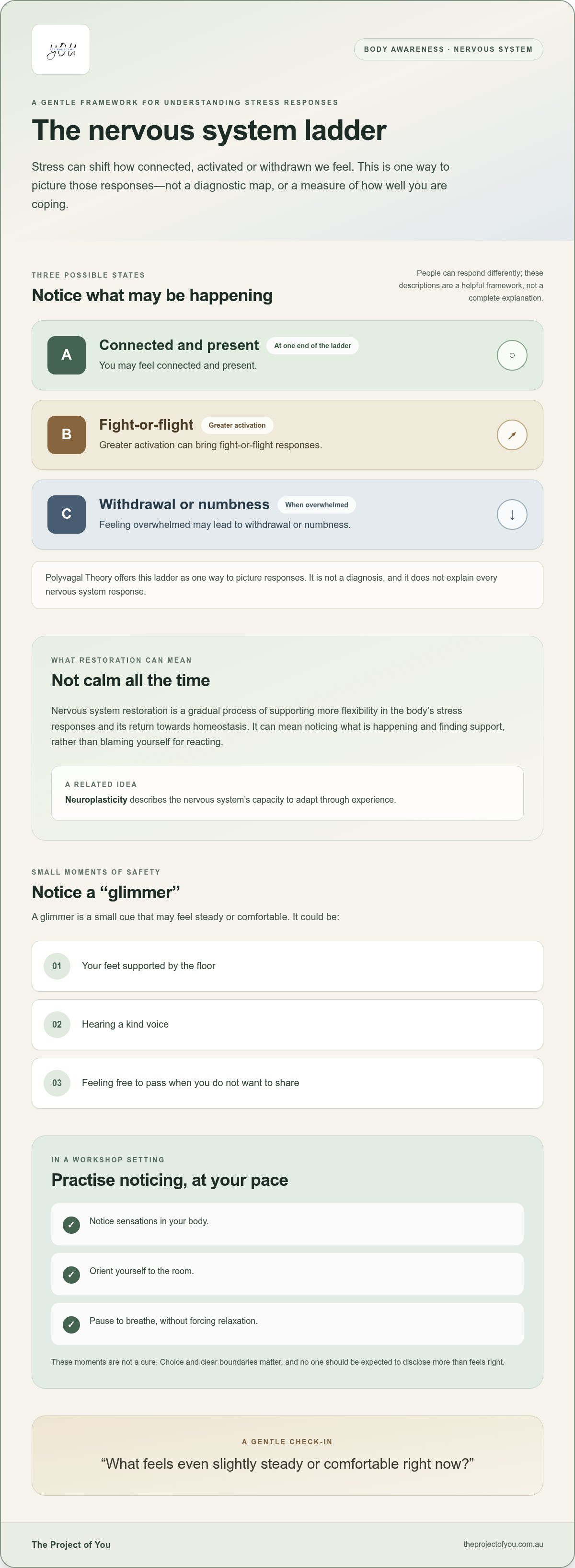
Feeling safe isn’t simply a thought you can talk yourself into. Your body responds to cues of pressure, connection and threat, often before you’ve had time to make sense of them. Polyvagal Theory offers one way to picture these responses as a ladder: at one end, you may feel connected and present; greater activation can bring fight-or-flight responses, while feeling overwhelmed may lead to withdrawal or numbness. This is a helpful framework, not a diagnostic map or a complete explanation of every nervous system response.
Nervous system restoration is a gradual process of supporting greater flexibility in the body’s stress responses and its return towards homeostasis. Neuroplasticity describes the nervous system’s capacity to adapt through experience. Restoration doesn’t mean staying calm all the time. It can mean developing more ways to notice what’s happening and find support, rather than blaming yourself for reacting.
Moving Out of Survival Mode
Anxiety, brain fog, irritability or feeling “tired but wired” can accompany prolonged stress, although they can also have other causes. A trauma-informed workshop can provide space away from everyday demands to practise noticing sensations, orienting to the room or pausing to breathe. These moments aren’t a cure, and the aim isn’t to force relaxation. Harvard Health Publishing explains how somatic therapy for trauma recovery brings attention to the connection between bodily experience and emotional wellbeing.
Small moments of safety, sometimes called “glimmers”, might include noticing your feet supported by the floor, hearing a kind voice or feeling free to pass when you don’t want to share. In a women's healing workshop, choice and clear boundaries can make these cues easier to notice. You could quietly ask yourself: What feels even slightly steady or comfortable right now?
Attachment Theory and Your Inner Peace
Early relationships can shape what we expect from closeness and how readily we seek comfort, but they don’t dictate who we become. If connection once felt uncertain, someone may become vigilant about other people’s responses. If relying on others felt uncomfortable, they may habitually manage distress alone. Either pattern can add strain, especially alongside work and caregiving, but neither attachment style automatically causes burnout.
Attachment-informed care makes room to explore these strategies with curiosity, not judgement. The Project of You integrates attachment and Polyvagal perspectives into its workshops, recognising that emotional safety can be shaped by both our inner responses and the relationships around us. If you’d like to explore professional support, you can view counselling booking options.
What Actually Happens at a Women's Healing Workshop?
A women's healing workshop isn’t a spa day, and it isn’t a hospital ward. It’s a facilitated space for learning, reflection and gentle body-based practices, held within clear boundaries. The focus is not on diagnosing or fixing anyone. Instead, you’re invited to notice what’s happening for you and explore new ways of relating to your feelings, body and needs.
A useful workshop “container” means participants understand how the group works and what supports emotional safety. This can include clear expectations around respectful listening, confidentiality, consent and the choice to pass, pause or step out. You shouldn’t have to share personal details or take part in an exercise that doesn’t feel right. Having choices matters, especially if you’re used to putting other people’s comfort first.
A Possible Journey Through the Day
The exact format can vary, so think of this as an example rather than a set timetable. A session might begin with grounding and an invitation to settle in, followed by learning and guided reflection on themes such as boundaries, feminine energy or “The Wounded Feminine”. There may also be time to draw together what you’ve noticed and consider how it could translate into everyday life. A well-paced workshop allows room to pause, ask questions and take things at your own speed.
Learning, Practice and Reflection
Different activities offer different ways to engage. You might be invited to try a guided visualisation or mindfulness practice, then reflect on what you noticed. Gentle movement could help you become aware of tension or areas of ease, without needing to push your body or aim for a particular emotional response. Journalling can help organise thoughts that feel tangled. You can adapt or decline an activity; your experience doesn’t need to match anyone else’s.
As you consider a women's healing workshop, it may help to ask yourself: What would support me to feel comfortable enough to take part? Notice whether the facilitator explains activities clearly, welcomes questions and makes space for different cultural experiences, access needs and personal boundaries. These details can help you understand how the group will be held.
Taking What’s Useful Into Daily Life
The value of a workshop isn’t measured by how much you disclose or how emotional a session becomes. You might leave with a clearer sense of a boundary you want to practise, a grounding exercise to return to, or a better understanding of what your body is signalling. Small, realistic steps are often easier to carry into a busy week than ambitious promises to change everything at once.
The Healing Feminine Workshops at The Project of You bring trauma-informed perspectives to nervous system regulation and attachment. The intention is to create space for exploration while respecting your choices and pace.
How to Choose a Safe and Trauma-Informed Space
A thoughtful choice starts with more than the setting or programme title. A “wellness retreat” may focus on rest and general wellbeing, while a healing workshop often centres on guided reflection, learning and emotional exploration. The labels aren’t standardised, and some experiences combine both. Look for a clear description of the purpose, activities, facilitator’s background and how your choice and boundaries will be respected.
Clinical credentials matter because working with trauma and emotional overwhelm calls for appropriate training, sound judgement and an understanding of when someone may need support beyond a group setting. A qualified facilitator can’t guarantee a particular outcome, but professional experience can help them approach difficult material thoughtfully. The Project of You’s workshops are led by Azita Abdollahian, a qualified clinical social worker and psychotherapist, and draw on trauma-informed practice, attachment and nervous system regulation.
Ask How Emotional Safety Is Supported
When considering a women's healing workshop, think about how emotional overwhelm is handled. It’s useful to understand whether sharing is optional, how participants can pause or step away, and what the group is asked to keep private. These questions aren’t a test. They can help you decide whether the structure feels right for you.
In ungrounded settings, “spiritual bypassing” can mean using spiritual ideas to move past or minimise difficult feelings rather than making room for them. A trauma-informed approach doesn’t insist that distress has a simple meaning or that you should feel positive. It makes room for complexity, choice and practical support. The aim isn’t to “take the lid off” intense material without considering how someone can feel supported and reorient afterwards.
Look for Clear, Grounded Language
Useful signs in a workshop description include phrases such as “trauma-informed”, “nervous system focused” and “attachment-aware”, especially when the facilitator explains what they mean in practice. Evidence-informed work describes its methods without promising a cure or claiming to diagnose participants. Notice whether the language invites curiosity and self-understanding, rather than suggesting that you’re broken and need fixing.
Purpose: Is it clear what the experience is designed to explore?
Participation: Are choice, consent and personal boundaries acknowledged?
Facilitation: Are the facilitator’s relevant qualifications and approach described?
Practical details: Is it clear what activities and support are part of the experience?
At The Project of You, clinical experience informs a non-blaming approach to healing. The Healing Feminine Workshops centre on nervous system regulation and attachment, while respecting that each person’s experience is their own.
Reclaiming Your Vitality with The Project of You
The Healing Feminine Workshops are a core offering of The Project of You, led by clinical social worker and psychotherapist Azita Abdollahian. They bring trauma-informed perspectives on attachment and nervous system regulation into a group experience. Rather than asking you to become a different person, the work invites you to notice what has helped you keep going and what might make more room for rest, connection and vitality.
Burnout can leave you feeling guarded, depleted or distant from parts of yourself that once felt accessible. Reclaiming your essence doesn’t mean performing a particular version of femininity. It can mean becoming curious about your needs, softening habits built around constant pressure, and finding small ways to feel more present in your own life. There’s no guaranteed shift from surviving to thriving, but a workshop can offer an opportunity to explore what greater regulation and support could look like for you.
The Healing Feminine: A Path to Restoration
A workshop may complement individual counselling by offering a shared space for learning and reflection, while counselling can provide more individualised support. The Project of You also offers nervous system retreats for those seeking a more immersive focus on restoration. These approaches aren’t interchangeable; the right fit depends on your circumstances, preferences and support needs. Educational resources can also help you learn about how trauma may affect nervous system responses.
Consider what you’re hoping to make space for. Is it a clearer sense of your boundaries? A chance to understand your responses with less self-blame? Or simply time to listen inward without immediately moving on to the next task? You don’t need to arrive with a polished goal.
Your Next Steps Towards Healing
Before attending a women's healing workshop, you might set a gentle intention, such as “I’ll notice what feels supportive” or “I can participate at my own pace”. If possible, make room around the experience so you’re not rushing straight from a full day into another demanding commitment. You don’t need to prepare by revisiting painful memories or deciding what you’ll share.
Afterwards, integration means giving yourself time to reflect on what felt meaningful and how it might fit into everyday life. You could write down one insight, practise a grounding tool or talk it through with a trusted support person. If difficult feelings arise or continue to affect daily life, individual counselling can offer space to explore them with professional support.
Make Space for a More Supported Way Forward
You don’t need to be broken to benefit from care. Stress can shape how safe, connected and present you feel, and body-based practices may complement the understanding you gain through conversation. A trauma-informed women's healing workshop offers one way to explore nervous system regulation, attachment and self-awareness at a pace that respects your choices.
The Healing Feminine Workshops at The Project of You are facilitated by Azita Abdollahian, Clinical Social Worker and Psychotherapist. They draw on Polyvagal and Attachment theories within a supportive, non-judgemental setting. The aim isn’t to promise a quick fix, but to make room for reflection, connection and practical ways to support your wellbeing.
If you’re considering a next step, choose one that feels manageable and aligned with what you need. You deserve support that meets you with care and curiosity.
Frequently Asked Questions
Do I have to share my personal trauma with the whole group?
No, you shouldn’t have to disclose personal trauma to take part in a women's healing workshop. Sharing is a choice, and listening, reflecting privately or passing on an activity can also be meaningful ways to participate. You can decide what feels appropriate for you rather than feeling pressed to tell your story. Clear group boundaries should support privacy and respect.
Is a women's healing workshop the same as a yoga retreat?
No. A yoga retreat generally centres on yoga practice, while a women's healing workshop focuses on guided reflection, emotional learning and nervous system awareness. Some experiences may include mindfulness or gentle movement, but that doesn’t make them the same. The Healing Feminine Workshops draw on trauma-informed practice, attachment and nervous system regulation. Reading the description can help you understand the focus and decide whether it suits what you’re looking for.
What should I wear or bring to a somatic workshop?
Choose clothing that lets you sit, stretch gently or move comfortably, such as relaxed layers you can adjust if you feel warm or cool. You might bring a notebook and pen for reflections, and water for general comfort. These are suggestions, not requirements. Activities and practical arrangements can vary between workshops, so use the information provided for your session as your guide, and let comfort take priority over having the “right” equipment.
I'm currently seeing a psychologist. Is this workshop right for me?
It may be possible to attend a workshop while seeing a psychologist, as group learning can complement individual counselling, but it isn’t a replacement for your existing care. Consider what you’re hoping to gain and whether the group format feels supportive for you. If you’re working through trauma or want help thinking about support before and after the workshop, you may find it helpful to discuss the idea with your psychologist.
Can a workshop really help with chronic stress and burnout?
A workshop may give you structured time to explore stress responses, practise body-awareness tools and reflect on what support you need. It can’t promise to resolve chronic stress or burnout, and it may be one part of a broader approach that includes professional care and changes in everyday demands. The experience may offer ideas to take into daily life, while ongoing change can involve attention to health, relationships, boundaries and workload.
What happens if I get overwhelmed during the session?
If you feel overwhelmed, you can pause, step back from an activity or ask the facilitator for support. A trauma-informed space should respect your boundaries and avoid pressuring you to continue or explain what’s happening. Simple grounding, such as noticing your feet on the floor or looking around the room, may help you reconnect with the present. Consider beforehand what helps you feel steadier and what support you might want.
Are these workshops religious or 'woo-woo'?
The Healing Feminine Workshops are grounded in trauma-informed practice and draw on Polyvagal and Attachment theories. They focus on nervous system regulation, relationships and personal reflection, rather than asking you to adopt a particular belief system. “Feminine” doesn’t have to mean one fixed way of being a woman. You’re welcome to approach the themes with curiosity and decide what feels relevant to your own life and values.
How do I know if I'm ready for a deep healing experience?
You don’t need to feel completely prepared or have every part of your story understood. It may help to consider whether you can choose your level of participation, what support you have around you, and how much emotional space you have at present. If you’re unsure, speak with a treating professional or consider individual counselling. Readiness is something to explore gently, not a test you have to pass.


Comments