

Burnout recovery plan: a compassionate, practical path back to capacity

What is the best way to recover from burnout, and how can you start feeling like yourself again without pushing beyond your limits? If you're experiencing persistent exhaustion, emotional overwhelm, difficulty concentrating or a sense of detachment from work and everyday life, even simple tasks can feel overwhelming. You might know you need to slow down but feel unable to switch off, take time away or figure out what needs to change. Burnout recovery isn't about forcing yourself to get back to normal. It's about understanding what has depleted you and finding a sustainable way forward.
Burnout is associated with chronic workplace stress that has not been successfully managed, and recovery often requires more than a few days off. Depending on your circumstances, it may involve adjusting your workload, establishing healthier boundaries, prioritising rest and seeking professional support. Psychotherapist Azita Abdollahian explores how burnout can affect your emotional wellbeing, energy and daily functioning, and why recovery needs to reflect your current capacity rather than the expectations you've placed on yourself.
In this guide, you'll discover practical strategies for recovering from burnout, pacing your energy, managing setbacks without self-blame and recognising when additional support may help. Whether you're balancing demanding work, caring responsibilities or the pressure to keep everything together, you'll learn how to approach recovery one manageable step at a time, without turning healing into another thing you have to get right.
Table of Contents
What a burnout recovery plan can offer, and what burnout means
A burnout recovery plan can help you organise supportive steps, but it can’t guarantee how long recovery will take or promise a particular outcome. Think of it as a flexible guide, not a test of how well you’re coping. Some people may need to reduce demands first; others may begin by asking for support or identifying what has been draining them.
The World Health Organization (WHO) describes burnout in ICD-11 as an occupational phenomenon arising from chronic workplace stress that hasn’t been successfully managed. It involves exhaustion, increased mental distance or cynicism towards work, and reduced professional effectiveness. The WHO’s framing is specific to work, rather than a diagnosis that can be made from a list of feelings. For a broader overview, see Burnout (psychology).
People also use “burnout” in everyday conversation to describe feeling depleted by study, caring responsibilities, relationship strain or several pressures at once. That language can help someone express how hard things feel, even when the cause isn’t solely work-related. A supportive plan can help organise practical steps, but it isn’t a diagnosis or a promise of recovery. The WHO defines burnout as an occupational phenomenon, not a medical condition.
What does burnout feel like in everyday life?
You might finish work but find your mind still replaying unfinished tasks, or feel that replying to a straightforward email takes more effort than it used to. A small decision, a trip to the shops or preparing dinner can feel unexpectedly demanding. At work, you might notice exhaustion, pulling back emotionally from your role, or finding it harder to concentrate and feel effective. These experiences can be part of burnout, but they aren’t a checklist for diagnosing yourself.
Similar changes can have different causes, including health concerns, grief, disrupted sleep or other life pressures. You don’t have to settle on a label before taking your experience seriously. It may be more useful to ask: What has changed? What demands am I carrying? What support or assessment would help me understand what’s going on?
Why a recovery plan should not become another demand
If a detailed routine feels impossible to follow, that doesn’t mean you lack commitment. It may mean the plan assumes more energy, time or control than you have right now. A rigid checklist can become one more standard to fall short of, particularly when work, caring responsibilities or circumstances outside your control are already taking up your capacity.
Treat the plan as adjustable support. You might pause an activity, simplify it or ask someone to help with one practical task. If a step makes your load heavier, review it rather than pushing through automatically. There’s no single sequence everyone must follow. A useful burnout recovery plan makes room for your actual circumstances, including days when the kindest next step is to do less or seek help.
Why burnout recovery involves more than taking a short break
A weekend away or a few quiet days may offer welcome relief, but rest alone can’t always change the pressures that have been wearing you down. If you return to the same unmanageable workload, unclear expectations or lack of support, the strain may build again. This isn’t a sign that you rested incorrectly. It may mean your circumstances need attention alongside your need for recovery.
The World Health Organization’s ICD-11 describes burnout as an occupational phenomenon associated with chronic workplace stress that hasn’t been successfully managed. That framing matters: burnout is work-related, while stress is a response to demands that can arise in many parts of life. Stress and burnout aren’t simply two points on a severity scale, and one doesn’t always lead to the other.
Work may be only one part of what you’re living with. Caring for a family member, navigating relationship difficulties or managing a health concern can also use time and energy, sometimes alongside workplace pressures. These factors don’t establish a diagnosis, but they can help explain why a short break may not feel restorative. Mental Health America’s information on burnout also encourages people to notice what they’re experiencing and consider support.
How do stress and burnout differ?
Stress often describes feeling under pressure as demands compete for your attention. It can be brief or ongoing, and it may relate to work, finances, family or change. Burnout, in the WHO’s classification, refers specifically to chronic workplace stress and its effects on someone’s relationship with work and sense of effectiveness. That distinction offers context, not a self-diagnosis. If distress persists, worsens or makes everyday responsibilities difficult, consider speaking with a health professional to explore what may be contributing.
Why context matters when rebuilding capacity
As you shape a burnout recovery plan, look beyond “How can I cope better?” and ask, “What is asking so much of me, and what could change?” Workload may be too high, expectations unclear or control over how tasks are done limited. Outside work, caring arrangements or relationship tension might leave little protected time to rest. Naming the pressures isn’t about blaming yourself or someone else; it helps make the situation more understandable.
Start with three practical questions: What drains energy most reliably? What actually feels restorative, rather than simply keeping you occupied? Which pressure, if any, can be reduced or shared? A boundary such as finishing at an agreed time may help, but it may need to sit alongside a conversation about priorities or workload. Individual coping strategies can support you, yet they can’t always resolve structural demands on their own.
If it feels difficult to untangle what’s personal, relational or work-related, individual counselling can offer space to explore the situation and identify manageable next steps. You can book an individual counselling session with The Project of You | Trauma, Couples & Relationship Therapy Australia. If your health or daily functioning is affected, counselling can complement practical changes and appropriate health care.
How to shape a burnout recovery plan around your real capacity
A workable plan begins with what you can manage now, not what you think you should be able to do. Try a flexible framework: notice your capacity, choose one support, reduce one pressure where possible, then review gently. You can repeat or adjust these steps as work, health and caring responsibilities shift.
A rigid checklist might expect you to exercise, meditate, cook and journal every day. A paced plan asks what would make today a little more manageable, and allows the answer to change tomorrow. Recovery doesn’t have to happen within a week. There’s no standard duration that fits everyone, and a difficult day doesn’t mean you’ve lost progress.
How can I set a starting point without judging myself?
Pause for a brief check-in, without grading your answers. How much energy do you have for essential tasks? What feels emotionally heavy? Which everyday responsibilities need attention today, and what can wait? You might jot down a few words, or simply notice what comes to mind. This is information about your current circumstances, not a clinical measure or a verdict on your effort.
Then ask: What feels most urgent? Who or what could support me? What is one next step small enough to feel possible? If you’re caring for children after work, for example, a realistic step may be asking someone to help with dinner rather than adding a new evening routine.
Which recovery steps deserve priority?
Give priority to actions that ease immediate strain or make basic routines more manageable. Separate what you can choose directly from changes that need a conversation with a manager, colleague or loved one. You don’t need to resolve every pressure at once. The examples below are options to adapt, not tasks to complete all together.
Too depleted for a full routine: Choose one basic need, such as eating something simple or taking a quiet pause.
Work feels unmanageable: Write down the competing priorities and consider asking your manager to clarify what comes first.
Rest is interrupted by messages: If it’s within your control, silence non-urgent notifications for a short period. If not, discuss expectations around contact.
Home responsibilities leave little room: Ask someone you trust to share or take on one specific task, if that’s available to you.
If it helps, keep a light record of energy, sleep quality or work strain. A brief note such as “low energy after late meeting” can help you spot patterns and consider what might be changeable. These observations aren’t a diagnostic tool, and they don’t need to be tracked every day. Set them aside if monitoring becomes another burden.
Review the plan when you have enough space to do so. Ask what helped, what felt unrealistic and what support is still missing. A useful burnout recovery plan can become smaller when capacity is low and grow or change as circumstances allow. Its purpose is to guide your next steps, not measure your worth.
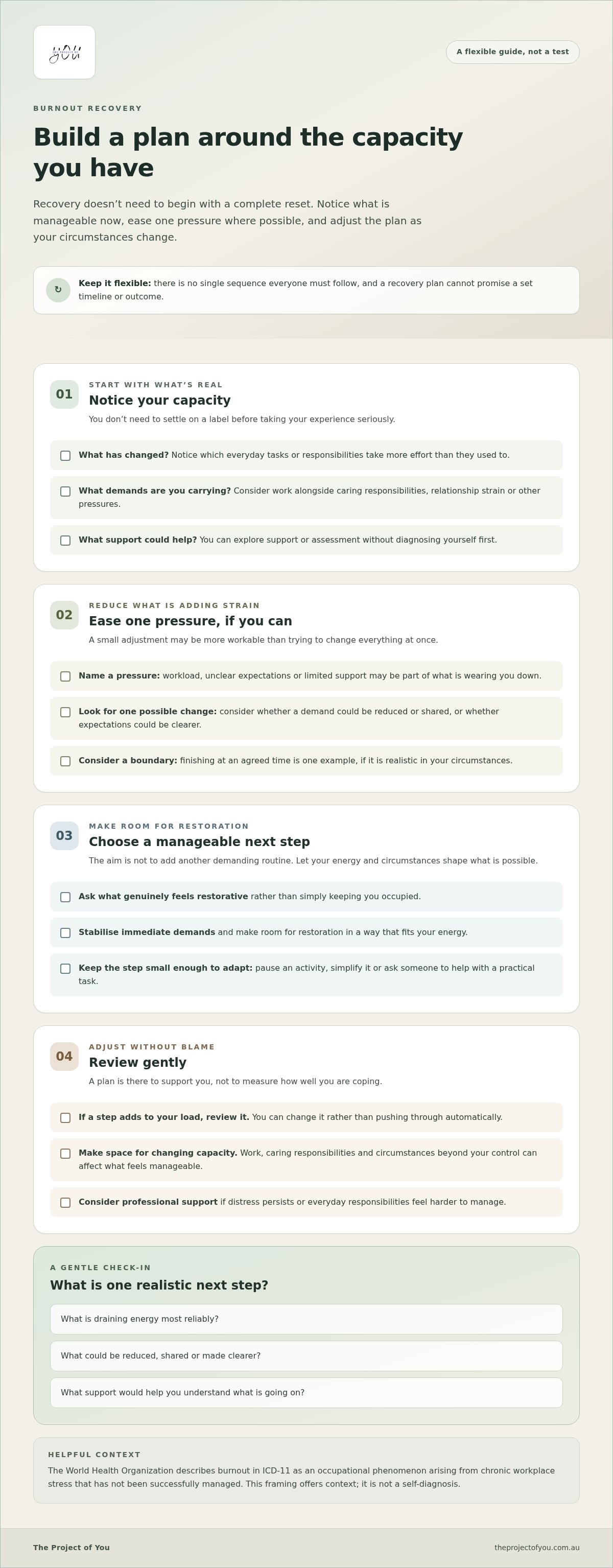
A practical burnout recovery plan: stabilise, restore and review
A practical sequence can help you decide what to focus on without turning recovery into another project. Think of it as three adaptable phases: stabilise immediate demands, make room for restoration, and review what may need to change. You can move between them, pause or revisit an earlier step. This is a supportive framework, not a clinical treatment protocol.
The phases don’t need to happen on separate days or in a set order. If a new work pressure appears, stabilising may need attention again. If you have very little energy, doing less can be the most realistic adjustment. The aim is to make space for supportive choices, not to complete a prescribed routine.
Stabilise: what could ease the pressure this week?
Look for one demand that could be reduced, shared or clarified. For example, you might ask a manager which of two deadlines should take priority, or pause a non-essential commitment while you catch your breath. Keep basic routines simple and accept practical help if it’s available. With very limited energy, choose one task to postpone or tell a trusted person that you’re having a hard week.
There’s no universal requirement to exercise, avoid screens or overhaul your habits. A useful first step is one that fits your circumstances and doesn’t create another standard to meet.
Restore: what feels replenishing and accessible?
Restoration doesn’t have to mean a holiday or a carefully planned wellness routine. It might be a few quiet minutes, a gentle walk if that feels comfortable, or a low-pressure conversation with someone who helps you feel understood. Notice what leaves you feeling a little more settled, rather than choosing an activity because you believe it’s what you’re supposed to do.
If energy is scarce, make the option smaller: sit outside briefly, listen to a familiar song, or let someone else handle one practical task. Connection and quiet can both be restorative; the right choice depends on what feels supportive to you.
Review: what might need to change?
After trying a small adjustment, take a gentle look back. What helped, even slightly? What remained difficult? Is there a pressure that needs a conversation or further support? You could note one observation, such as “the late meeting made the evening harder,” without judging yourself or treating it as proof of progress or failure.
Boundaries can help protect time and energy, while your values can guide which commitments matter most. But not every pressure is within your control, and needing support to address it isn’t a personal shortcoming. A boundary might mean declining an optional task; a bigger change may require discussing workload, expectations or shared responsibilities with someone else.
Stabilise what feels most urgent, make room for restoration in a manageable way, then review what’s helping and what still needs attention. This burnout recovery plan is a flexible guide: return to whichever phase fits your circumstances, and adjust it as your capacity and demands change.
When burnout recovery may benefit from professional support
Consider seeking support if distress continues, your ability to manage everyday responsibilities is getting harder, or your usual ways of coping no longer feel sufficient. You don’t need to wait until things feel unbearable, and you don’t need to be certain that burnout explains what’s happening. A qualified professional can help you explore the pressures you’re facing, consider what support may fit and identify manageable next steps.
Support can be especially useful when it’s difficult to separate work strain from other concerns, such as health worries, relationship difficulties or caring demands. Counselling isn’t a guaranteed solution, and it doesn’t replace medical care where that’s needed. It can offer a thoughtful space to make sense of your experience and consider how your burnout recovery plan might account for your needs and circumstances.
What might happen when I seek counselling?
An initial conversation is a chance to describe what has been happening in your own words. You might talk about changes in your energy, what daily life currently asks of you, and what you hope could feel more manageable. You don’t need to arrive with a diagnosis, a polished explanation or a complete plan. You can also ask questions and discuss what kind of support feels comfortable.
At The Project of You | Trauma, Couples & Relationship Therapy Australia, Azita Abdollahian is a qualified social worker, psychotherapist and neurofeedback trainer. The practice offers individual counselling and Nervous System Regulation & Restoration. The focus is on understanding your situation and exploring suitable next steps, rather than assuming there’s one approach that works for everyone. The practice also offers a nervous system restoration retreat for people seeking an immersive option.
What is one gentle next step I can take?
Choose one action that feels possible, not every action that might eventually help. You could write down what’s been most difficult, tell someone you trust that you’re struggling, or arrange a conversation with a health professional. If you’re already receiving care, you might bring up how depleted you’ve been and ask what support or assessment could be appropriate. If your immediate responsibilities feel hard to manage, consider whether there’s one practical task someone else could share.
There’s no need to make a major decision today. A first conversation can help you understand your options; you remain part of deciding what feels useful. If you’d like to explore individual counselling with The Project of You | Trauma, Couples & Relationship Therapy Australia, you’re welcome to book an individual counselling session when it feels right for you.
Let your next step be small and supported
You don’t need to have the whole path mapped out before you begin. A useful burnout recovery plan can start with noticing what feels possible today, then making room to adjust as your needs and circumstances change. If you’re unsure where to begin, talking it through with someone may help you find a next step that feels manageable.
At The Project of You | Trauma, Couples & Relationship Therapy Australia, individual counselling and Nervous System Regulation & Restoration can support you as you explore what’s been happening and consider what kind of support may suit you. You don’t need to arrive with all the answers.
Take the time you need. One compassionate step is enough for now.
Frequently Asked Questions
What is a burnout recovery plan?
A burnout recovery plan is a flexible set of steps for responding to strain and making room for recovery. It might include noting what drains you, asking for help with one responsibility or discussing a change to your workload. It isn’t a diagnosis or a treatment in itself, and following a plan can’t guarantee a particular result. The steps that feel useful depend on your circumstances, capacity and available support.
How long does it take to recover from burnout?
There’s no single recovery timeline that applies to everyone. Ongoing work pressures, health, support and opportunities to change what’s contributing to the strain can all affect what recovery involves. Rather than measuring yourself against a deadline, notice whether daily life is becoming more manageable and what still feels difficult. If distress persists, worsens or interferes with everyday functioning, speak with a qualified health professional about what may be going on.
Can you recover from burnout while still working?
Some people continue working while making adjustments, although ongoing demands may make recovery harder. If it feels safe and possible, you could ask which task takes priority, clarify expectations about availability or explore a manageable change to your workload. Not everyone can take leave or change jobs, and those aren’t the only possible next steps. If work strain is affecting your wellbeing or ability to function, consider discussing your options with a qualified professional.
Is burnout the same as depression?
No. Burnout and depression aren’t interchangeable terms, although some experiences may overlap. The World Health Organization classifies burnout as an occupational phenomenon linked to chronic workplace stress, not a medical condition. A list of feelings can’t reliably establish whether someone has burnout, depression or something else. If changes in mood, energy or daily functioning persist or concern you, talk with a qualified health professional who can explore your situation and discuss appropriate assessment or support.
What should I do first if I feel burnt out?
Start with a gentle check-in: what needs attention today, how much capacity do you have, and is there one pressure you could ease? For example, you might postpone a non-urgent errand or ask someone to share a task. You don’t need to build a demanding routine or make a major decision straight away. If distress is worsening, persistent or affecting daily functioning, seeking professional support can be a sensible next step.
Can a recovery plan include boundaries at work?
Yes. A plan may include considering workload, availability and expectations, while recognising that your control over these can vary. If it feels appropriate, you could ask your manager to clarify competing priorities or discuss a change to a deadline. Boundary-setting alone may not address the pressures involved, and workplace conversations aren’t equally safe or straightforward for everyone. Consider what support or preparation would help before raising a concern.
When should I seek professional help for burnout?
Consider seeking support if distress persists, worsens, affects daily life or feels difficult to manage alone. A qualified health professional can help you explore what’s happening and discuss suitable next steps; counselling doesn’t guarantee recovery and may sit alongside other care. If you’re concerned about your immediate safety, call Triple Zero (000) or go to an emergency department. For crisis support in Australia, Lifeline is available on 13 11 14.



Comments