

Long term effects of infidelity and the path to couples therapy

What are the long-term effects of infidelity on the betrayed spouse, and how can couples begin to recover? Discovering that a partner has been unfaithful can affect emotional wellbeing, trust, family life and relationship satisfaction long after the betrayal comes to light. The long-term effects of infidelity may include anxiety, low mood, grief, persistent doubts and difficulty feeling emotionally safe with a partner. These experiences do not automatically indicate a mental health condition, but they can have a significant impact on daily life, family routines and the way partners communicate.
If you’re struggling to move forward after infidelity, you may wonder whether you’ll ever feel secure in your relationship again. The aftermath of betrayal can be complicated, and each partner may experience the hurt, uncertainty and consequences differently. There is no single timeline for recovery, and you do not have to rush the process.
In this article, Azita Abdollahian, psychotherapist and Clinical Social Worker, explores the long-term emotional and relational effects of infidelity, what can influence recovery and how couples counselling can help partners navigate the aftermath of betrayal. You’ll learn how therapy can support safer communication, rebuild trust through accountability and consistent actions, and help you explore whether repairing the relationship is right for both of you. The goal is not to pressure you to stay together, but to help you make informed decisions that respect both partners’ needs, boundaries and wellbeing.
Table of Contents
Couples therapy and rebuilding the relationship
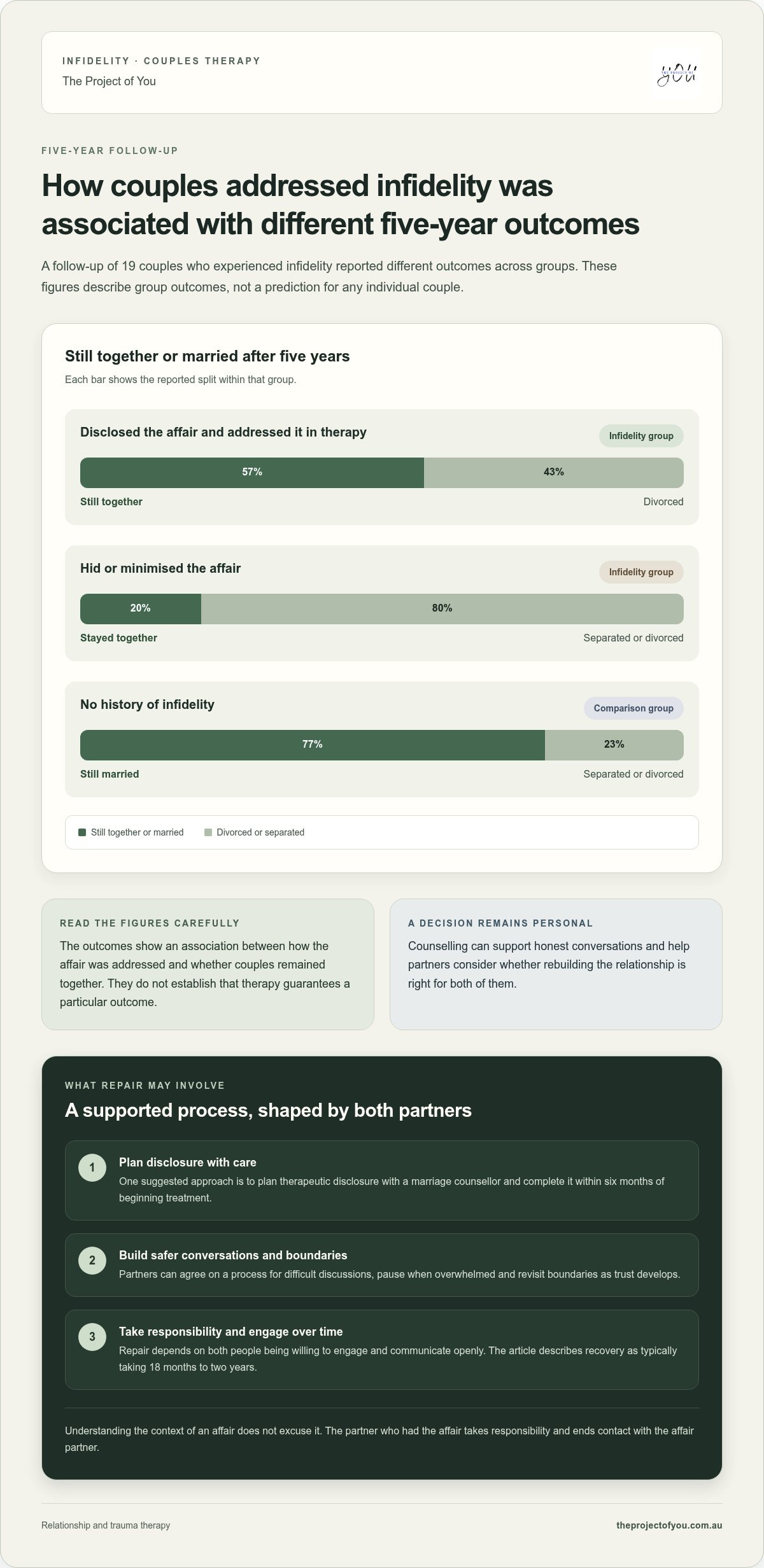
Couples therapy can offer a structured setting to discuss the affair, understand its impact and decide whether to rebuild. A five-year follow-up of 19 couples who experienced infidelity reported different outcomes depending on whether partners disclosed and addressed the affair in therapy.
In that follow-up, 57% of couples who disclosed the affair and addressed it in therapy were still together after five years; 43% had divorced. Among couples who hid or minimised the affair, 20% stayed together and 80% separated or divorced. For comparison, 77% of couples with no infidelity history were still married, while 23% had separated or divorced. These figures describe distinct groups and highlight how secrecy and engagement with the rupture were associated with different outcomes.
Counselling isn’t simply a forum for deciding who was right. A counsellor can help partners slow difficult conversations, identify what each person needs to feel emotionally safer, and agree on boundaries. For example, a couple might set a regular time to talk and pause if either person feels overwhelmed. This creates a clearer process for addressing problems instead of repeating the same argument.
Disclosure needs careful pacing. Detailed questions can feel urgent after an affair is discovered, but discussing intimate details immediately, without professional guidance, can intensify distress. One suggested approach is to plan disclosure with a marriage counsellor and complete full therapeutic disclosure within six months of beginning treatment. Partners can agree on a timeline and process so information is shared carefully rather than emerging in fragments during conflict.
Individual therapy approaches that may support a betrayed spouse include trauma-informed counselling, cognitive behavioural therapy (CBT) and somatic therapy. CBT can help someone notice distressing thought patterns and practise coping responses; somatic work attends to how stress is felt in the body. Individual sessions can also make room for grief, shame and chronic vigilance without requiring the spouse to manage both partners’ reactions at once.
In Australia, seek mental health support when distress persists, disrupts sleep, work or daily routines, or feels difficult to manage alone. If you feel unsafe or are struggling to care for yourself, contact a mental health professional or your GP promptly.
Relationship recovery takes time; the stated timeframe is typically 18 months to two years. During that period, therapy can help partners understand the context of the affair without excusing it, while the partner who had the affair takes responsibility and ends contact with the affair partner. Repair also depends on both people being willing to engage, communicate openly and revisit agreed boundaries as trust develops.
Depression following a partner's infidelity
After an affair, sadness can deepen into persistent low mood, especially when trust and emotional safety feel shaken. The betrayed partner may replay conversations, struggle to concentrate or lose interest in familiar routines. These reactions don’t mean someone is weak, and they don’t automatically establish a diagnosis. They deserve attention when they interfere with sleep, work, parenting or connection with others.
After infidelity is discovered, 30-60% of betrayed individuals develop clinically significant anxiety, depression or PTSD. Women who experience infidelity threats are six times more likely to develop major depression than women who haven’t. These figures describe reported findings, not a prediction for any one person. The affair’s duration, existing stress, earlier trauma and available support can shape how someone responds.
The effects can show up in ordinary moments. Someone who was cheated on might find grocery shopping difficult because a familiar place brings back the discovery, or withdraw from friends because explaining the situation feels exhausting. Shame can add another layer: they may blame themselves for not noticing sooner. Recognising that thought as self-blame, rather than fact, can make room for a kinder and more accurate perspective.
Long-term stress after infidelity has been associated with poorer chronic health outcomes years later. This association doesn’t prove that infidelity caused those outcomes. Ongoing stress can affect sleep, appetite and energy, so note changes and discuss persistent concerns with a GP.
A short journal entry can make distress easier to describe. Once a day, record the trigger, the feeling, any body sensations and what helped, such as a walk or a call with a trusted friend. For example: “A message notification brought back the discovery; my chest tightened; I took a break and spoke with my sister.” The aim isn’t to analyse every detail. It’s to notice patterns and share clear examples with a mental health professional.
Seek professional mental health support when low mood, anxiety or intrusive thoughts persist, or when daily responsibilities become harder to manage. A GP, psychologist, counsellor or mental health social worker can help assess what support may fit. If thoughts of self-harm arise, seek urgent help rather than managing alone. Support can focus on your wellbeing, whether or not your partner joins the process. If individual counselling feels like a helpful next step, you can book an individual counselling session.
Effects on the marriage and family system
Infidelity can change how partners understand their marriage, even when it looked settled from the outside. After a sexual or emotional affair comes to light, shared memories may be reconsidered through questions about honesty and trust. Ordinary moments, such as a late message or changed plans, can take on new meaning. The emotional impact may extend beyond the couple, affecting parenting, household routines and family conversations.
Infidelity-related marital problems were associated with 2.6 times the odds of divorce, after accounting for pre-existing marital satisfaction. This describes an association, not a certainty for any couple. It also shows why the state of a relationship before discovery matters. Partners may have felt close, distant or conflicted, and those different histories can shape how the rupture is understood and what rebuilding might require.
At home, tension can change the rhythm of family life. One parent might withdraw during dinner while the other takes on more school pick-ups or household tasks. Children may notice strained conversations or disrupted routines, even when adults haven’t shared details. Keeping meals, school arrangements and bedtime predictable can offer practical steadiness while the adults work through difficult decisions.
Children don’t need to carry messages between parents or hear intimate details of the affair. A simple, age-appropriate explanation can acknowledge that the adults are dealing with a relationship problem and make clear that children aren’t responsible for resolving it. If an argument begins, pausing and returning to the conversation privately can help keep children out of adult conflict.
Rebuilding a marriage involves more than resuming familiar routines. Partners can name what has changed, agree on boundaries around privacy and communication, and decide how to handle questions that arise. For example, they might plan to discuss difficult topics at a calm time rather than during school drop-off. These choices provide structure for counselling and help each person see whether actions match stated intentions.
Some couples decide to rebuild; others need time before making that choice. A useful conversation can focus on what each partner needs to feel respected, what taking responsibility looks like, and whether both can participate honestly. Marriage counselling can help partners explore these questions without treating the affair as proof that one person alone defines the entire relationship. The aim is clarity about the family’s next steps, not pressure to preserve appearances.
Marital satisfaction among couples who stay together
Staying together doesn’t, by itself, show that a couple feels satisfied or secure. Partners may remain married because of love, shared values, children, finances or uncertainty about separation. For example, one person might want to rebuild while the other stays mainly to preserve family routines. Understanding that difference matters more than treating relationship status as proof of recovery.
Explore marital satisfaction after infidelity through everyday experiences. Can each partner speak honestly without being mocked or shut down? Are agreements followed, including practical boundaries around communication? If one person asks to pause a difficult conversation, does the other respect that request? Specific examples show whether trust is being rebuilt through behaviour, not simply promised.
A couple can reflect on several parts of their relationship without rushing to a verdict:
Emotional safety: Can each person name hurt, fear or uncertainty and receive a thoughtful response?
Reliability: Do everyday commitments, such as arriving when agreed, match what each partner says?
Communication: Can disagreements end with a clear next step, rather than silence or repeated accusations?
Connection: Are there moments of warmth, shared humour or affection that feel freely chosen?
These signs aren’t a scorecard. A couple may feel close during a quiet weekend, then struggle after a reminder of the affair. A change in mood doesn’t erase progress, but it can point to an unresolved need. Naming the moment, such as “I felt unsettled when plans changed without a message”, gives both partners something specific to understand.
Sexual intimacy may also change. One partner might want closeness while the other needs time before touch feels comfortable. Neither response defines the couple’s future. They can discuss consent, affection and boundaries in plain language, then revisit the conversation as feelings shift. For instance, holding hands may feel welcome even when sex feels too vulnerable.
Healing means recognising the consequences without allowing the affair to become the marriage’s only subject. Partners can make space for practical matters, parenting and shared interests, while setting aside time for relationship conversations. A regular check-in might include the question, “What helped you feel respected this week?” The answer can identify a behaviour worth continuing.
Recovery isn’t measured by whether difficult feelings disappear. A more useful question is whether both people can respond to those feelings with care and accountability. If a couple notices repeated secrecy, unresolved resentment or conversations that escalate, those patterns deserve attention. Marriage counselling can help partners explore what satisfaction means to each of them and whether their actions are moving towards it.
What factors affect whether a betrayed spouse recovers from infidelity?
Recovery can be influenced by whether life begins to feel more predictable. Notice what happens after a difficult moment: can you return to work, sleep, eat and connect with someone you trust? A rough day doesn’t define your progress, but recurring disruption can show where extra support may help. Your needs matter whether you stay together or choose a different future.
Having room to make your own decisions can also support recovery. You might set a boundary around conversations at bedtime or ask for time before answering questions about the relationship. These choices don’t punish your partner. They give you space to notice what feels manageable and respond from your own values rather than pressure or fear.
Look for dependable actions in ordinary situations. If your partner says they’ll be home at a particular time, notice whether they communicate when plans change. If you ask for a pause during an intense conversation, notice whether that request is respected. Specific examples can help you assess whether everyday interactions are becoming more considerate and steady.
The quality of support around you matters, too. Choose a friend who can listen without taking over your decisions. You could say, “I need you to hear me, not tell me whether to stay.” If conversations with friends leave you feeling judged or pressured, consider setting limits on what you share.
Recovery can feel different from one day to the next. A reminder might leave you unsettled, while a calm conversation later helps you feel understood. Rather than treating either moment as the final answer, notice what influenced it. Was there enough time to speak? Did you feel listened to? Could you stop when overwhelmed?
Understanding the relationship’s history may help you make sense of what you want now. For example, you might recognise that conflict was often avoided before the affair. That insight can inform future choices, but it doesn’t make you responsible for your partner’s decisions. Consider whether both people are willing to examine their own patterns and behave differently.
Before making a major decision, ask yourself what would need to change for the relationship to feel respectful and emotionally safe. Write down a few observable actions, such as keeping agreements or speaking without insults. Then reflect on whether those actions are happening consistently. Recovery may mean rebuilding together, or finding steadiness while moving apart. If you’d like support exploring your next steps, book an infidelity recovery session.
The Project of You | Trauma, Couples & Relationship Therapy Australia: Nervous System Regulation & Restoration
The Project of You | Trauma, Couples & Relationship Therapy Australia offers Nervous System Regulation & Restoration for people seeking support with stress and emotional overwhelm after betrayal. When your body feels constantly on alert, this work may help you build awareness of your responses and practise ways to feel more grounded. Individual Counselling can also provide space to explore grief, boundaries and what you need next, whether or not you’re deciding to stay in the relationship.
You don’t have to make every decision at once. Support can begin with understanding what feels difficult today and choosing a manageable next step.
If you’d like to explore support, you’re welcome to contact The Project of You.
Choose a next step that feels steady and right for you
The long-term effects of infidelity on the betrayed spouse can shape how safe, connected and hopeful the future feels. You don’t need to decide the relationship’s entire future before seeking support. You might begin by asking yourself: what would help me feel more grounded this week, and what boundary would make the next conversation manageable?
That next step may be individual support, a careful conversation with your partner or time to reflect before choosing either. If you’re considering counselling, bring the questions you’re carrying, including uncertainty about whether to rebuild. A thoughtful space can help you listen to yourself and make decisions at a pace that respects your needs.
There’s no single path through betrayal, and seeking support is a way to care for your wellbeing, whatever comes next. You’re allowed to take this one step at a time.
[Explore booking options for support](https://www.theprojectofyou.com.au/book-online)
Be gentle with yourself as you find your way forward.
Frequently Asked Questions
Can infidelity cause mental illness?
Infidelity can contribute to emotional distress, but it doesn’t automatically cause a mental illness. Someone may feel overwhelmed, anxious or unable to focus after learning about an affair. If these experiences persist or make everyday tasks difficult, a GP or mental health professional can help assess what’s happening. They can also consider other pressures in your life rather than assuming the relationship event explains everything.
Should couples stay together after infidelity?
Whether to stay together is a personal decision, not a measure of how much someone cares. Consider what you want your relationship to stand for and whether continuing feels consistent with your values. You might take time to reflect on your own before discussing the future together. If you feel pressured, unsafe or unable to speak freely, seek individual support to clarify your options and what would help you decide with greater confidence.
Does infidelity pain ever go away?
The pain can become less central to daily life, though a reminder may still bring a wave of emotion. If that happens, pause and name what’s present: “I feel hurt and unsettled.” Then choose one small action, such as getting fresh air or focusing on a familiar task. This doesn’t erase the past; it can help you stay connected to the present while the feeling passes.
What do therapists say about affairs?
Counsellors can help people explore an affair’s meaning and impact without excusing the choices involved. They may ask what each partner understood about relationship boundaries, how the breach affected emotional intimacy and what each person needs now. For example, partners may need to clarify what counts as private communication with someone outside the relationship. The aim is to understand the situation and support thoughtful decisions, not assign a simple label to the couple.
What are the long-term effects of being cheated on?
The long-term effects of infidelity on the betrayed spouse can include difficulty trusting others, self-doubt or grief about the relationship they thought they had. These feelings may influence how someone approaches new connections or responds to uncertainty. For instance, they might feel uneasy when a new partner is vague about plans. Recognising that response can help distinguish current information from fears shaped by past experiences.
What are the long-term psychological effects of infidelity on the betrayed spouse?
Psychological effects may include shame, persistent worry, reduced confidence or uncertainty about your own judgement. One useful reflection is to write down what you know, what you’re assuming and what you need to ask. This can separate facts from fears and help you express concerns clearly. If self-blame or worry is affecting your choices, a mental health professional can offer space to explore it.
Can infidelity cause PTSD or symptoms of betrayal trauma?
Some people experience trauma-like responses after infidelity, including intrusive memories, distress around reminders or feeling constantly on guard. These experiences alone don’t establish PTSD. A qualified mental health professional can assess what you’re experiencing and how it affects your life. You might note when symptoms arise and what helps you feel present again, then share those observations during an appointment.
How long does recovery from a partner’s infidelity usually take?
Recovery varies, so a calendar date can’t tell you whether you’re making progress. Consider whether intense reactions are becoming easier to manage, whether you can focus on parts of life beyond the relationship and whether your choices feel like your own. A personal check-in with a counsellor can help you review these changes and adjust your support as your needs shift.



Comments