

How Childhood Experiences Shape Disorganized Attachment in Adults

What if you want closeness and fear it at the same time? Relationship expert and psychotherapist Azita Abdollahian has helped hundreds of clients navigate this very feeling. Disorganised attachment in adults can involve this painful push and pull: connection feels deeply important, yet difficult to trust. Early experiences of care that felt frightening, unpredictable or emotionally unsafe may shape this pattern, but they don’t define who you are or determine how your relationships must unfold.
If you recognise yourself in this tension, Azita says: "Don't judge yourself harshly. You’re not being difficult or contradictory." These responses may make sense as ways of adapting to earlier experiences, even when they no longer help you feel secure in adult relationships.
This article explores how childhood experiences can influence attachment, the beliefs that may develop around trust and closeness, and the anxious or withdrawn responses that can follow. You’ll learn what fearful avoidance can look like, why it may surface in everyday moments, and how self-understanding and supportive therapy can help you make sense of relationship patterns without blaming yourself or a partner.
Table of Contents
Beliefs and difficulty letting go
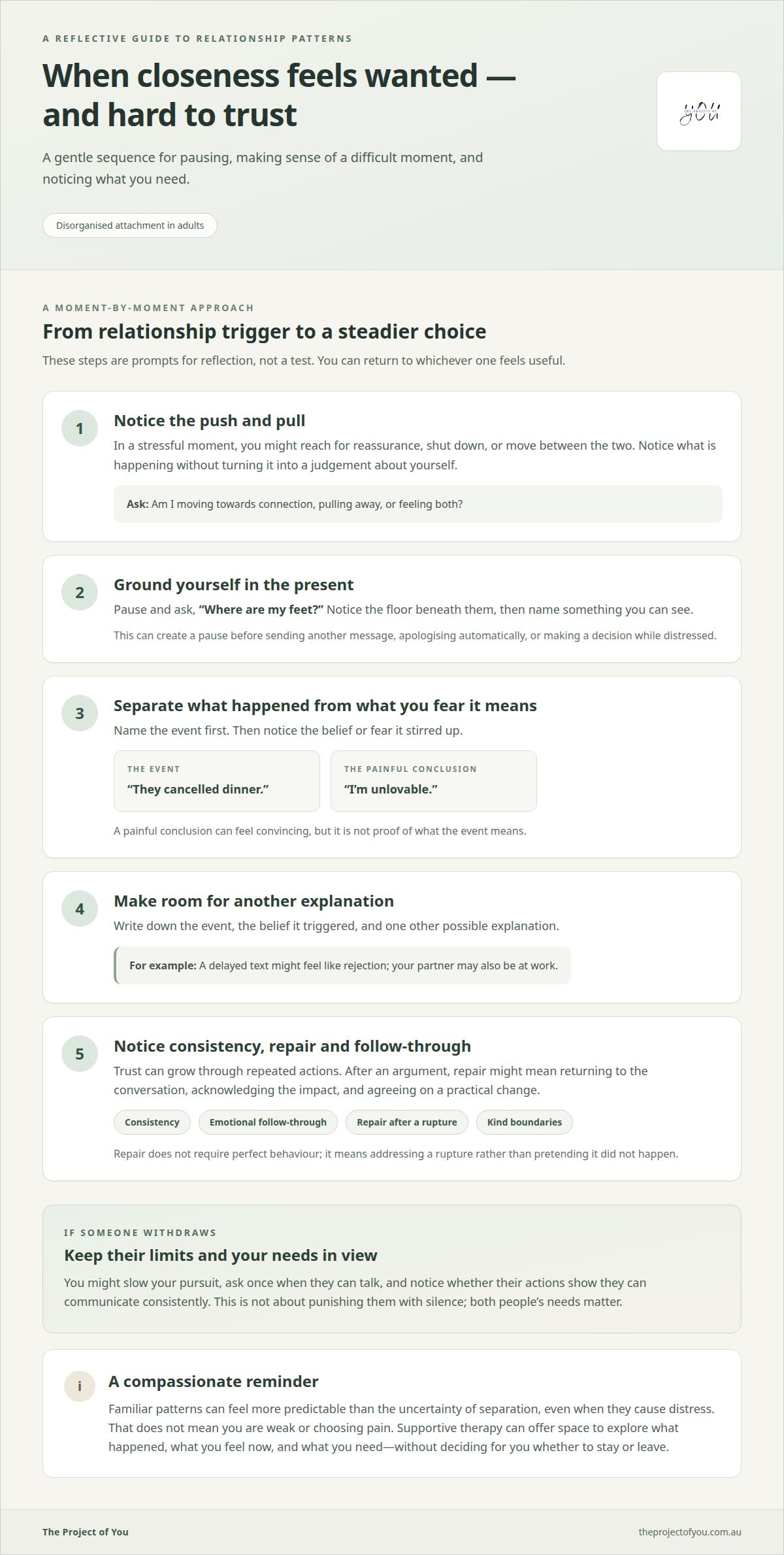
Beliefs about love and safety can develop through repeated experiences, not just one moment. If a caregiver sometimes offered comfort and sometimes frightened or rejected a child, closeness could become confusing. As an adult, someone may long for reassurance yet feel exposed when a partner responds warmly. That tension can make it harder than expected to leave a painful relationship.
Some beliefs sit quietly beneath everyday decisions: “I’m too much”, “people leave”, or “I can only rely on myself”. A delayed text, for example, might feel like proof of rejection, even when a partner is at work. Another person may dismiss their own needs, believing that asking for comfort will cause conflict. These beliefs can feel like facts, though they may reflect earlier ways of making sense of relationships.
Leaving a relationship can stir grief, hope and fear all at once. After an argument, someone may remember tender moments and decide the relationship will change, then feel unsafe again when the next conflict comes. This doesn’t mean they are weak or choosing pain. Familiar patterns can feel more predictable than the uncertainty of separation, even when they cause distress.
When emotions begin to spiral or you feel disconnected, try a simple grounding step: ask, “Where are my feet?” Notice the floor beneath them, then name something you can see. This brings your attention to the present rather than imagined outcomes. It can create a pause before sending another message, apologising automatically or making a decision while distressed.
Trust often grows through consistency, repair and follow-through. After an argument, for instance, a partner might return to the conversation, acknowledge their impact and agree on a practical change. Warm reassurance can help, while kind boundaries protect both people’s needs. Repair doesn’t require perfect behaviour; it means addressing a rupture instead of pretending it didn’t happen.
If you’re relating to someone who withdraws, matching their energy doesn’t mean punishing them with silence. It can mean slowing your pursuit, regulating your own response and noticing what they can genuinely offer. For example, ask once when they can talk, then consider whether their actions show they can communicate consistently. Their limits matter, and so do your needs.
Try separating what happened from what you fear it means. Write down the event, the belief it triggered and another possible explanation. “They cancelled dinner” is an event; “I’m unlovable” is a painful conclusion, not proof. This small step can make disorganised attachment in adults easier to understand without turning a relationship pattern into a fixed identity.
A calm, predictable therapeutic space can help you explore these beliefs without shame. A therapist can support you in reflecting on what happened, what you feel now and what you need in relationships. The aim isn’t to make you stay or leave. It’s to help you make choices with greater awareness, steadier boundaries and room for your values.
Childhood experiences and attachment patterns
Children learn about relationships through everyday interactions with caregivers. A toddler who reaches for comfort after a fall, for example, experiences how an adult responds to distress. Repeated moments of soothing, play and reunion after separation can shape expectations about asking for help. These expectations develop within a child’s relationships and circumstances, not from one isolated interaction.
Caregivers may be loving and still struggle to respond consistently. A parent managing grief, illness or intense stress might comfort a child at one moment, then seem withdrawn later. A child may respond by closely watching the parent’s mood or hiding a need. These behaviours can be understood as attempts to manage uncertainty in that particular environment.
Attachment theory describes patterns in how children seek closeness and respond to separation. One child, for example, might cry when a caregiver leaves, then settle when they return. Another might keep playing but avoid seeking comfort. These observations describe behaviour in a particular situation. They don’t sum up a child’s personality or tell the whole story of family life.
Disorganised attachment is a term used when a child’s behaviour around a caregiver seems difficult to organise into a consistent approach. Imagine a child moving towards a parent for comfort, then freezing or turning away when the parent approaches. That response may reflect conflicting feelings in the moment. It doesn’t establish why the child responded that way or predict their adult relationships.
Children’s responses can change as their relationships and environments change. A child who feels unsettled with one caregiver might readily seek comfort from another trusted adult. Changes in routine, stress at home or a new source of support can also affect a child’s behaviour. Considering the broader context is more helpful than drawing conclusions from one scene.
To reflect on your own experience, begin with a present-day reaction, such as feeling tense when someone offers help. Ask what you noticed, what you expected and what would have felt supportive. Stay curious. Childhood memories may be patchy, and you don’t need a complete account to understand what you need now.
If a particular memory comes to mind, separate what you remember from what you’re interpreting. “I sat alone after school” is different from “No one cared about me.” Both the event and its meaning deserve attention, but they aren’t the same. This distinction can help you explore your history without rushing towards blame or certainty.
If you’d like support exploring how earlier experiences relate to present-day responses, a conversation about attachment patterns can offer a place to reflect at a manageable pace.
Disorganised attachment and fearful avoidance
Fearful avoidance describes wanting emotional closeness while expecting it to bring hurt, rejection or loss of control. In adult relationships, this can look like moving towards a partner, then pulling back as intimacy deepens. Someone might share a difficult memory, feel exposed afterwards and become distant. This shift can confuse both people, especially when neither understands what triggered it.
“Disorganised attachment” and “fearful-avoidant attachment” are often used for closely related patterns. The terms describe an approach-and-retreat response, not a fixed personality or diagnosis. One person might send several messages after a partner leaves a disagreement, then feel overwhelmed when the partner replies. Another might want support but insist they’re fine when asked what’s wrong.
Fearful avoidance can lean towards anxious responses, withdrawal or shifts between the two. During a tense conversation, someone may seek reassurance and ask, “Are we all right?” If reassurance comes, they might struggle to trust it and change the subject. Someone else may go quiet, leave the room or feel emotionally numb. The response can depend on the situation and the person’s sense of safety.
How is disorganised attachment assessed or diagnosed, and can an online quiz identify it? A qualified mental health professional can explore relationship history, current patterns and their impact through conversation. An online quiz can prompt reflection, but it cannot diagnose you. Attachment language describes relational patterns, while a mental health diagnosis requires a separate clinical assessment.
What are the risks of self-diagnosing disorganised attachment or using attachment labels? A label may help name an experience, but treating a quiz result as a diagnosis can narrow your understanding or make change feel impossible. Calling yourself “avoidant”, for instance, might obscure how differently you respond with a trusted friend, a partner or during conflict.
It can help to track a specific moment instead of deciding what type of person you are. After a difficult exchange, note what happened, what you felt in your body and what you wanted to do next. For example: “They asked to talk later; my chest tightened; I wanted to cancel the weekend.” This separates an event from the meaning you attach to it.
Then consider what might support a steadier response. You could pause before replying, place both feet on the floor and identify the need beneath the impulse. Is it reassurance, space, clarity or time to settle? Naming a need doesn’t oblige a partner to meet it immediately, but it can make communication more direct and reduce the pressure to guess.
If the pattern is affecting your relationships, consider discussing specific examples with a therapist. You don’t need the right label or a complete account of childhood to begin. Starting with one recent moment, such as withdrawing after receiving affection, gives you something concrete to explore together.
Meaning of disorganised attachment in adult relationships
In an adult relationship, disorganised attachment can mean wanting connection while also experiencing closeness as unsafe. A caring question such as “How was your day?” may feel comforting one evening and intrusive another. Someone may value their partner deeply, yet feel exposed when affection or emotional honesty increases. Both reactions can be real at once.
This tension can shape ordinary moments, not just major disagreements. Imagine a couple planning a weekend together. One partner looks forward to spending time together, then feels trapped when the plans become definite. They might ask to change the arrangement, while the other partner hears rejection. Neither response alone captures the whole relationship.
For an adult with disorganised attachment, a partner’s actions may take on meanings shaped by earlier expectations. A brief pause before answering could feel like impending criticism, even when the partner is choosing their words carefully. The body may react before there’s time to check what is happening now, making a small moment feel charged.
Couples can get caught in a cycle. One person seeks closeness to feel secure; the other senses pressure and asks for space. The first then experiences distance as abandonment, while the second may feel pursued. Naming the cycle, rather than blaming either person, can help them discuss what happens between them.
For example, one partner might say, “When you went quiet, I worried we were disconnected.” The other could explain, “I needed time to settle, not to end the conversation.” These statements separate impact from intention and give the couple something specific to work with, rather than arguing over who is unreasonable.
Emotional safety is built through observable actions. A partner can say when they need a pause, agree on when to return and follow through. The other can respect that pause while expressing a need to reconnect. A clear plan, such as resuming the conversation after dinner, makes taking space less ambiguous.
Boundaries matter too. Understanding a partner’s fears doesn’t mean accepting insults, threats or repeated disregard for consent. You can care about what shaped a response and still say, “I want to talk, but not while we’re raising our voices.” Compassion and self-protection can belong in the same relationship.
Progress is easier to notice through small changes than dramatic promises. A couple might repair a misunderstanding before bedtime or ask directly for reassurance instead of testing each other. Reflect on a recent moment: what helped each person feel heard, and what made connection harder? Such details can show where trust is taking root.
What are common signs and behaviours of disorganised attachment in adults?
Two broad patterns may appear: anxious-leaning or changing responses, and shutting down or disconnecting. These are not fixed categories. Someone may seek frequent contact after a disagreement, while another person in the same situation might go quiet and avoid the conversation. Responses can also vary across relationships and situations.
An anxious-leaning response may involve strong concern about changes in closeness. A partner taking longer to reply could prompt repeated messages, checking for signs of rejection or asking for reassurance. The person might then feel embarrassed about needing reassurance and pull away. The shift from seeking connection to retreating can feel confusing, but noticing its sequence can offer useful information.
Someone who tends to shut down may struggle to speak during conflict. They might go blank when asked what they’re feeling, leave the room or focus on practical tasks instead. After a tense conversation, they may need time alone before reconnecting. Silence doesn’t automatically mean indifference; it can be a response to feeling overwhelmed.
Other signs can include feeling uneasy when affection increases, finding it hard to trust kind words or expecting conflict after a peaceful moment. A partner’s compliment, for instance, may bring warmth and suspicion at once. These reactions can affect emotional intimacy, but they don’t prove a particular attachment pattern or reveal someone’s whole story.
Notice what happens in a specific moment rather than treating one behaviour as a verdict. You could write down:
The situation: “My partner asked if I wanted to talk after dinner.”
The response: “I felt tense and said I was tired.”
The need: “I wanted reassurance, but also needed time to settle.”
This short record can help distinguish an immediate reaction from a longer-term pattern. If the same sequence appears around messages, plans or disagreements, consider what tends to happen just before it. A partner changing plans, for example, might bring up worry, anger or numbness. The aim is curiosity, not self-surveillance.
These behaviours can also overlap with responses to stress, grief or difficult experiences. Someone who withdraws during conflict may communicate openly with friends or feel safe in other parts of life. Context matters. It’s more useful to explore how a pattern affects trust, communication and wellbeing than to decide one sign defines you.
Try one small communication shift during a calm moment. You might say, “I want to stay connected, and I need a short pause before we continue.” This names both the wish for connection and the need for space. If these patterns repeatedly strain your relationships, book a conversation to explore your relationship patterns.
The Project of You | Trauma, Couples & Relationship Therapy Australia
The Project of You | Trauma, Couples & Relationship Therapy Australia offers Individual Counselling for people who want to understand confusing relationship patterns and their roots. Sessions provide space to explore what happens when closeness feels difficult, identify emotional needs and consider practical ways to respond with greater awareness.
If relationship stress leaves you caught between seeking connection and pulling away, professional support can help you make sense of the experience without reducing yourself to a label. The Project of You also offers Nervous System Regulation & Restoration to support awareness of stress responses in the body.
If you’d like to talk about support, contact The Project of You | Trauma, Couples & Relationship Therapy Australia.
Take one thoughtful step towards change
Recognising disorganised attachment in adults can give you language for experiences that once felt difficult to explain. A label is a starting point, not a verdict on your character or a prediction for your relationships. What matters next is meeting your feelings with curiosity and making choices that reflect the kind of connection you value.
You might begin by noticing a moment when you feel pulled between closeness and distance. Pause, name what you need and consider how to express it clearly. Small acts of self-understanding can create room for different responses over time. You don’t have to make sense of everything at once.
Alongside counselling, The Project of You offers The Healing Feminine Workshops and Self Love e-Books as further opportunities for reflection and learning. Choose the support that feels relevant to where you are now.
Your past may help explain your path, but it doesn’t have to define every step ahead.
Frequently Asked Questions
How Does the Disorganised or Fearful Avoidant Attachment Style Develop?
It may develop when a child’s experiences of care make closeness difficult to predict. For example, a child may seek comfort from a caregiver but also become wary of their reactions. Later relationships and experiences can also influence how someone approaches trust. This pattern isn’t proof of a particular childhood event, and people can respond differently to similar circumstances.
How Can I Heal?
Start by noticing what happens in one relationship moment, rather than trying to change everything at once. You might record the situation, your feelings and what you needed, then discuss that example with a therapist. Practising a clear request, such as “Could we choose a time to talk?”, can make communication more manageable. Progress is personal; the aim is greater understanding and choice, not perfection.
How Does Attachment Form in Early Childhood?
Attachment forms through repeated interactions between a child and the people who care for them. When a distressed child is comforted, for instance, they experience how that caregiver responds to a need. Everyday routines, soothing and reunion after separation all contribute to a child’s expectations of care. These expectations can adapt as relationships and circumstances change.
What do relationships with fearful-avoidant adults look like?
They can involve warmth and connection alongside difficulty trusting or sustaining closeness. Someone might enjoy planning a date, then feel uneasy as it approaches and cancel. Another person may want to discuss a problem but struggle to stay present as emotions rise. These are possible experiences, not a checklist; communication, context and each person’s needs shape every relationship.
What does disorganised mean in relationships?
It describes responses to closeness that may feel difficult to organise into one consistent approach. A person might want support, then feel overwhelmed when it arrives. In a relationship, this can leave both people uncertain about what would help. Talking about the immediate need, such as reassurance or a pause, can be more useful than treating the term as a judgement about either partner.
What is disorganised attachment in adults?
In adults, disorganised attachment describes a relationship pattern in which connection may feel both wanted and unsettling. Someone might seek emotional closeness, then become guarded after sharing something personal. The term can describe an experience, but it isn’t a diagnosis or a complete account of someone’s identity. Responses can differ across relationships and may shift with greater understanding and support.
What causes disorganised attachment to develop in childhood?
It may develop when a child’s caregiver is a source of comfort at some times and fear or confusion at others. Caregiving can be affected by stress, frightening behaviour, emotional unavailability or changing circumstances. No single explanation fits everyone. An adult can explore their history without assuming a specific event occurred or placing all responsibility on one caregiver.
How does disorganised attachment affect adult relationships, dating, and intimacy?
It may influence how someone handles dating uncertainty, emotional vulnerability and disagreements. After a promising date, for instance, someone might feel excited but worry about being judged, then delay replying. Intimacy can bring tenderness as well as discomfort. Partners can discuss pacing, communication preferences and boundaries, while remembering that one person’s attachment pattern doesn’t explain every difficulty or determine how a relationship will unfold.


Comments