.png)

Finding a Therapist in Australia: How to Choose the Right Fit

What if the right therapist isn’t simply the person with the most familiar title, but someone whose training, approach and way of listening fit what you need? Finding a therapist in Australia can feel difficult when practitioner titles and therapy approaches seem unfamiliar. It’s natural to wonder whether you’ll feel understood rather than judged. With hundreds of clients from all over the world, psychotherapist Azita Abdollahian understands how overwhelming the process can be.
You don’t need to know exactly what kind of therapy you need before you begin. Practitioners have different qualifications and registration pathways, and a title alone won’t tell you whether someone’s experience, approach or practical arrangements suit you. It’s reasonable to ask questions, compare options and notice how you feel during an initial conversation.
This guide offers a practical way to shortlist therapists, check their background and approach, and ask useful questions before or during a first session. You’ll also find ways to consider availability and other practical details. Choosing support is a process, not a test. You can move at your own pace and reassess the fit as you go.
Table of Contents
Finding a therapist: when might professional support help?
Therapy can offer a supported space to make sense of what’s troubling you and consider possible next steps. You might seek support because distress has been lingering, a relationship is changing, or you want to understand yourself more clearly. You don’t need a diagnosis, a crisis or a perfectly formed explanation before asking whether support could be useful.
Sometimes the reason becomes clearer as you talk. Perhaps you and someone close keep having the same argument, then feel distant afterwards. Or you’re carrying stress alone and notice it’s affecting sleep, work or your patience with people you care about. These experiences don’t mean you’ve failed to cope. They may be a prompt to explore what’s going on with someone trained to listen.
What can therapy help you explore?
Therapy may help you explore anxiety, grief, trauma, relationship strain or emotional patterns that keep returning. It can help you notice what you feel, what may be shaping your responses and what choices are available. Your goals might include understanding an experience, finding ways to cope, communicating differently or making a change. Psychotherapy is a broad term for talking-based approaches, and methods vary. No single approach or practitioner suits everyone.
What if you are not sure you are ready?
Readiness isn’t a test you have to pass. You might start by asking yourself, “What would I hope feels different if I had support?” The answer could be having more room to think, feeling less alone with a decision, or understanding why a familiar conflict leaves you upset. You don’t need certainty about the outcome to enquire.
An initial enquiry gives you a chance to ask questions and consider whether the practitioner’s experience and approach seem relevant. You can choose what feels manageable to share. You don’t have to tell your whole story straight away. If finding a therapist feels like a big step, choose one small action, such as writing down what you’d like help with or noting a question to ask.
What might you want more space to understand? Even a tentative answer can give you a place to begin, while leaving you in charge of the pace and direction.
How to compare therapist qualifications, experience and approach
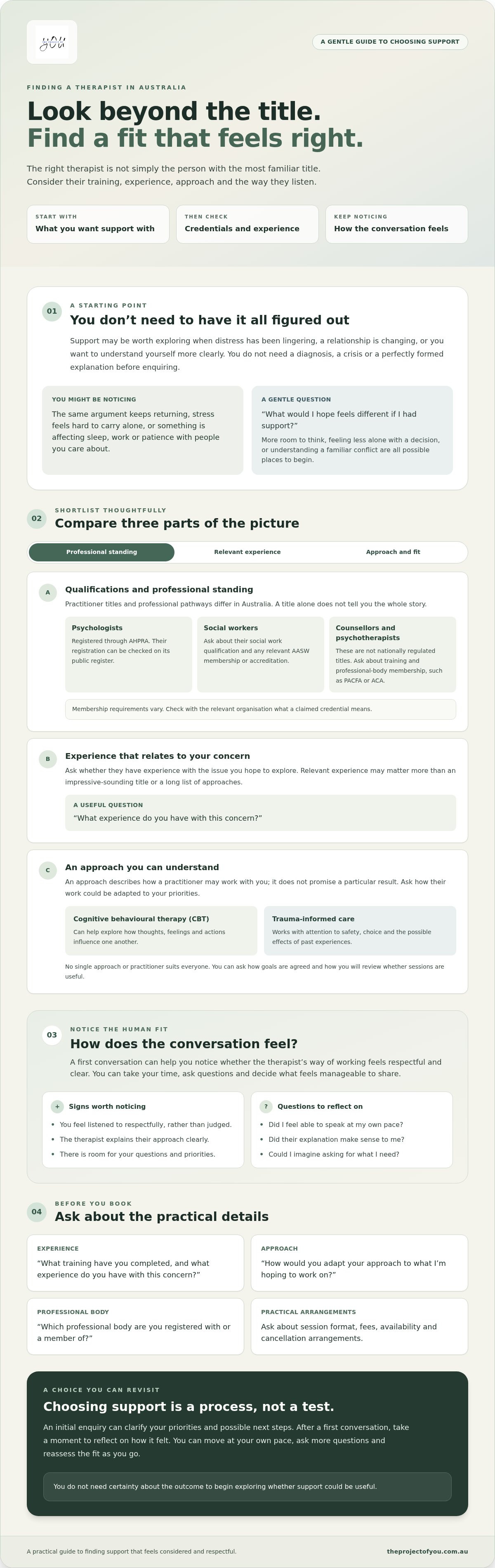
When finding a therapist, consider three things together: their qualifications and professional standing, their experience with concerns like yours, and whether their way of working makes sense to you. A long list of approaches or an impressive-sounding title doesn’t automatically mean someone is the right fit. Focus on information you can check and questions you can ask.
Which qualifications and credentials should you check?
Practitioner titles and professional pathways differ in Australia. Psychologists are registered through the Australian Health Practitioner Regulation Agency (AHPRA), and you can check a psychologist’s registration on its public register. Social workers have a different professional pathway. You can ask about their social work qualification and any relevant Australian Association of Social Workers (AASW) membership or accreditation they hold. “Counsellor” and “psychotherapist” are not nationally regulated titles, so ask about training and whether the practitioner belongs to a professional body such as PACFA or the Australian Counselling Association (ACA). Membership requirements vary, so check what a claimed credential means with the relevant organisation.
Ask directly: “What training have you completed, and what experience do you have with this concern?” A clear answer can help you understand their background without needing to interpret unfamiliar abbreviations.
How do therapy approaches relate to your needs?
An approach describes how a practitioner may work with you, rather than promising a particular result. Cognitive behavioural therapy (CBT), for example, can help explore how thoughts, feelings and actions influence one another. Trauma-informed care means working with attention to safety, choice and the possible effects of past experiences. Neither approach is automatically right for everyone. Ask how the therapist would adapt their work to your priorities, agree on goals and review whether sessions are useful.
Use this comparison when reviewing profiles or speaking with practitioners:
You don’t have to settle every question before making contact. If you’re looking for immediate support options while comparing practitioners, healthdirect lists Australian mental health helplines. If you’re considering individual counselling with The Project of You | Trauma, Couples & Relationship Therapy Australia, you can review booking options and ask questions about fit and next steps.
How can you tell whether a therapist feels like the right fit?
You may not feel completely at ease in an initial session, especially if talking about personal experiences is unfamiliar. Feeling nervous or uncertain at first doesn’t automatically mean the therapist is a poor fit. Notice how they respond: do they listen respectfully, show curiosity without making assumptions, explain things clearly and leave room for your questions?
Trust can take time to build. You might leave a session with a lot to think about or feel unsure how to put something into words. That’s different from repeatedly feeling dismissed, pressured or unable to raise concerns. Fit isn’t about agreeing on everything. It’s something you and the therapist can discuss and review together.
What should a safe and collaborative session feel like?
A respectful session allows you to share at a pace that feels manageable. You shouldn’t have to disclose more than you’re ready to. You can ask why a question is being asked or request a pause. A therapist should be able to explain their approach in language you understand and welcome questions about what happens next.
Choice and boundaries matter. You may disagree with a reflection or say that a suggestion doesn’t feel right for you. A collaborative therapist can make space for that conversation rather than treating disagreement as a problem. After a session, consider: Did I feel listened to? Could I speak honestly about what I needed?
What if you do not feel understood?
If something doesn’t sit well, you could name it if it feels safe to do so. For example: “I’m not sure I understood what you meant. Could you explain?” or “I’d like to slow down before we go further.” Notice whether the response is respectful and open to exploring your concern. Your feedback can help clarify whether you can work through the moment together.
If you continue to feel unheard or uncomfortable, you’re allowed to seek another therapist. That isn’t a failure, and it doesn’t mean either person is to blame. Finding a therapist is partly about identifying someone whose way of working feels workable for you. If you’re unsure whether you need a psychologist or psychiatrist, Healthdirect explains the difference and offers guidance on finding a psychologist in Australia.
What should you ask before booking and at your first appointment?
A few clear questions can make the first step feel more manageable. Note what you’d like help with, shortlist practitioners whose experience seems relevant, then ask about practical arrangements before booking. After your first contact or appointment, take a moment to consider whether the information was clear and the next step feels workable.
What questions can you ask before making an appointment?
You can keep your enquiry brief. You don’t need to share sensitive details before you understand how the practitioner works. Consider asking:
Experience: “Do you work with concerns like mine?”
Approach: “How do you usually begin, and how would we decide what to focus on?”
Practicalities: “What appointment formats are available, what are the fees and payment arrangements, and what is the cancellation policy?”
Confidentiality: “How is what I share kept confidential, and what are the limits?”
Ask for clear information about confidentiality and its limits before discussing anything you’d prefer to keep private. Arrangements can vary, so check them directly with the practitioner rather than relying on assumptions.
How can you prepare for the first session?
You don’t need to prepare a polished account of your life. A few notes can help you find your starting point: what prompted your search, what you’re hoping to understand, and any questions you want answered. If you’re seeking support for a relationship concern, ask whether the practitioner works with individuals, couples or both, and which option may fit your situation.
During the appointment, you can ask for something to be explained, pause or say you’re not ready to discuss a particular detail. Afterwards, consider: Did I feel listened to? Were the approach and next steps explained clearly? Does continuing feel manageable, including the practical arrangements? You don’t have to decide everything in the room. Finding a therapist can involve gathering information, reflecting and choosing at a pace that feels right for you.
Finding a therapist with The Project of You: choose your next step
The Project of You | Trauma, Couples & Relationship Therapy Australia offers individual counselling for people wanting space to explore emotional or relationship concerns. It’s one option to consider as you compare practitioners. The right choice depends on what you’re looking for, the practitioner’s experience and approach, and whether their way of working feels appropriate for you. No single approach suits everyone.
What can you discuss with a counsellor at The Project of You?
You might want to talk about a recurring relationship difficulty, the effects of infidelity, or patterns in how you respond to stress and closeness. The practice’s work includes CBT, attachment, infidelity and trauma-informed care. In broad terms, attachment work can help you explore how experiences of connection shape your expectations and responses in relationships. Trauma-informed care considers safety, choice and the possible impact of past experiences. These are areas of work, not promises about what counselling will achieve.
Azita Abdollahian, founder of The Project of You | Trauma, Couples & Relationship Therapy Australia, is a qualified social worker, psychotherapist and neurofeedback trainer. You can consider whether her professional background and experience may be relevant to your needs. If your main concern involves your relationship as a couple, ask whether individual or couples counselling better reflects what you’re hoping to work on. The focus and suitability of support are best discussed together.
How can you take a first step at your own pace?
Before making an enquiry, write down what you’d like help understanding and what you’d like to know about the practitioner’s approach. For example, ask how counselling usually begins, whether your concern is within their experience, and how you can discuss practical arrangements such as session format, fees and availability. These questions can help you decide whether to take another step, without obliging you to share more than you’re ready to.
A first conversation can help clarify your concern, goals and possible next steps. You’re entitled to ask questions and take time to consider the answers. If you decide to book, you can begin with what feels manageable and discuss how the work is going as you proceed. Finding a therapist is a personal decision. Choosing to enquire is one way to gather information, not a commitment to a particular outcome.
Take your next step towards support
Finding a therapist doesn’t mean having every answer before you begin. Start by checking qualifications and relevant experience, then use an initial conversation to ask about approach, practical arrangements and whether you feel listened to. The right fit may take time to assess, and it’s reasonable to reflect or raise questions as you go.
The Project of You | Trauma, Couples & Relationship Therapy Australia offers individual, couples and parenting counselling. Founder Azita Abdollahian is a qualified social worker, psychotherapist and neurofeedback trainer. Whether the practice’s experience and approach suit your needs is something you can discuss together. You can ask questions and decide what feels manageable, without expecting a particular outcome.
You’ve already taken a thoughtful step by learning what to look for. Let your next one be guided by your needs and your own pace.
Frequently Asked Questions
How do I find a therapist who is right for me?
Start by identifying what you’d like support with, then compare practitioners’ qualifications, relevant experience and approach. Check whether their work relates to your concern, such as anxiety, grief or relationship difficulties. Contact a shortlist with questions about how they work and practical arrangements. Finding a therapist is a process, not a one-off test. An initial conversation can help you decide whether taking another step feels right.
What should I look for when choosing a therapist in Australia?
Look for clear information about the practitioner’s qualifications, professional registration or membership, experience and approach. Psychologists are registered with the Australian Health Practitioner Regulation Agency (AHPRA); other practitioner titles and professional pathways differ. Ask what training they’ve completed and whether they have experience with concerns like yours. Consider practical details too, including appointment format, fees, availability and cancellation arrangements, so you can judge whether the option is workable for you.
How do I know if a therapist is a good fit?
A therapist may be a good fit if you feel listened to and respected, their explanations make sense, and you can ask questions or express a different view. You might still feel nervous or unsure, particularly at first, so discomfort alone doesn’t prove the fit is wrong. Notice whether you can share at a manageable pace and whether concerns are met with openness. If you continue to feel dismissed, you can discuss it or consider another practitioner.
What happens at a first therapy appointment?
A first appointment commonly gives you and the practitioner a chance to discuss what brought you in, what you hope to understand and possible next steps. You can ask about their approach and clarify anything that feels uncertain. You don’t need to tell your whole story straight away. It may help to jot down a few questions beforehand, and you can pause or say you’re not ready to discuss something.
Can I change therapists if I do not feel comfortable?
Yes, you can decide to look for another therapist if the fit doesn’t feel right. If it feels safe, you might first explain what’s concerning you, such as needing a slower pace or clearer explanations, and see whether the practitioner responds respectfully. Sometimes a conversation helps clarify what you need. If you’d rather move on, that’s a valid choice. Seeking a different practitioner doesn’t mean you’ve failed.
Do I need a diagnosis before finding a therapist?
No, you don’t need a diagnosis to enquire about support. People seek therapy for many reasons, including ongoing stress, grief, relationship changes or a wish to understand recurring patterns. You can begin with an everyday description, such as “I feel stuck in the same arguments” or “I’m finding it hard to manage stress”. A practitioner can discuss whether their experience and approach may suit what you’re looking for.
How much does seeing a therapist cost in Australia?
There isn’t one standard fee for therapy in Australia. Costs vary between practitioners and may depend on their qualifications, session length and arrangements. Ask for the fee, payment details and cancellation policy before booking, and check whether any rebate may apply to the specific service and practitioner. Some eligible psychology services may attract a Medicare rebate with the appropriate referral. Don’t assume a rebate applies to every therapist or service.


Comments