.png)

Attachment Based Parenting Support Australia: Family Guide
- Azita Abdollahian

- 2 hours ago
- 13 min read
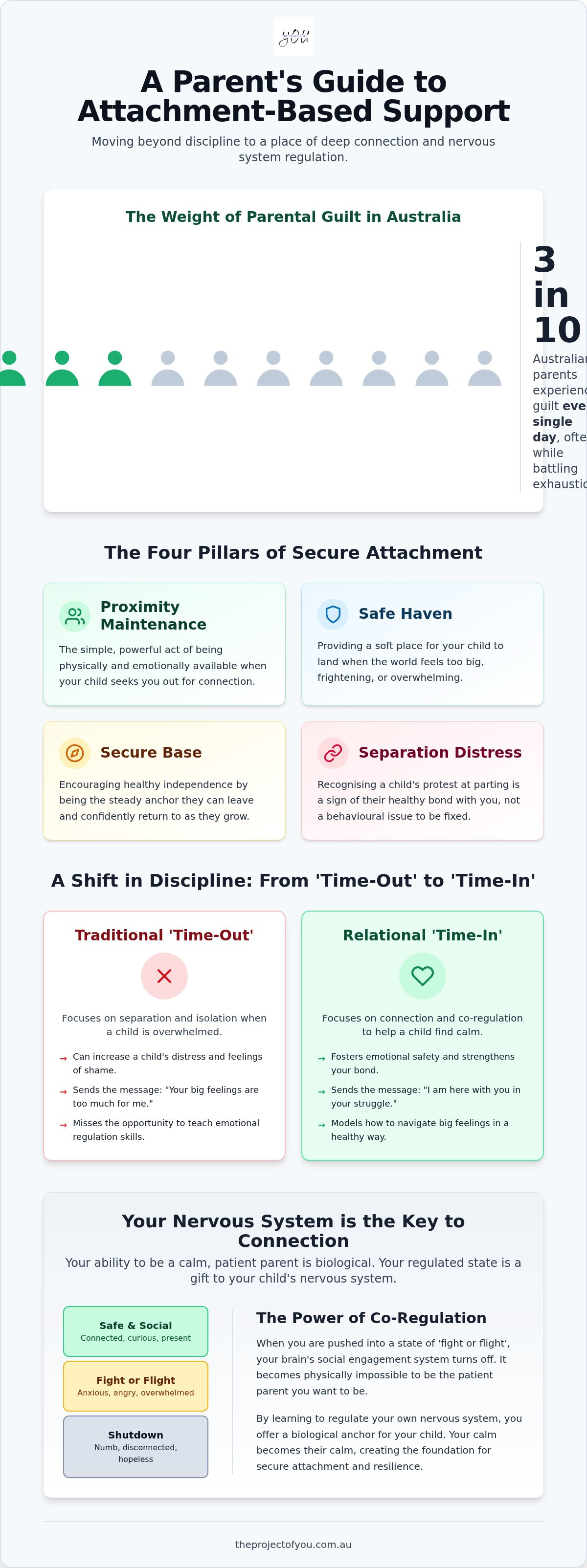
Did you know that over 3 in 10 Australian parents experience feelings of guilt every single day, often while grappling with the exhaustion of being sleep-deprived? It is a heavy burden to carry, especially when you are searching for attachment based parenting support Australia but feel lost in a sea of conflicting advice. You might feel caught between the desire to be a "gentle" parent and the reality of an overwhelmed nervous system that feels like it is constantly on the verge of snapping. If you are tired of "losing it" with the kids and then carrying that weight into the next day, please know that your struggle is valid and deeply human.
When people ask me for my expert opinion, I answer with a question: What if the key to a calmer home isn't more discipline for your child, but more compassion and regulation for yourself? This guide will show you how to move beyond generic parenting tips to find transformative support that honours both your child's needs and your own nervous system. We will explore how to break intergenerational patterns and use practical tools for regulation, helping you move from a state of survival into a space where you feel truly in tune with your family and confident in your own parenting gut.
Table of Contents
What is Attachment-Based Parenting Support in Australia?
Have you ever felt that parenting has become a series of "to-do" lists rather than a shared journey? It's easy to get caught in the trap of managing behaviours while losing sight of the heart of the matter: the connection. This is where attachment based parenting support Australia offers a different path. Rather than focusing on how to make your child comply, it looks at the space between you. It's a shift from seeing a child's outburst as a problem to be fixed, toward seeing it as a message to be understood.
Rooted in Attachment theory, this approach views the parent and child as a "dyad," a two-person system where each nervous system affects the other. In Australia, we've seen a beautiful movement away from old-school behavioural models, which often relied on rewards and punishments, toward relational models that prioritise emotional safety. It is no longer about "velcro" parenting, where the goal is constant physical closeness, but about becoming a "secure base." This means your child feels safe enough to explore the world, knowing they can always return to you for comfort and restoration.
The Four Pillars of Secure Attachment
I teach these in my retreats and workshops to over 100 clients a year with incredible success. Think of these pillars as the architecture of your child's emotional world. They aren't rigid rules, but rather a guide to help you navigate the daily transitions of family life. When we understand these, we can stop second-guessing our "gut" and start responding with clarity.
Proximity Maintenance: The simple, powerful act of being physically and emotionally available when your child seeks you out.
Safe Haven: Providing a soft place to land when the world feels too big, frightening, or overwhelming.
Secure Base: Encouraging healthy independence by being the steady anchor they can leave and return to as they grow.
Separation Distress: Recognising that a child's protest at parting is often a sign of their healthy bond with you, rather than a "behavioural issue."
Why Traditional 'Time-Outs' are Fading in Australia
For decades, the "time-out" was the gold standard of discipline in many Australian homes. However, modern research and trauma-informed practices have highlighted a significant flaw; isolation often increases a child's distress when they most need connection. We are seeing a significant shift toward "Time-In," where we stay with the child during their big feelings. This fosters emotional co-regulation, helping their developing brain learn how to find calm through your presence. Instead of using shame to correct behaviour, we use curiosity to understand the need beneath the action. It's an invitation to move away from "fixing" and toward truly being with your child in their moments of struggle.
The Science of Connection: Why Your Nervous System is the Key
Why is it that we can read every parenting book on the shelf, yet still find ourselves yelling at the very people we love most? The answer isn't a lack of willpower; it's biology. Our ability to provide attachment based parenting support Australia often depends on the state of our own nervous system. Think of your nervous system as a ladder. At the top, you are safe, social, and connected. In the middle, you're in "fight or flight," where everything feels like a threat. At the bottom, you might feel shut down or numb. When you are pushed into that middle rung, your brain's "social engagement" system turns off, making it physically impossible to be the calm, patient parent you want to be.
This biological reality creates a ripple effect. If your nervous system is screaming "danger," your child’s system will mirror that distress, shutting down their own ability to listen or learn. We often call this the "Ghost in the Nursery," a term describing how our own childhood experiences and unmet needs can haunt our current parenting. Research from Relationships Australia suggests that while many parents understand the importance of a secure bond, actually maintaining that connection during stress is the real challenge. Co-regulation is the biological foundation of all secure attachment; it is the process where a regulated adult uses their own calm state to help a dysregulated child find their way back to balance.
Understanding Your Window of Tolerance
Every parent has a "window of tolerance," a space where they can handle the noise, the mess, and the big emotions without losing their cool. When you are pushed out of this zone, your logical brain goes offline. This is why you cannot use logic or reason with a toddler (or a teenager) when you are both dysregulated; it’s like trying to talk to someone while a fire alarm is blaring. The goal isn't to be perfect, but to focus on "Repair." Acknowledging a rupture and coming back together with warmth is what builds true resilience.
Nervous System Restoration as Parenting Support
Sometimes, we need more than just a deep breath. As an expert in trauma-informed therapy and somatic healing, these practices can help "reset" your baseline, expanding your window of tolerance so you aren't living on the edge of burnout. By focusing on your own restoration, you move from "reacting" to old patterns toward "responding" with presence. If you feel your nervous system needs a gentle space to land, you might consider exploring a supportive session to help find your way back to centre.
Choosing the Right Attachment Theory Parenting Course or Support
Finding the right fit for your family is a deeply personal task. When you begin looking for attachment based parenting support Australia, you'll likely encounter a wide array of options, from low-cost e-books to intensive therapeutic retreats. The first step is to ask yourself: am I looking for information, or am I looking for transformation? Education is wonderful for understanding why your child acts out, but deep healing is often required to change how you feel in those moments. It is the difference between knowing what to do and actually being able to do it when the house is in chaos.
In the Australian landscape, it's vital to check the qualifications of your provider. Are they a registered mental health professional, such as a Clinical Social Worker or Psychotherapist? Do they engage in regular clinical supervision? These aren't just bureaucratic boxes; they ensure your support is safe, ethical, and grounded in the latest research. You might also see labels like "Evidence-Based" or "Evidence-Informed." While "Evidence-Based" refers to programmes tested in strict clinical trials, such as Circle of Security or Tuning into Kids, "Evidence-Informed" means the practitioner integrates various proven theories, like Polyvagal Theory and Gottman methods, to create a bespoke approach for your unique family dynamics.
Comparison: Self-Paced Courses vs. Therapeutic Counselling
Self-paced courses are excellent for gathering general knowledge on a budget. They allow you to learn at your own speed, which is helpful when you're already stretched thin. However, therapeutic counselling is often essential if you find yourself stuck in deep-seated patterns or carrying your own childhood trauma. For those looking for a "deep dive" into specific topics, immersive workshops can bridge the gap. These settings provide a safe container to explore boundaries and intimacy with professional guidance, offering a level of nuance that a pre-recorded video simply cannot match.
Red Flags to Avoid in Parenting Support
Identifying what doesn't feel right is just as important as finding what does. Be wary of any programme that promises a "perfect" child or "guaranteed" results within a specific timeframe. Attachment is a relationship, not a transaction; it requires time, patience, and presence. Avoid support that relies on shame, fear, or rigid schedules that ignore your child's individual needs. Most importantly, if a provider focuses solely on the child's behaviour while ignoring your own mental health or burnout, they are missing half the equation. True support should always hold space for the parent's well-being as much as the child's development.
How to Identify Your Own Attachment Style as a Parent
Understanding your own attachment style is a courageous step toward a more peaceful home. You can do this under the expert guide and care of Azita Abdollahian who specialises in all things healing, relationships, and self development. It isn't about looking for someone to blame or labelling yourself as "broken" but rather about looking at the emotional blueprint you were given as a child. Most of us aren't born with a perfectly secure attachment; we are either "earned secure" or still in the process of working toward it. This inner work is a cornerstone of effective attachment based parenting support Australia, as it allows us to show up for our children with a clearer and more regulated presence.
A secure parent generally feels comfortable with both intimacy and independence. They can hold a child's big feelings without becoming overwhelmed, and they trust in the strength of the bond even during conflict. However, many of us lean toward other styles based on our own upbringing. An anxious attachment style might manifest as "over-functioning," where you feel a constant need to fix everything or a deep-seated fear that your child might reject you. If you have an avoidant style, you might find intense emotions, whether they belong to your child or yourself, uncomfortable. This often leads to a preference for independence and a tendency to minimise distress. For some, a disorganised style can create a "frightened or frightening" cycle, where the parent feels stuck in a loop of trauma and requires specialised clinical support to find a sense of safety.
Reflective Questions for Your Parenting Journey
Taking a moment to pause and reflect can be incredibly grounding. It helps you move from a place of automatic reaction to one of conscious choice. Consider these questions with a spirit of gentle curiosity:
How did my parents respond to my big emotions when I was a child? Was there space for my tears, or was I told to be "strong" and quiet?
What is my "go-to" reaction when my child is distressed today? Do I want to fix it immediately, or do I feel a desire to withdraw?
Do I feel comfortable asking for support when things get tough, or do I feel like I must "do it all" to be a good parent?
Moving Toward 'Earned Security'
The beautiful truth is that your attachment style is not a life sentence. The power of making sense of your own story allows you to break intergenerational patterns that no longer serve your family. By processing your past, you can achieve "earned security," a state where you are no longer driven by old, unconscious fears. This is where individual counselling can be profoundly transformative, providing a safe space to heal your own internal wounds so you can better connect with your child. Self-compassion is the first step on this path. When you are kinder to yourself, you naturally find it easier to be the steady, secure base your child needs.
Cultivating Connection: How The Project of You Supports Australian Parents
At The Project of You, we believe that the most powerful tool you have as a parent isn't a technique or a clever strategy, but your own presence. Azita Abdollahian’s approach centres on the vital concept of "nurturing the nurturer," recognising that you cannot pour from an empty cup. When you seek attachment based parenting support Australia, you deserve more than just a list of "to-dos" that leave you feeling more overwhelmed. You need a space where your own nervous system is held with the same care and compassion you wish to provide for your child. What if your parenting journey could feel less like a series of fires to put out and more like a steady path toward mutual growth?
By integrating Nervous System Restoration into our work, we help you move beyond surface-level struggles. Trauma-informed parenting counselling is fundamentally different from generic advice because it honours the "why" behind your reactions. Generic tips often assume every parent starts from the same baseline of calm, ignoring the reality of burnout or the echoes of our own past experiences. Our approach treats your fatigue and frustration as valid signals rather than failures of character. This creates a foundation of psychological safety that allows for genuine, sustainable change within your family home.
Tailored Support for Every Australian Family
We understand that every family dynamic is unique, which is why we offer various ways to engage with our support services. Whether you are seeking a deep dive into your own history or a way to align with your partner, we provide a warm, professional container for that work.
Individual Counselling: These sessions focus on the "Parenting Self," helping you process your own attachment history and expand your window of tolerance.
Couple Counselling: We work with you and your partner to ensure you are both on the same page, fostering a "secure base" for your children together.
Digital Resources: For those who prefer a self-paced start, our Self-Love E-books provide a gentle way to begin the process of reflection and self-compassion.
Next Steps: Finding Your Calm Centre
Taking the first step toward support can feel daunting, yet it is a profound act of love for both yourself and your children. Booking an initial parenting support session is a simple way to begin shifting the energy in your home. In your first therapeutic consultation, we will sit together to understand your current challenges and explore the specific patterns you wish to change. There is no judgment here, only curiosity and a commitment to your well-being. It's never too late to repair a rupture or build a deeper connection. Your family’s story is still being written, and with the right support, the next chapters can be filled with more peace, more laughter, and a lasting sense of security.
Your Path to a More Connected Home
We have explored how your nervous system acts as the biological foundation for your child's security and why understanding your own attachment style is the essential first step toward breaking intergenerational patterns. Moving from a behavioural model to a relational one isn't about achieving perfection; it's about the profound beauty of repair and the courage to look inward with curiosity. Finding attachment based parenting support Australia that truly honours your unique family story allows you to move away from survival mode and into a space of genuine, steady presence.
As a qualified Psychotherapist and Social Worker, I am dedicated to providing evidence-informed trauma care with a holistic focus on nervous system restoration. You deserve a supportive partner who understands the complexities of the human condition and offers a structured way to navigate them with grace. You don't have to walk this path alone.
There is a gentler way forward for your family, and it begins with the decision to nurture yourself as much as you nurture your children. Your journey toward a calmer, more "in tune" home environment is waiting for you.
Frequently Asked Questions
What is the difference between attachment parenting and attachment theory?
Attachment theory is a scientific framework that explains how humans form emotional bonds, whereas attachment parenting is a specific parenting philosophy often focused on practices like co-sleeping or baby-wearing. You don't need to follow a specific set of lifestyle rules to apply the science of connection. The theory focuses on the quality of your relational bond and your ability to act as a secure base for your child's exploration.
Can I still have a secure attachment with my child if I work full-time?
You can absolutely build a secure attachment with your child while working full-time. Attachment is built on the quality of your interactions rather than the total number of hours you spend together. What matters most is your ability to be emotionally available, responsive, and present during the "reunion" moments. These consistent, high-quality connections at the start and end of the day provide the safety your child needs.
Is attachment-based parenting just 'permissive' parenting?
Attachment-based parenting is not permissive; it actually requires firm, loving boundaries to create a true sense of psychological safety. A secure base requires a parent who is "bigger, stronger, wiser, and kind." While we prioritise understanding a child's emotions, we don't allow them to dictate every rule. Boundaries are the essential structure that makes the emotional connection feel safe and predictable for the child.
How do I know if I need a parenting course or a therapist?
Choose a parenting course if you are looking for general education, but seek a therapist if you feel stuck in deep-seated emotional patterns or trauma. Courses provide a helpful map of child development and strategies. However, a therapist walks the path with you, helping you navigate the specific obstacles in your own history. If you find yourself "losing it" despite knowing the techniques, individual support is often necessary.
What should I look for in an attachment theory parenting course in Australia?
Look for attachment based parenting support Australia that is led by qualified mental health professionals and grounded in evidence-informed frameworks. Ensure the programme moves beyond surface-level behavioural tips to address nervous system regulation and the parent's own attachment history. Check if the provider is a registered social worker or psychologist to ensure you are receiving high-quality care that respects the complexity of family dynamics.
Can attachment styles be changed in adulthood?
Yes, attachment styles are not a life sentence and can be shifted through a process known as "earned security." This involves making sense of your own story and learning new ways to regulate your nervous system. With the right therapeutic support and self-reflection, you can move from an anxious or avoidant style toward a more secure way of relating to yourself and your children.
Does Medicare cover attachment-based parenting support?
Medicare rebates are available for therapeutic sessions with a registered psychologist or social worker when you have a Mental Health Treatment Plan from your GP. While general parenting advice is not typically covered, individual therapy that addresses the parent's mental health, anxiety, or trauma often is. You should check with your specific provider regarding their eligibility and how their services fit within the Australian healthcare system.
What happens if I didn't have a secure attachment with my own parents?
You are not destined to repeat the patterns of your past just because you lacked a secure attachment in childhood. Many parents find that attachment based parenting support Australia helps them acknowledge their own unmet needs while learning to provide something different for their children. Healing your own "internal working model" is a courageous act that offers a gift of security to both yourself and the next generation.


Comments