

Parenting challenges with a difficult child and ways to find support

What if your child's challenging behaviour is not about deliberately being difficult, but a sign that they are struggling with emotions, unmet needs or skills they are still learning? Parenting a difficult child can feel exhausting, particularly when repeated conflict, emotional outbursts or resistance to boundaries begin affecting the whole family. However, understanding why a child behaves the way they do can help you move beyond frustration and respond with greater empathy, consistency and confidence.
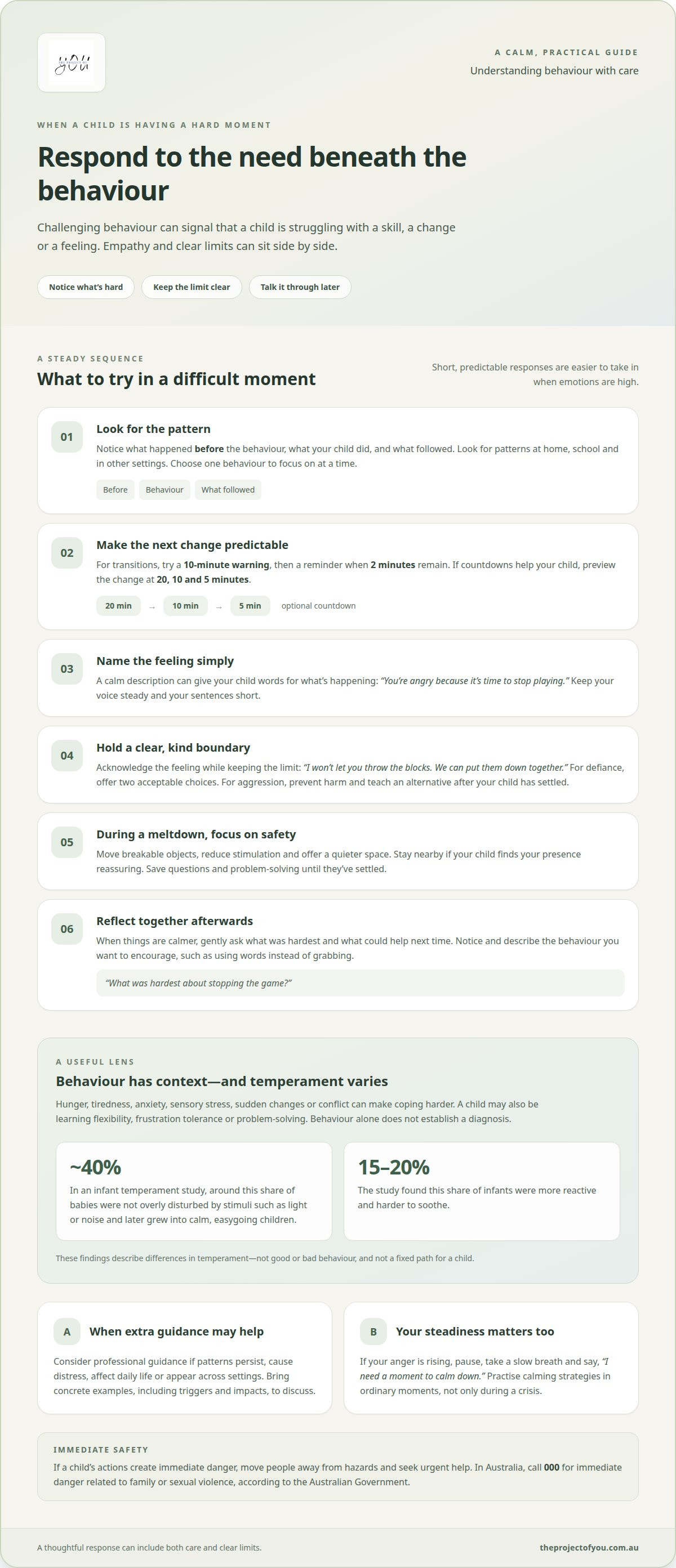
You might find yourself constantly negotiating, feeling overwhelmed by emotional outbursts or questioning whether your parenting approach is making a difference. It can be difficult to know when to hold a boundary, when to offer comfort and when your child needs a different kind of support. Children's behaviour is influenced by their temperament, developmental stage, emotional regulation skills and environment. Looking beneath the behaviour can help you understand what your child may be communicating without dismissing the importance of healthy boundaries.
In this article, Azita Abdollahian, psychotherapist, Clinical Social Worker and relationship specialist, explores why some children display challenging behaviour, how emotional regulation and temperament influence a child's responses, and how parents can navigate difficult parenting moments. You'll also discover practical strategies for setting consistent boundaries, supporting your child's emotional development, recognising when professional guidance may help and protecting your own wellbeing along the way.
Table of Contents
1. Child temperament and emotional regulation
Two children can meet the same change with very different emotions. One may move easily from play to dinner, while another protests when asked to put toys away. Temperament describes these inborn differences in how children respond to sensations, change and frustration. In an infant temperament study, around 40% of babies were not overly disturbed by stimuli such as light or noise and later grew into calm, easygoing children. The study found 15% to 20% of infants were more reactive and harder to soothe.
Temperament isn’t a measure of good or bad behaviour. A child who finds noise overwhelming may cover their ears in a busy supermarket; a child who struggles with change may become upset when a familiar routine shifts. Skills such as expressing frustration, calming down and adapting develop at different rates. The prefrontal cortex, which supports planning, decision-making and emotional control, is still developing in young children. Keeping this in mind can help you see a meltdown as a sign of distress or limited coping skills, rather than a calculated attempt to upset you.
When emotions rise, start with a calm, simple description: “You’re angry because it’s time to stop playing.” Naming the feeling gives your child words for an experience they may not yet know how to explain. Then set a clear boundary: “I won’t let you throw the blocks. We can put them down together.” Keep your voice steady and your sentences short. A child who’s already overwhelmed may not be able to take in a long explanation.
Practise self-regulation during ordinary moments, not only during a crisis. You might breathe slowly together after school, notice the feeling in your body, then choose a calming activity such as drawing or sitting quietly. Before a transition, give a 10-minute warning, followed by a reminder when 2 minutes remain. For a child who finds countdowns helpful, preview the change at 20, 10 and 5 minutes. These steps make what comes next more predictable.
During a major meltdown, focus first on safety and reducing stimulation. Move breakable objects, offer a quieter space and stay nearby if your child finds your presence reassuring. Save questions and problem-solving for after they’ve settled; reasoning during intense distress can add pressure. Later, gently revisit what happened: “What was hardest about stopping the game?” A focused conversation can help you spot patterns and plan support for next time.
Your own regulation matters in those moments. If you feel your anger rising, pause, take a slow breath and use a brief phrase such as, “I need a moment to calm down.” In Australia, anyone facing immediate danger related to family or sexual violence should call 000, according to the Australian Government.
2. Why Do Some Kids Struggle With Problem Behaviour?
Challenging behaviour can reflect a child struggling to use skills such as flexibility, frustration tolerance or problem-solving. Think:Kids says neuroscience research over the past 30 years points to these difficulties for some children displaying challenging behaviour. Hunger, tiredness, anxiety, sensory stress, sudden changes or conflict can make coping harder; behaviour may also reflect what a child has learnt happens after a particular action.
Temperament can shape how strongly a child responds to the same situation. A child who finds uncertainty difficult might argue when plans change, while another may withdraw when a room feels noisy. A longitudinal study spanning more than 25 years found that temperament at birth can help predict behaviour in adolescence. This doesn’t make a child’s path fixed; it can help parents notice which situations need more preparation or support.
To understand what may be sustaining a behaviour, record a simple sequence: what happened before, what the child did and what followed. For example, note whether shouting starts when a screen is switched off, and whether the child gets extra screen time after protesting. Look for patterns at home, school and in other settings. Choose one behaviour to focus on, such as hitting during sibling arguments, instead of trying to change every difficult moment at once.
Positive discipline combines empathy with predictable limits. During a tantrum, keep your language brief, acknowledge the feeling and hold the boundary: “You’re upset. The tablet is finished, and I’ll help you put it away.” For defiance, offer two acceptable choices, such as putting on shoes before or after breakfast. For aggression, calmly prevent harm, create space and teach an alternative once your child has settled, such as asking for a break. Notice and describe the behaviour you want to encourage, such as using words instead of grabbing.
Think:Kids advises viewing challenging behaviour as a sign of skills a child has difficulty using, rather than assuming deliberate manipulation. A structured, consistent response can still include boundaries and consequences while helping you understand an unmet need or skill gap. What happened just before the behaviour, and what might your child need help doing differently next time?
When might behaviour point to ADHD, autism, anxiety or another condition? Consider professional guidance if patterns persist, cause distress, affect daily life or appear across settings. Bring concrete examples, including triggers and impacts, to discuss; behaviour alone doesn’t establish a diagnosis.
If a child’s actions create immediate danger, move people away from hazards and seek urgent help. If the danger involves family or sexual violence in Australia, call 000, according to the Australian Government.
If these patterns are straining family life, book a conversation about support to explore what may be driving the behaviour and how to respond.
3. Seeking professional guidance when challenges persist
Consider professional support if behaviour repeatedly disrupts sleep, school, friendships or family routines. If parenting challenges with a difficult child continue to affect daily life, support can help you understand the pattern. For example, note whether morning arguments happen on most school days or distress appears only when routines change. These details help a professional understand the situations involved, how long they’ve been happening and what support may fit. Seeking guidance isn’t a judgement on your parenting; it can bring another perspective to a difficult pattern.
Before an appointment, write down a few clear examples. Record what happened before the behaviour, what your child did, how adults responded and what happened afterwards. Include your child’s age, relevant changes at home or school, and what has helped, even briefly. A general practitioner, child psychologist or parenting counsellor can discuss your concerns and help you consider next steps. If school difficulties are part of the picture, ask the teacher what they’ve noticed in the classroom.
Several forms of support may be useful, depending on the child and family. Parent-Child Interaction Therapy (PCIT) is described as effective for children aged 2 to 7 years and usually involves 14 to 17 weekly sessions. Parent Management Training is intended for children aged 3 to 13 years, and families usually take part in at least 10 sessions. Parenting support may also involve counselling, practical coaching or a family program focused on communication and consistent responses.
How much do child psychologists and parenting support services cost in Australia, and are Medicare rebates available? Fees vary by practitioner, service, appointment format and location. Medicare rebates depend on eligibility and the type of care, so they don’t apply to every service. Ask about fees and rebate arrangements before booking, and consider whether individual, parent-only or family sessions best match your needs.
Before choosing support, ask yourself what you most want help with: understanding the behaviour, responding during conflict, or improving family routines. A parent-only session can create space to discuss sensitive concerns, while family sessions can help everyone practise new ways of communicating. A structured program may suit families seeking practical strategies and ongoing practice. For families facing parenting challenges with a difficult child, the most useful starting point is support that addresses the situations causing the greatest strain.
Progress is easier to notice when you set a specific goal, such as fewer arguments during homework or safer ways to handle sibling conflict. Review the goal with the professional over time and share what feels manageable at home. If a strategy increases distress or doesn’t fit your family, say so. Support should help you understand the pattern and adjust the approach, not leave you feeling blamed.
4. Balancing attention between children
When one child’s needs take up much of the day, siblings can feel overlooked, even when you care deeply about each of them. A seven-year-old girl once felt her ten-year-old brother, who had been diagnosed with ADHD and autism, was sometimes treated more favourably. Her feelings show why it helps to notice each child’s experience, not only whether the same rules apply to everyone.
Fairness doesn’t always mean identical treatment. One child may need extra help getting ready, while another needs reassurance that their turn for attention will come. A mother of five girls manages her youngest daughter’s slower preparation by asking the family to give her a couple of extra minutes. Explaining the reason can help siblings understand the adjustment without making anyone responsible for managing another child’s needs.
Try setting aside individual time that fits your household. One guide suggests aiming for five minutes of daily quality time with younger children and 15 minutes with teenagers. Let the child choose a simple activity, such as drawing, kicking a ball or chatting before bed. Put your phone aside and offer your attention without turning that time into a lesson or discussion about behaviour.
Small, dependable moments can be easier to protect than a large family outing. For example, you might talk with one child while walking to school, then read with their sibling before bed. If a child is having tantrums or needs frequent supervision, explain when you’ll return to the other child: “I’m helping your brother now, then we’ll have our story together.” Follow through when you can.
Invite siblings to share what they notice, without asking them to take sides. “What feels hard when I’m busy helping your sister?” gives a child room to speak. Listen for concerns about missed activities, interrupted conversations or rules that seem different. Acknowledge the feeling first, then briefly explain what each child needs. Avoid sharing private details about a sibling’s diagnosis or struggles unless they’re comfortable with that.
Notice quiet signs of disconnection, too. A child who stops asking for help, leaves family activities or repeatedly says, “You only care about them,” may be telling you they need more connection. Choose one practical response, such as a regular bedtime chat, and see how it feels after several days. The aim isn’t to make every moment equal; it’s to help each child feel noticed, valued and safe to ask for your attention.
5. Parents’ mental health and wellbeing
Parenting can ask a great deal of you, especially when family life feels tense most days. You might notice yourself snapping during the school-morning rush, feeling guilty afterwards, then dreading the next difficult moment. These reactions don’t mean you’re a bad parent. They may signal that your emotional capacity needs care alongside your child’s needs.
Beyond Blue states that more than 2 in 5 people have experienced a mental health condition at some stage in their life. Postnatal depression can develop up to one year after childbirth, and up to one in 6 women experience it. These facts matter for parents who feel persistently low, anxious, disconnected or overwhelmed. If these feelings affect daily life, speak with a health professional about what support may help.
Begin with a brief check-in at a consistent point in your day. Ask yourself: “What am I feeling, and what would help me manage the next hour?” You might notice tension before the afternoon school pick-up, then take a few slow breaths before getting out of the car. Small pauses can help you respond more deliberately instead of reacting from exhaustion.
Practical support needs to be specific, too. Instead of saying, “I’m struggling”, tell someone you trust what would help: “Could you take the kids to the park while I rest?” or “Can you sit with me during the bedtime routine?” If you co-parent, discuss one predictable handover or household task that could ease the pressure. Clear requests give others a concrete way to help.
Notice whether shame is keeping you isolated. Thoughts such as “I should cope better” can make it harder to ask for support, even when the load is heavy. Try replacing that judgement with a more accurate observation: “The arguments at dinner are draining me, and I need a plan.” A trusted friend, GP or counsellor can help you explore the pattern without reducing your family to one difficult moment.
Choose one restorative activity that fits real life, rather than waiting for a perfect stretch of free time. You might sit outside with a cup of tea after school drop-off, take a short walk while another adult supervises, or protect a quiet moment before bed. If you have a baby, ask someone you trust to handle a practical task while you rest. Your needs belong in the family picture, too.
Reflect on this: what would make the next difficult day more manageable for you? Write down one person you can approach and one task they could take on. A clear request, made before you reach breaking point, can be a meaningful first step.
[Book a conversation about your wellbeing](https://www.theprojectofyou.com.au/book-online)
The Project of You | Trauma, Couples & Relationship Therapy Australia: Nervous System Regulation & Restoration
The Project of You | Trauma, Couples & Relationship Therapy Australia offers Nervous System Regulation & Restoration and Individual Counselling to support emotional wellbeing. If parenting stress is affecting your patience, sleep or sense of connection, individual counselling can give you space to explore what’s happening and consider practical next steps. Nervous System Regulation & Restoration may also suit you if you want to focus on noticing and responding to your own stress.
You might consider reaching out when the strain feels persistent, you’re finding it hard to recover after family conflict, or you want support alongside parenting strategies. Seeking help for yourself doesn’t mean you care less for your child. It’s one way to include your wellbeing in the family’s support plan.
Choose a next step that supports your whole family
Parenting challenges with a difficult child can shape how you see yourself as a parent, especially after a hard day. Try meeting self-judgement with curiosity: what support would help you feel more grounded, and what kind of connection do you want to build with your child? You don’t need a perfect plan before you begin.
A useful next step might be choosing one small intention for the coming week, such as pausing before you respond or making space for a calm conversation after conflict. Notice what feels possible in your actual family life, not an imagined version where everyone is rested and unhurried. Small, thoughtful changes can give you room to find a more workable path.
If you’d like support exploring what’s happening in your family and what might help, you’re welcome to take the next step at your own pace.
[Book a conversation with The Project of You](https://www.theprojectofyou.com.au/book-online)
Asking for support is a considered way to care for yourself and your family. You can begin with one honest conversation.
Frequently Asked Questions
Why Do Some Kids Struggle With Problem Behavior?
Children may struggle when everyday demands feel greater than the skills or support they can draw on. A new classroom, friendship difficulties or a change in who collects them can affect how they cope. Consider what changed around the time the behaviour began, and whether it happens in particular places or with particular people. This context can help you understand what your child may be communicating and what support could make situations easier.
What behaviours are common in children described as difficult?
Parents may describe repeated arguing, refusing everyday requests, intense outbursts, withdrawal, clinginess or frequent conflict with peers. A child might also avoid group activities or struggle to recover after disappointment. These behaviours can mean different things for different children, so a label alone tells you little. For example, refusing schoolwork could reflect confusion about the task, worry about getting it wrong or difficulty getting started, rather than simple unwillingness.
How can parents set consistent boundaries and consequences without escalating conflict?
Keep the boundary brief, specific and connected to the situation. For example, if a child draws on the table, say that drawing belongs on paper, then involve them in cleaning the surface. Avoid adding unrelated punishments or arguing about the rule in the heat of the moment. Once everyone is calmer, revisit what happened and agree on what to try next time. Consistency means following through calmly, not responding identically in every circumstance.
How can parents respond to challenging behaviour in toddlers, school-aged children and teenagers?
Match your response to your child’s age and growing independence. With a toddler, use a few clear words and guide them away from an unsafe action. With a school-aged child, discuss a practical plan for a recurring issue, such as packing their sports bag together the night before. With a teenager, listen first and involve them in setting expectations while keeping essential safety limits clear.
What signs mean a child needs assessment from a GP or child psychologist in Australia?
Arrange a discussion with a GP or child psychologist if distress or behaviour persists, disrupts learning or relationships, or is difficult to manage at home and school. Share specific examples, including when the change began and how it affects daily activities. An assessment can explore your child’s development, emotional wellbeing and circumstances. Seek urgent help if there’s an immediate safety risk rather than waiting for a routine appointment.
How can parents manage stress and protect family relationships while supporting a child with challenging behaviour?
Agree with your co-parent or another trusted adult on a shared response to recurring situations, so disagreements don’t unfold in front of the children. Set aside a brief check-in together after bedtime to discuss what went well and what needs adjusting. Keep adult worries with supportive adults, rather than asking siblings to take sides. If tension has caused hurt, a simple apology and calm reconnection can help restore trust.


Comments