

Fear of Abandonment: Signs, Causes and Mental Health Links

What if the fear of someone leaving is affecting your ability to feel safe, secure and connected in your relationships? Fear of abandonment can influence how you respond to intimacy, conflict, communication and emotional distance. While it is not a mental health diagnosis on its own, fear of abandonment therapy can help you understand where these patterns may come from and develop healthier ways of responding to them.
You might find yourself constantly seeking reassurance, overthinking a delayed message, feeling anxious when someone becomes distant or pushing people away before they have the chance to hurt you. These responses can be difficult to understand, particularly when you recognise that your reactions feel stronger than the situation itself. Often, they are connected to earlier relational experiences, attachment patterns or unresolved emotional wounds.
Understanding your fear is not about blaming yourself or forcing yourself to stop needing connection. It is about exploring what has shaped your responses, recognising the patterns that may be keeping you stuck and developing a greater sense of emotional safety within yourself and your relationships.
In this article, Azita Abdollahian, psychotherapist, Clinical Social Worker and relationship specialist, explores what fear of abandonment is, the common signs and symptoms, how childhood experiences and trauma can contribute to it, and how it may affect adult relationships. You will also learn how therapy for fear of abandonment can help you understand your attachment patterns, build emotional resilience and develop more secure, fulfilling relationships.
Table of Contents
What Is Fear of Abandonment in Psychology?
Fear of abandonment is a strong worry that someone important will leave, withdraw or stop caring. It can shape how a person interprets silence, disagreement or time apart. Attachment describes the emotional bond people form with important others. John Bowlby and Mary Ainsworth developed attachment theory in the 1950s. Their work helps explain why early relationships can influence later expectations, without determining someone’s future.
In adult relationships, fear may show up as repeated reassurance-seeking, conflict after a delayed reply or difficulty trusting a partner’s commitment. For example, someone might interpret a busy evening as evidence that the relationship is ending. These feelings can prompt checking, accusations or withdrawal, even when the other person hasn’t indicated they’re leaving. A partner may then feel pressured or misunderstood, and both people can become caught in a cycle of insecurity.
The same pattern can affect friendships and work. Someone may avoid sharing a different opinion with a friend for fear of rejection, or take on extra work to feel valued. In romantic relationships, anxious attachment can make closeness feel essential while ordinary independence feels threatening. In social settings, a missed invitation may seem like proof of exclusion. At work, feedback from a manager may feel like a warning of rejection rather than guidance on a task.
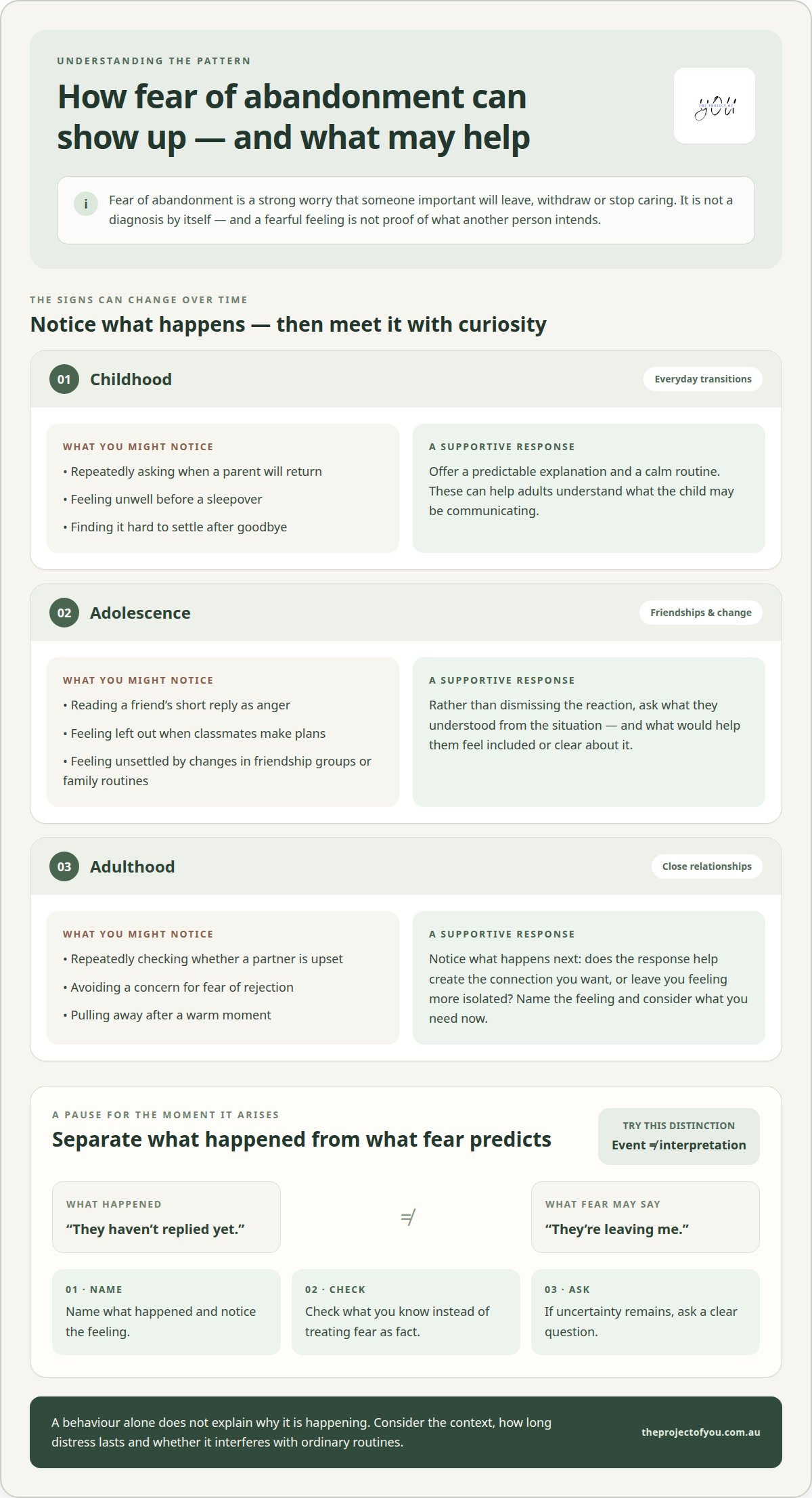
These are patterns to understand, not proof of a diagnosis or a person’s character. A therapist can help you explore when the fear appears, what meaning you attach to an event, and how your response affects connection. A useful pause is to separate the observable event from the feared interpretation: “They haven’t replied yet” is different from “They’re leaving me.” This distinction can create space for a calmer conversation.
Look for a registered psychologist or appropriately qualified therapist with relevant experience in attachment, trauma and relationship concerns. Ask about their training, approach and experience supporting adults with these patterns. A good fit means feeling respected and able to discuss difficult feelings without pressure to share more than feels safe.
Therapy fees vary depending on the practitioner, session format and individual circumstances, so ask about the fee before starting. Medicare rebates depend on eligibility, the practitioner and the care pathway involved. Clarify these details before planning ongoing sessions.
Therapy duration depends on what you want to change, how the pattern developed and how it affects daily life. Early sessions may focus on understanding triggers; later work may practise communication, boundaries and emotional regulation. Progress might mean noticing insecurity sooner, asking for reassurance directly, or tolerating a partner’s separate plans without repeated checking.
Managing familiar patterns after therapy involves applying those skills in everyday moments. You might notice a delayed message, name the feeling and wait before sending another text. Check what you know rather than treating fear as fact, then ask a clear question if something remains uncertain. Trusted friends, personal routines and activities that build confidence outside relationships can also broaden your sources of security.
Signs across childhood, adolescence and adulthood
Abandonment fears can look different as a child grows. A young child may struggle when a caregiver leaves, while an adult may feel unsettled when a close friend becomes less available. Behaviour alone doesn’t explain why it’s happening. Consider the context, how long the distress lasts and whether it interferes with ordinary routines.
For children, notice what happens around everyday transitions, such as school drop-off, bedtime or staying with relatives. A child might repeatedly ask when a parent will return, say they feel unwell before a sleepover, or struggle to settle after goodbye. A predictable explanation and calm routine can help adults understand what the child is communicating.
Adolescents may be especially sensitive to changes in friendship groups, privacy or family routines. A teenager might interpret a friend’s short reply as anger, or feel left out when classmates make plans without them. Rather than dismissing the reaction, ask what they understood from the situation and what would help them feel included or clear about it.
Adults may notice the fear in choices that seem protective at first. Someone might repeatedly check whether a partner is upset, avoid raising a concern or pull away after a warm moment. The useful question is what happens next: does the response help create the connection they want, or leave them feeling more isolated?
Memories of separation can influence how a present-day event feels. A parent’s departure, a move between households or a caregiver becoming unavailable may remain emotionally significant. But remembering a difficult event doesn’t automatically explain every current fear. It may be one part of the picture, alongside later relationships, present stress and the support available now.
Trauma may be part of someone’s history, but it shouldn’t be assumed from a reaction in a relationship alone. For example, distress when a partner travels could relate to an earlier loss, current uncertainty, or both. Staying curious about the details helps avoid turning a possible explanation into a fixed story about yourself.
Self-discovery can begin with a gentle check-in: name what happened, notice the feeling, then ask what you need now. Inner child work might involve writing a compassionate note to a younger version of yourself, such as, “You deserved to know when someone would return.” Keep the exercise grounded in present-day safety, and pause if it becomes overwhelming.
If these patterns affect your wellbeing or relationships, a therapist can help you explore them at a manageable pace. You can book an initial conversation to consider whether support feels right for you.
Physical, emotional and psychological abandonment
Fear of abandonment can follow physical separation, emotional disconnection or an expectation that support will disappear. In a first therapy session, you can discuss current triggers, relevant history and goals. The therapist can explore what feels safe before agreeing on a focus.
Forms of Abandonment
Physical abandonment means a parent or caregiver is absent; emotional abandonment means care or comfort feels unavailable; psychological abandonment describes feeling unseen, dismissed or unsafe in a relationship. These experiences can affect how someone interprets closeness, even when the current situation differs from earlier events.
For example, a child whose parent leaves without explanation may later feel alarmed when a partner travels. Emotional distance can also happen while people share a home, such as when a child’s distress is repeatedly ignored. The distinction matters because understanding the experience helps make sense of symptoms without assuming every fear has the same cause.
Noticing Emotional Patterns
Noticing a pattern means identifying the trigger, body response, thought and action before they become a rapid reaction. For instance, a cancelled plan might bring tightness, the thought “I don’t matter”, then repeated calls or an avoidant silence.
Try writing down those four parts after the moment has passed. This can reveal whether a negative interpretation keeps recurring and help you consider a response that fits the present rather than an earlier threat.
In therapy, a clinician may help you trace how a trigger develops into an action. You might describe a recent disagreement, notice the urge to withdraw and practise naming the feeling before speaking. The therapist can help distinguish an immediate safety concern from anxiety rooted in an expectation of rejection. This isn’t about dismissing distress; it’s about creating more choice in how you respond.
Emotional regulation strategies can be simple and repeatable. Pause, feel your feet on the floor and lengthen your exhale. Name the emotion plainly, such as “I’m scared and need reassurance.” Then choose a next step, perhaps asking your partner when you can talk instead of sending several messages while distressed.
A worksheet can make this practice easier to revisit. Record the situation, feelings, physical sensations, first interpretation and what you did next. Add an alternative explanation and a response you’d like to try. For example, “My friend hasn’t replied” could have several explanations; planning to check in later may feel more settled than checking constantly.
Therapy may also explore how past experiences shape present relationships and what emotional safety looks like now. If reflection brings up intense memories, slow down and discuss the impact in a session. The pace can follow your needs, with attention to grounding, boundaries and coping skills before exploring painful material more deeply.
Possible causes, including trauma and family instability
Fear of abandonment can have several influences, and no single experience explains everyone’s reactions. Attachment theory, developed through the work of John Bowlby and Mary Ainsworth, offers a framework for considering how early caregiving relationships shape expectations of closeness. It’s a way to explore patterns, not a verdict on someone’s family or future.
Family changes can unsettle a child’s sense of predictability. A parent’s separation, a death in the family, frequent moves or changes in caregiving may leave a young person unsure what to expect. The meaning of these events depends on the child’s circumstances, relationships and support. A steady adult who explains changes and listens can help a child make sense of what’s happening.
Neglect and physical abuse are serious experiences that may affect later wellbeing. Their impact can depend on how long they continued, whether the child had safe adults nearby and what support followed. A history of adversity doesn’t determine a person’s attachment style or mean they will develop a mental health disorder. It can, however, provide useful context when exploring present-day distress.
Later experiences can also change how safe relationships feel. Betrayal, bereavement, a painful separation or repeated rejection may make closeness feel less predictable. For instance, someone whose former partner ended a relationship without warning might become highly alert to signs of distance in a new relationship. That response makes sense as an attempt to protect themselves, even if it no longer fits every situation.
Therapy can help connect a current reaction with its context while considering what the person wants to do differently now. A clinician might explore what a late change of plans brings up, then help separate earlier expectations from present evidence. There’s no need to decide that one memory caused everything; several experiences and current pressures may contribute.
Trauma-focused cognitive behavioural therapy (CBT) works with links between trauma-related thoughts, feelings and behaviour. NICE guidance includes trauma-focused CBT among psychological treatments for post-traumatic stress disorder (PTSD). That guidance concerns PTSD, so it doesn’t prove that CBT suits everyone experiencing abandonment fears. A therapist can discuss whether this approach fits the person’s history and goals.
Eye movement desensitisation and reprocessing (EMDR) is another approach used for trauma-related difficulties. NICE guidance also includes EMDR among treatment options for PTSD. In therapy, the practitioner and client work with distressing memories and their emotional meaning; the process is planned with attention to readiness and coping resources. It isn’t about erasing what happened.
Trauma integration can mean making room for the past while strengthening choices in the present. Someone may recognise that a protective behaviour once helped them cope, then consider whether it serves their relationships now. Therapy can support this reflection without requiring disclosure before the person feels ready.
Mental health conditions and abandonment issues
Fear of abandonment isn’t a distinct mental health diagnosis. It describes a fear or pattern that may appear alongside other difficulties, so the key question is how it affects someone’s wellbeing and relationships. For example, a delayed reply might trigger intense distress for one person, while another feels disappointed but carries on with their day.
Clinicians may assess whether someone’s symptoms fit a wider mental health condition using the Diagnostic and Statistical Manual of Mental Disorders (DSM-5). They consider the overall pattern, not one argument or anxious moment. A fear of rejection alone doesn’t establish a diagnosis, and attachment style is not a mental health condition.
Anxious attachment can involve heightened sensitivity to signs of distance, such as a partner cancelling plans. That response may overlap with anxiety, but it doesn’t mean everyone with anxious attachment has an anxiety disorder. Likewise, someone with a secure attachment style can feel insecure during grief, major change or relationship strain.
Abandonment fears can also be relevant when a clinician assesses borderline personality disorder. Fear of being left may be part of a broader pattern, but it cannot identify the condition by itself. A clinician considers the person’s experiences and symptoms as a whole, rather than drawing a conclusion from a single relationship behaviour.
Dialectical behaviour therapy (DBT) may help people with borderline personality disorder. It teaches skills for managing intense emotions, tolerating distress and communicating needs. For instance, someone overwhelmed after a disagreement might practise pausing, naming the emotion and choosing a response before sending a message. The aim is to build options, not shame someone for having strong feelings.
The useful distinction is between a familiar fear and a condition that requires assessment. Ask what happens, how often it disrupts daily life, and whether the same pattern appears across relationships or settings. For example, repeated panic about separation may call for a different assessment from distress limited to one unsafe relationship. Context matters; harm within a relationship should not be reframed as a symptom in the person experiencing it.
Support can focus on the concern affecting you, whether that’s anxiety, trauma-related distress or relationship insecurity. Mental health counselling can provide space to understand symptoms and consider suitable strategies. In relationship work, exploring communication, emotional safety and boundaries may help both people understand the pattern without assigning blame. A professional assessment can clarify what support fits your needs.
[Book a counselling appointment](https://www.theprojectofyou.com.au/book-online)
The Project of You | Trauma, Couples & Relationship Therapy Australia: Nervous System Regulation & Restoration
The Project of You | Trauma, Couples & Relationship Therapy Australia offers Individual Counselling for people who want to understand how abandonment fears affect their feelings, relationships and everyday choices. If you notice recurring anxiety, difficulty settling after conflict or a strong urge to seek reassurance, counselling can give you space to explore these patterns and consider practical ways to respond.
Nervous System Regulation & Restoration may also be relevant if stress feels difficult to settle in your body. The work can centre on noticing emotional responses, building regulation skills and exploring what supports a greater sense of safety. You can begin by sharing what has been happening and what you hope to understand, at a pace that feels manageable.
If you’d like to explore support, contact The Project of You.
Take a gentle next step towards steadier connection
You don’t have to wait until a relationship feels unmanageable to seek support. Fear of abandonment therapy can help you make sense of what gets activated in moments of uncertainty and practise responses that fit who you are today. The aim isn’t to stop caring or needing connection. It’s to build more choice, so fear doesn’t have to make every decision for you.
As you consider what comes next, ask yourself: what would feeling safer in connection look like in everyday life? It might mean expressing a need clearly, allowing space without withdrawing, or making room for your own interests alongside a relationship. Small shifts can help you notice what supports your wellbeing.
If you’d like to explore support with The Project of You, take the next step at your own pace.
[Explore counselling support](https://www.theprojectofyou.com.au/book-online)
Your feelings deserve curiosity, not shame. A more grounded way of relating can begin with one thoughtful step.
Frequently Asked Questions
What Causes Abandonment Issues?
There isn’t one cause that explains everyone’s experience. To explore your own, map a recent episode across three points: what was happening beforehand, what made the fear rise, and what kept it going afterwards. For example, an argument may trigger worry, while repeatedly checking for signs of rejection keeps your attention fixed on the threat. This timeline can give you and a therapist a clearer starting point.
What is fear of abandonment and what causes it?
It’s helpful to separate the feeling from the situation: fear can be intense, while the evidence about what another person intends may still be unclear. At the same time, concern can be a response to genuine inconsistency or harmful behaviour. Ask yourself what you know, what you’re predicting and what you need clarified. This approach makes room for both emotional care and an honest appraisal of the relationship.
What are common signs and symptoms of fear of abandonment?
Rather than treating one behaviour as a test, look at its effect on your life. Does relationship worry make it hard to sleep, concentrate on a task or make choices that matter to you? For instance, repeatedly changing plans to stay available may show that fear is taking up too much space. A brief record of the impact can help you explain your concern at a first appointment.
What types of therapy help with fear of abandonment, such as CBT, DBT, or attachment-based therapy?
CBT, DBT and attachment-based therapy are possible approaches, and a useful discussion starts with your goals rather than a label. Ask how sessions would address a specific difficulty, such as recovering after conflict or communicating a need. You can also ask how progress will be reviewed and what happens if an approach doesn’t feel useful. These questions help keep therapy collaborative and focused on your priorities.
How can I find a therapist for fear of abandonment in Australia, including telehealth options?
For telehealth, ask about the session format, privacy and what happens if the connection drops. Before an appointment, choose a private space where you can speak freely and use a device with a stable connection. You may also want to clarify how you’ll share notes or exercises between sessions. These practical details can help remote sessions feel more contained and help you decide whether the format suits you.
What can I do between therapy sessions to manage fear of abandonment?
Choose one relationship skill to practise between sessions, such as making a clear request without apologising for having a need. You could rehearse the words beforehand, then note what felt difficult and what you learnt from the conversation. Keep plans that matter to you, even when uncertainty arises. Bringing a specific example to your next appointment gives you something concrete to work through together.
What are the risks of untreated fear of abandonment, and when should I seek urgent help?
Consider seeking support if fear is narrowing your life, affecting work or study, or leading you to accept treatment that feels unsafe. Urgent help is appropriate if you may harm yourself or another person, or can’t keep yourself safe. Contact emergency services or attend an emergency department. If you can, tell someone you trust what’s happening and ask them to stay with you while help is arranged.



Comments