

Overcoming Fear of Intimacy by Building Trust at Your Own Pace

Wanting closeness and fearing it can exist side by side. Overcoming fear of intimacy often starts with recognising that fear can show up as difficulty trusting, sharing feelings or feeling comfortable with affection, rather than a lack of care for someone. Past experiences and attachment patterns can shape how safe closeness feels, but they don’t define what connection has to look like for you.
If opening up leaves you feeling exposed, or you find yourself pulling away just as a relationship deepens, your response may be trying to protect you. You don’t need to judge yourself or force vulnerability before you feel ready. Understanding what’s happening can help you respond with more choice and care.
This article explores what fear of intimacy can involve, how earlier experiences and attachment styles may influence it, and how communication, clear boundaries and self-compassion can support a steadier pace. You’ll also find ways to notice what helps you feel emotionally safe, whether you’re working through these feelings on your own or with a partner.
Table of Contents
What Is Fear of Intimacy?
Fear of intimacy is unease with emotional or physical closeness, trust, or being known by another person. It can involve several parts of connection, not simply sex or commitment.
Wanting a relationship while fearing vulnerability can feel confusing. Noticing what happens around closeness is a useful place to begin.
Relationship visions and emotional safety
A relationship vision describes the kind of connection that would feel safe and comfortable to you. It matters because naming what you value can make closeness less abstract and help you recognise what supports trust.
Picture an ordinary moment, such as telling a partner you’ve had a difficult day. What response would help you feel heard? A vision board can gather words or images representing qualities such as honesty, affection, personal space and mutual respect. Treat it as a reflection tool, not a promise that every relationship will match it.
Past relationships and fear of rejection
Past relationship experiences can shape expectations about whether closeness will lead to care, rejection or hurt. If a former partner dismissed your feelings, for example, sharing a concern with someone new may feel exposing, even when the current situation is different.
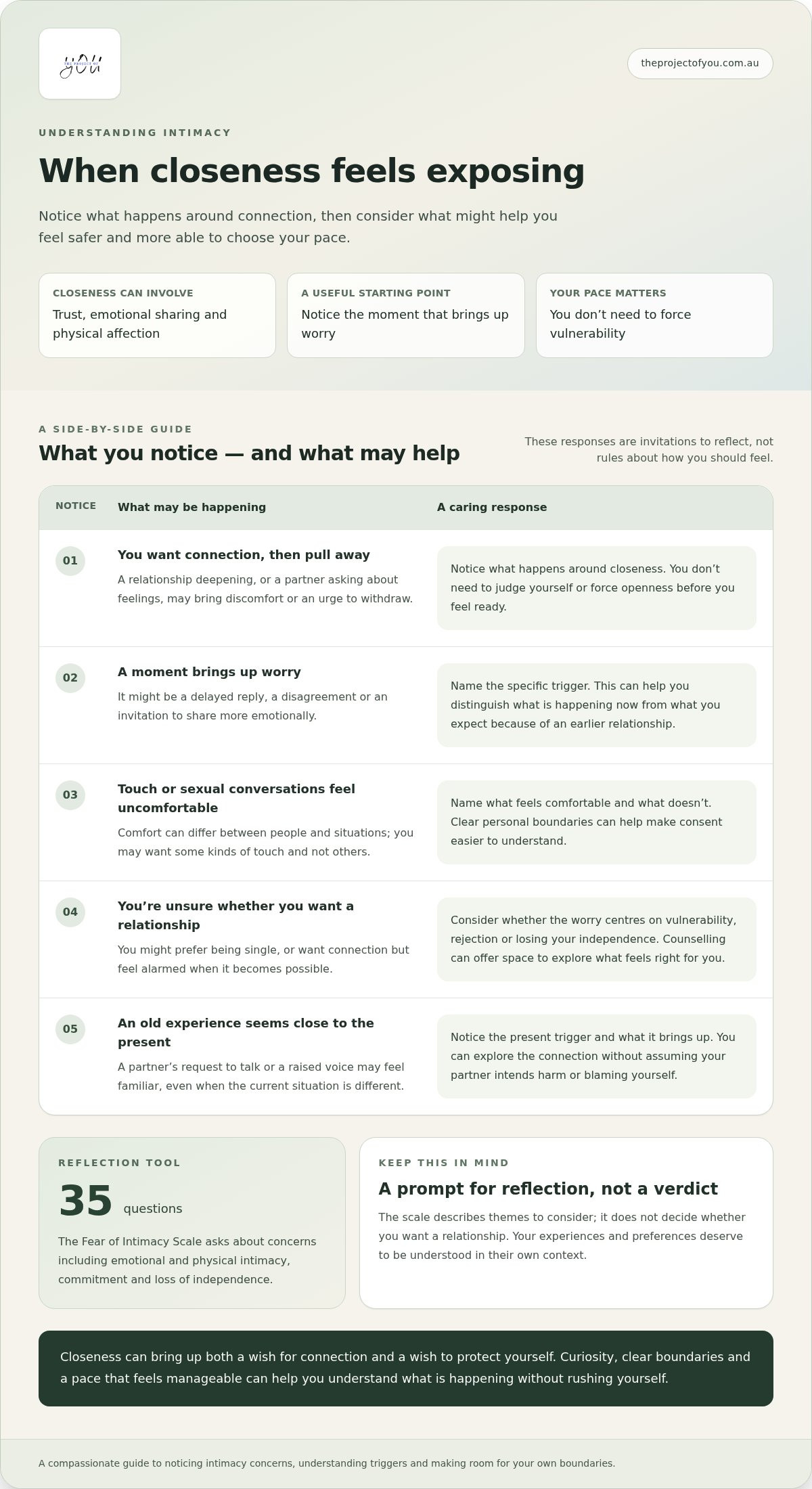
Notice the specific moment that brings up worry: a delayed reply, a disagreement or an invitation to be more emotionally open. Naming the trigger helps distinguish what’s happening now from what you expect based on an earlier relationship. Fear of rejection deserves curiosity, not self-blame. It may be an understandable response to what you’ve lived through.
Effects on relationships and wellbeing
Fear of intimacy can make it harder to build close, lasting relationships. Someone might want companionship but withdraw when a partner asks about feelings, while the partner may interpret that distance as disinterest.
Over time, avoiding connection can contribute to social isolation and depression. Friendship skills can provide a foundation for closeness: sensitivity, empathy and emotional awareness help people listen, respond and repair misunderstandings. For example, asking a friend how a difficult conversation felt, then listening without rushing to fix it, gives both people practice in being present. These skills can support romantic relationships too.
Recognising relationship anxiety
Relationship anxiety involves distress around closeness, trust or rejection; counselling can help you explore its patterns and possible causes. The Fear of Intimacy Scale has 35 questions about concerns including emotional and physical intimacy, commitment and loss of independence. It describes themes to consider, rather than deciding whether you want a relationship.
How can you tell fear of intimacy from simply not wanting a relationship? Consider whether you genuinely prefer being single, or want connection but feel alarmed when it becomes possible. You can also ask whether the worry centres on vulnerability, rejection or losing yourself. Individual or couples counselling can provide space to explore those questions and understand what feels right for you.
Childhood experiences and violations of trust
Early experiences can shape what closeness, trust and emotional safety feel like later. That influence may become clearer when a relationship brings up a reaction that feels stronger than the present moment alone seems to explain.
Early experiences and broken trust
When a child’s trust is repeatedly broken, closeness can become associated with uncertainty or hurt. For example, a caregiver who offers comfort one day but responds with anger the next may make it difficult to know whether reaching out is safe.
This history can matter in adult relationships, where a partner’s ordinary request to talk may feel threatening. Noticing the present trigger, such as a raised voice or unanswered message, can help you understand what feels familiar without assuming your partner intends harm.
Childhood sexual abuse and intimacy
Childhood sexual abuse can affect how a person experiences sexual and emotional closeness later in life. Touch, sexual conversations or feeling physically vulnerable may bring up discomfort, numbness or a strong wish to withdraw.
These reactions differ between people and may change across situations. Someone might welcome a hug from a trusted friend but feel unsettled by unexpected touch from a partner. Naming what feels comfortable, and what doesn’t, can help make consent and personal boundaries clearer.
Childhood abuse and intimacy
Other forms of childhood abuse can also influence trust, self-worth and the sense of safety needed for intimacy. A child who was criticised for expressing sadness, for example, may find it hard to share disappointment with a partner as an adult.
That difficulty doesn’t mean the person lacks care or wants to keep others at a distance. It may reflect an earlier way of coping that still appears during conflict or vulnerability. Recognising the pattern can help separate an old expectation, such as “speaking up isn’t safe”, from what’s happening now.
You don’t need to remember every detail or explain your experiences before seeking support. You might begin by noting a present-day trigger, the feeling it brings up, and what would help you feel safer in that moment. A trauma-informed counsellor can help explore those connections at a pace that respects your choices and boundaries.
If these experiences are affecting your relationships or wellbeing, individual counselling can offer space to explore them with care. You can begin with one question: what helps me feel safe enough to stay present during a difficult conversation?
Communication, boundaries and taking things slowly
In an intimate relationship, clear communication and personal boundaries can make closeness feel more manageable. Small, chosen steps let you notice what feels comfortable without rushing.
Clear communication and boundaries
Communication means naming what you feel, need or prefer, while boundaries describe what feels comfortable and what doesn’t. Both matter because a partner can’t reliably guess what helps you feel safe.
You might say, “I like spending time together, but I’m not ready to stay over.” Or you could ask before initiating a hug. These specific conversations make room for both people’s needs. If you’re afraid your boundary will disappoint someone, notice that worry and say what you can, rather than agreeing to something you don’t want.
Small steps towards vulnerability
Vulnerability can grow through sharing small, genuine details before discussing more personal experiences. A gradual pace gives you room to see how another person responds.
For instance, tell someone you felt overlooked during a conversation, then notice whether they listen and ask what you need. You might share an everyday feeling before a deeper fear. A “vulnerability hangover”, the anxiety, shame or regret that can follow personal sharing, may arise afterwards. Give yourself time to settle before deciding that opening up was a mistake.
Taking intimacy slowly
Taking intimacy slowly means allowing physical and emotional closeness to develop through mutual choice, rather than following a fixed timetable. It matters because comfort can change across situations and forms of touch.
You may feel ready to hold hands but not kiss, or welcome a hug one day and prefer space the next. Say what feels okay, check in with each other, and pause if either person feels unsure. Shared experiences, such as cooking dinner or taking a walk, can also build connection without requiring immediate disclosure or touch.
Try these steps when closeness brings up uncertainty:
Name one feeling, such as nervousness before a date.
State one boundary clearly, such as wanting to leave by a certain time.
Afterwards, reflect on what felt comfortable and what you’d change next time.
If you notice yourself agreeing while feeling uncomfortable, pause and return to the conversation later. You can say, “I need time to think about that.” If you’d like support exploring these patterns, you can book a conversation at a pace that feels right for you.
Self-compassion and nervous system regulation
Self-compassion means responding to yourself with understanding rather than criticism when closeness feels difficult. If you notice yourself withdrawing after a tender conversation, try naming the feeling before judging your reaction. “I feel exposed right now” is more supportive than “I’m impossible to love”. This small shift can help you meet discomfort with curiosity.
Your nervous system helps your body respond to cues of safety and threat. Before a vulnerable conversation, you might notice a racing heart, tense shoulders or an urge to leave. These responses are signals to pause and check what you need, not proof that you must end the relationship. Place both feet on the floor, look around the room, and notice a few details, such as the light or furniture.
Practise grounding while calm, so it feels familiar when anxiety rises. You could breathe slowly, feel your feet against the ground, or repeat a steadying phrase: “I can take this conversation one step at a time.” If a partner asks about your feelings and you feel overwhelmed, ask for a pause and agree when you’ll return to the discussion. A clear pause can protect space for both people.
Journalling can help you see patterns without turning each difficult moment into a verdict about yourself. After an interaction, write what happened, what you felt, and what you needed. For example: “They went quiet; I felt fear of abandonment; I needed reassurance, so I asked whether we could talk later.” This record can help distinguish an event from the meaning you assigned to it.
Self-worth isn’t measured by how quickly you trust, how much you disclose, or whether someone chooses to stay. If a delayed reply brings up “I’m not worth effort”, write down the thought and consider what else might explain the silence. You can acknowledge your desire for connection while remembering that another person’s response doesn’t define your value.
Notice which actions support your values, even when discomfort is present. Perhaps you want honesty, but need time before discussing a painful subject. You could write a few notes first, then share one thought with someone you trust. Afterwards, acknowledge the effort rather than measuring success by their reaction. What helped you stay connected to yourself?
Attachment styles and intimacy avoidance
Attachment describes how people learn to seek closeness, comfort and reassurance in relationships. Adult attachment researchers Mario Mikulincer and Phillip R. Shaver examine how attachment anxiety and avoidance can shape responses to intimacy. One person might seek frequent reassurance, while another pulls back when conversations become personal. These patterns offer clues about relationship responses, not a diagnosis or a fixed identity.
With anxious attachment, uncertainty can stir worry about rejection. You might reread a brief message, feel unsettled when plans change, or wonder repeatedly whether your partner is upset. Reassurance may bring temporary relief, but noticing when the worry rises can help you name the need beneath it, such as clarity, connection or a direct conversation.
Avoidant attachment can involve protecting independence by keeping emotional distance. Someone might change the subject when asked about feelings, stay busy after a close weekend, or feel crowded by ordinary requests for shared time. This response may have helped them feel safer in earlier relationships. Recognising it can create a pause between feeling exposed and automatically withdrawing.
Dismissive avoidant patterns may involve relying heavily on yourself and minimising emotional needs. Fearful avoidant patterns can involve wanting closeness while expecting hurt, creating a push-pull experience. These descriptions aren’t boxes to squeeze yourself into. Your responses may shift with different people, conflict or stress. Understanding your own pattern can help make overcoming fear of intimacy feel less like a personal flaw and more like a process of learning.
Try tracking what happens around a difficult interaction. What came just before you wanted to move closer or create distance? What did you imagine your partner’s response meant? If they ask for a quiet evening alone, you might think, “I’m being rejected” or “I’m losing my freedom”. Separating the event from your interpretation can help you choose a response that fits the present situation.
Developing greater security doesn’t mean never needing reassurance or personal space. It can mean expressing a need directly, tolerating a partner’s separate plans, and returning to a conversation after a pause. A partner can contribute through consistent communication and respectful responses, while each person remains responsible for their own choices and boundaries. These small experiences can support the work of overcoming fear of intimacy without demanding that either person change overnight.
Attachment-informed therapy can help people explore relationship patterns and practise trust, vulnerability and steadier connection. Individual or couples counselling may be useful when a cycle keeps returning, such as one person pursuing reassurance while the other withdraws. The focus is understanding the interaction, not assigning blame or deciding who is “the problem”.
[Book a counselling conversation](https://www.theprojectofyou.com.au/book-online)
The Project of You | Trauma, Couples & Relationship Therapy Australia: Nervous System Regulation & Restoration
The Project of You | Trauma, Couples & Relationship Therapy Australia offers Nervous System Regulation & Restoration and Individual Counselling for people exploring how fear, past experiences or attachment patterns affect intimacy. Individual support may be a useful next step if you’re finding it hard to understand recurring reactions, express what you need, or feel present in close relationships.
You can explore these concerns at a pace that respects your boundaries, with space to reflect on what feels difficult and what might support greater emotional safety. The aim isn’t to force closeness, but to help you understand your experience and consider your next steps.
If you’d like to discuss support, contact The Project of You.
Let your next step be your own
Closeness doesn’t need to be a test you pass. The work of overcoming fear of intimacy can begin with one honest choice: noticing what you want, what feels difficult, and what support would help you move at a pace that respects you.
You might explore these questions in writing, discuss them with someone you trust, or seek professional support if the same relationship patterns keep causing distress. The Project of You offers Nervous System Regulation & Restoration, The Healing Feminine Workshops and Self Love e-Books as different ways to engage with reflection and personal growth. Choose what feels relevant to where you are now, rather than trying to do everything at once.
You deserve to approach connection with care for your own needs as well as another person’s. A small, considered step can be meaningful.
[Explore counselling support](https://www.theprojectofyou.com.au/book-online)
There’s room to keep learning, at your pace.
Frequently Asked Questions
What Are The Types Of Intimacy?
Intimacy can involve emotional, physical, intellectual and shared-experience connection. One framework describes four dimensions: self-disclosure, love and affection, personal validation, and trust. Physical closeness might include sexual contact or a hug, while intellectual intimacy could involve sharing ideas about a book or a decision. These forms can overlap, but a person may feel at ease with one and uncertain about another.
What causes fear of intimacy and what are common signs?
Fear of intimacy can be shaped by earlier relationship experiences, expectations about rejection, or discomfort with vulnerability. Possible signs include avoiding personal conversations, doubting a partner’s intentions or retreating after a close moment. For example, someone might enjoy a date but feel a strong urge to cancel the next one. These experiences aren’t a diagnosis. Attachment research by Mario Mikulincer and Phillip R. Shaver explores how expectations about closeness can influence relationship responses.
What practical steps help overcome fear of emotional intimacy?
Start by noticing the thought that appears when someone gets close, such as “If I ask for support, I’ll be rejected.” Write down what happened and consider whether other explanations fit. Then choose a manageable action, such as asking a trusted person for help with a small task. Cognitive behavioural therapy uses similar examination of thoughts and assumptions; NICE guidance includes CBT among psychological approaches for anxiety and depression.
How can you build trust and communicate vulnerability gradually with a partner?
Ask your partner whether they have space for a personal conversation, then share one specific concern rather than several at once. For example: “I felt unsure after our plans changed. Could you tell me what happened?” Pause to hear their response and explain what would help next time. This approach gives each person a clear part in the conversation and lets trust grow through listening and follow-through.
How does attachment style relate to fear of intimacy?
Attachment patterns can shape how people respond to closeness, uncertainty and requests for space. A person may seek reassurance when a partner goes quiet, while another may step back when asked to share more. Adult attachment researchers Mikulincer and Shaver describe anxiety and avoidance as patterns that can influence relationship behaviour. These ideas are useful for reflection, but they don’t label a person permanently or explain every relationship difficulty.
Can therapy help with fear of intimacy, and which therapies are used?
Therapy can help you explore recurring reactions and practise different ways of relating. A practitioner may use CBT to examine unhelpful beliefs, or trauma-informed and attachment-focused approaches to explore how past experiences affect present relationships. NICE guidance recognises CBT as one psychological approach for conditions including anxiety and PTSD. Individual counselling can focus on your experience, while couples work can explore interaction patterns and communication together.
How can a partner support someone who fears intimacy without pressuring them?
Offer choices rather than demands. You could ask, “Would you rather talk now or tomorrow?” and respect the answer, while agreeing when to revisit an important topic. Listen without insisting on details about the person’s past, and ask what kind of support would feel useful. A supportive response doesn’t mean ignoring your own needs; both partners can discuss boundaries and ways to stay connected.
When might fear of intimacy be linked to trauma, anxiety, or depression, and what support is recommended?
Consider professional support if intimacy-related distress occurs alongside painful memories, persistent anxiety, low mood or difficulty managing everyday life. A mental health professional can explore these concerns without assuming a single cause. NICE guidance for PTSD recommends psychological assessment and evidence-based care for people experiencing trauma-related difficulties. In Australia, a GP or mental health practitioner can help discuss suitable support, including individual counselling where relationship patterns are affecting wellbeing.



Comments