.png)

Constant Fighting in Your Relationship? Why it Happens and How to Find Calm

Constant conflict in a relationship can be one of the most exhausting experiences faced by my clients at The Project Of You clinic. As a relationship and communication expert, I ask my clients: What if the constant fighting in relationship isn't a sign that you've chosen the wrong partner, but a signal that your nervous systems are stuck in a protective loop? It's physically exhausting to live in a state of high alert, feeling lonely even when you're in the same room, and carrying the heavy weight of guilt over how this tension impacts your children. Data from the Australian Institute of Family Studies suggests that communication difficulties are the most common reason for relationship distress, so please know that you aren't alone in this struggle.
I want you to know that there's a path through this. By understanding the "why" behind your reactions, you can begin to shift from reactive survival into relational calm. In this article, we'll explore how Polyvagal Theory and Gottman research explain these cycles, and I'll share practical strategies to help you both feel seen and safe again. Discover how to transform these painful arguments into a foundation for the secure, nurturing connection you both deserve.
Table of Contents
Understanding the Cycle: Why Does Constant Fighting Happen?
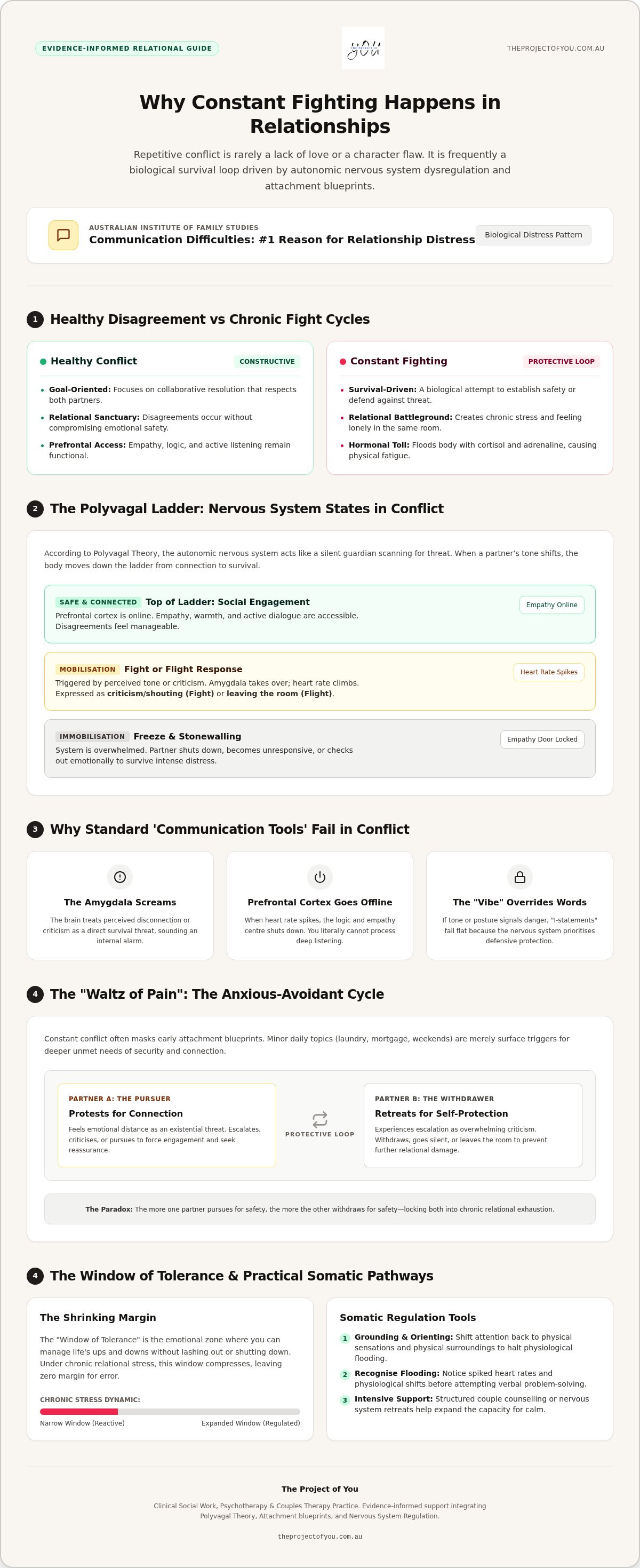
Have you ever felt like you're repeating the same argument for the hundredth time, just with different scenery? Constant fighting in relationship isn't just about the words you say; it's a repetitive, escalating cycle that can leave you feeling utterly depleted. This isn't just simple bickering. It's a state of chronic relational stress that often feels like a "Waltz of Pain." In this dance, one partner typically pursues, seeking connection or reassurance through protest, while the other withdraws to protect themselves from further hurt. It is completely normal to feel "burnt out" by this rhythm, as your body isn't designed to live in a state of perpetual conflict.
While you might be arguing about the laundry, the mortgage, or how you spend your weekends, these topics are rarely the root cause. They're merely the surface triggers for deeper, unmet needs. These patterns are often influenced by attachment styles in adult relationships, where our early experiences of safety shape how we react to perceived distance or criticism today. When we feel disconnected, our brain treats it as a survival threat, making the argument feel like a matter of life or death.
The Difference Between Healthy Conflict and Constant Fighting
There's a vital distinction between a disagreement and a cycle of distress. Healthy conflict is goal-oriented; it seeks a resolution that respects both partners. Constant fighting, however, is a biological attempt to find safety or protection. When you enter a high-conflict phase, your relationship becomes a battleground rather than a sanctuary. The impact isn't just emotional. Chronic conflict keeps your body flooded with cortisol and adrenaline, which can lead to physical exhaustion and a weakened immune system over time. You might notice you're always tired, or that minor health issues seem to linger longer than they used to.
Why 'Communication Tools' Often Fail in the Heat of the Moment
You've probably tried using "I statements" or active listening, only to find they fall flat when things get heated. This happens because your brain's alarm system, the amygdala, is screaming. When your heart rate spikes, your prefrontal cortex, the part of the brain responsible for empathy and logic, effectively goes offline. You can't listen deeply when your body feels like it's under attack. Words are often secondary to the "vibe" or energy you project. If your partner senses a threat in your tone or posture, no amount of "correct" phrasing will bridge the gap. If you feel stuck in this loop, couple counselling can provide a structured space to begin de-escalating these intense moments before they spiral.
Beyond Communication: The Role of the Nervous System in Conflict
Have you ever noticed how a simple Saturday morning chat about the grocery list can suddenly spiral into a shouting match? It's easy to blame poor communication. However, the truth is often found deeper within your physiology. Constant fighting in relationship is frequently driven by the autonomic nervous system, which acts like a silent guardian scanning for threat. According to Polyvagal Theory, we move up and down a "ladder" of safety. At the top, we feel social and connected. When a partner’s tone shifts, you might slide down into "fight" (criticism), "flight" (leaving the room), or "freeze" (stonewalling).
In these moments, your body prioritises survival over connection. A partner’s raised eyebrow or a sharp tone isn't just a gesture; to your nervous system, it's a signal of danger. When this happens, your heart rate climbs and your brain effectively locks the door to empathy. While the American Psychological Association suggests various healthy relationship communication strategies, these tools are almost impossible to access when you are physiologically flooded. Your survival brain simply doesn't believe that "I statements" are a priority when it perceives a threat to your emotional safety.
What is Nervous System Dysregulation?
Psychologists often refer to the "Window of Tolerance." This is the emotional space where you can handle life's ups and downs without lashing out or shutting down. When you're under chronic stress, this window shrinks. Suddenly, you have no margin for error. You might recognise that your nervous system has "hijacked" your personality when you find yourself saying things you later regret. Deep healing often requires a structured approach to regulation, such as an immersive nervous system retreat, to help expand this window and return to a state of balance and resilience.
The Concept of Neuroception
Our bodies possess an internal surveillance system called neuroception. It constantly scans our partner’s posture, eye contact, and vocal prosody for cues of safety or danger. Sometimes, we aren't even reacting to the person in front of us. Instead, we are responding to "ghosts" of past trauma that have been stored in our cellular memory, causing us to overreact to minor slights. Creating cues of safety in your home, like soft lighting or a gentle touch, can help signal to your partner that they are safe. If you feel your relationship is currently stuck in a high-threat zone, you might find it helpful to book a session online to begin exploring these patterns together.
The Attachment Link: How Our Past Shapes Our Current Arguments
Your earliest bonds with caregivers created a subconscious map for how to love and be loved. This "relationship blueprint" dictates how you interpret distance, silence, or disagreement in your adult life. Constant fighting in relationship is rarely just about the present moment; it's often a collision of two different survival strategies formed long ago. These attachment styles are best understood as creative ways we once learned to belong, rather than permanent labels or medical diagnoses.
Consider how a simple change in plans can spiral. If one partner stays late at work without calling, it might trigger a deep-seated fear of abandonment in someone with an anxious attachment style. They might "pursue" with multiple texts or a sharp tone when the other walks in, desperate for connection. Conversely, an avoidant partner may perceive this pursuit as a threat to their autonomy or a sign of their own inadequacy. This creates a cycle where the very thing one person does to feel safe makes the other person feel unsafe, fueling the constant fighting in relationship.
Recognising Your Attachment Style in a Fight
In the heat of an argument, your attachment style often dictates your "protest behaviours." If you lean towards an anxious style, you might feel a desperate need for immediate reassurance, fearing that you're "too much" for your partner. If you lean towards an avoidant style, you might feel suffocated by intensity, needing to pull away to regulate your emotions. When you become curious about these reactions, you can begin to see them as protective mechanisms rather than personal flaws or signs of a broken partnership.
Moving Toward Earned Secure Attachment
The heartening truth is that these patterns aren't set in stone. Through a process of self-awareness and couple counselling, you can move toward what psychologists call "earned secure attachment." This involves learning to soothe your own triggers and beginning to understand the "inner child" that your partner is trying to protect. When you see your partner's withdrawal as a fear of being "not enough" rather than a lack of love, your anger can begin to soften into compassion. Take a moment to reflect: what was the younger version of me trying to protect in that argument?
Breaking the Cycle: Moving from Conflict to Connection
What if you could catch the spark before the house catches fire? Moving away from constant fighting in relationship requires a shift from verbal combat to somatic awareness. When you recognise the physical signs of "flooding," such as a racing heart or shallow breathing, you have reached a physiological tipping point. Research from the Gottman Institute suggests that once your heart rate exceeds 100 beats per minute, your capacity for empathy and logic effectively shuts down. At this stage, no amount of talking will lead to a resolution because your survival brain has taken the wheel.
This is where the "Pause and Pivot" becomes your most powerful tool. You must implement a strict 20-minute rule. This is the minimum time the parasympathetic nervous system needs to return to a baseline state of calm. During this break, it's vital to engage in self-soothing rather than ruminating on the argument. You might try practical somatic tools to ground yourself:
Deep Breathing: Focus on making your exhales longer than your inhales to signal safety to your brain.
Grounding: Feel the weight of your feet on the floor or the texture of the chair beneath you.
Orienting: Gently look around the room and name five things you can see, which helps pull you out of an internal threat response and back into the present moment.
Once you have found your own centre, you can begin the process of co-regulation. This involves using your calm presence to help settle your partner’s nervous system, creating a bridge back to connection.
Creating a 'Relationship Reset' Ritual
A "time-out" should never feel like a punishment or an abandonment. It is a protective measure for the relationship. To make this work, you need a pre-agreed script. You might say, "I’m feeling flooded and I want to stay kind, can we take a break and talk in 30 minutes?" The key is to never leave the time-out open-ended. Knowing exactly when you will return provides the emotional safety your partner needs to stop pursuing or withdrawing.
The Power of Vulnerability
When you eventually return to the conversation, try shifting your language from "top" emotions like anger to "underbelly" emotions like hurt or fear. Replace "You always ignore me" with "I feel scared and lonely when I don't feel heard." This shift moves you away from blame and invites your partner to be curious rather than defensive. Ultimately, vulnerability is the ultimate cue of safety for a nervous system, as it signals that you are no longer a threat to be managed but a partner to be held.
Seeking Support: Finding Your Path Back to Each Other
While the tools we've discussed can offer immediate relief, some cycles of constant fighting in relationship feel too heavy to carry alone. It's an act of profound courage to admit that your current patterns have become bigger than the two of you. If you recognise signs of contempt, where one partner acts superior to the other, or stonewalling, where communication shuts down entirely, these are signals that your relationship is in a state of high distress. Seeking professional support isn't a sign of failure. It is a commitment to the possibility of a different future.
While standard weekly therapy provides a steady rhythm for growth, many couples find that they need a more intensive "circuit-breaker" to stop the spiral. Stepping away from the triggers of daily life, such as chores, work stress, and parenting demands, can provide the space needed for deep healing. A private couples retreat offers this immersive experience, allowing you to move past surface-level bickering and address the underlying nervous system dysregulation in a safe, held environment.
What to Expect in Trauma-Informed Couples Counselling
Trauma-informed care prioritises your sense of safety. Before we ever dive into "the problems" or who said what, we focus on helping you both return to your window of tolerance. Azita Abdollahian guides couples through this process of nervous system restoration, using evidence-based frameworks like the Gottman Method and Attachment-based therapy. This approach ensures that you aren't just learning to argue "better," but are actually repairing the foundational bond that makes you feel secure with one another.
Your Journey of Transformation Starts Here
Healing is a journey that requires both time and immense patience with yourself and each other. Sometimes, individual regulation is the necessary first step toward relational peace. If you're finding it difficult to stay calm enough to even begin the work, exploring resources like my Self Love E-books can help you understand your own triggers and attachment wounds. Whether you are ready to book a session or simply want to join a workshop to learn more, know that a calmer, more connected life is within your reach.
Creating a Path Toward Relational Peace
Moving from a place of constant fighting in relationship toward a sense of safety is a journey of both the heart and the physiology. We've explored how your nervous system acts as a silent guardian, and how understanding your unique attachment blueprint can soften the edges of even the most painful arguments. By prioritising regulation and somatic awareness, you can begin to shift from reactive survival into a space of genuine, nurturing connection.
Azita Abdollahian provides expert, trauma-informed care designed to help couples navigate these complex transitions with grace. Whether you choose specialised Nervous System Restoration techniques in our sessions or the deep, immersive healing of our private and group retreats, you are choosing to invest in the health of your bond. Transformation takes time; however, every small moment of co-regulation is a meaningful step toward a brighter future together.
Take the first step toward a calmer, more connected relationship; explore our Couples Counselling and Private Retreats today. You deserve to feel safe, seen, and deeply loved in your partnership. It's never too late to begin building the foundation for the relationship you truly desire.
Frequently Asked Questions
Is it normal to fight every day in a relationship?
Frequent conflict is common, but fighting every single day suggests your relationship is stuck in a chronic survival loop. While disagreements are natural, daily bickering often indicates that both partners' nervous systems are perpetually on high alert. This level of constant fighting in relationship can lead to physical and emotional exhaustion. It is a signal that the foundational sense of safety needs restoration through intentional regulation and professional support.
How do I stop a fight from escalating when I'm already angry?
The most effective way to stop escalation is to physically disengage before you hit a breaking point. When you feel that surge of heat or a racing heart, your thinking brain has already started to shut down. Try naming your feeling and stepping away for a short break. Use this time for grounding exercises, like feeling your feet on the floor, rather than rehearsing your next argument in your head.
What if my partner refuses to go to couples counselling?
If your partner isn't ready for conjoint therapy, you can still begin your own journey of nervous system restoration. Focusing on your own regulation often shifts the relational dynamic, as a calmer presence can invite a different response from your partner. You might start with individual counselling or resources like Self Love E-books to explore your own attachment triggers. Often, when one person changes their dance steps, the entire cycle begins to transform.
Can a relationship survive constant fighting if there is still love?
Love provides the motivation for change, but emotional safety is the actual engine of a healthy partnership. A relationship can certainly survive chronic conflict if both partners are willing to look beneath the surface of their arguments. The key is moving from blame to curiosity about each other's protective triggers. By integrating trauma-informed tools and perhaps a relationship intensive retreat, you can transform that shared love into a secure, lasting bond.
What is 'flooding' and how does it affect our arguments?
Flooding occurs when your nervous system becomes overwhelmed by perceived threat, causing your heart rate to spike. In this state, your body is flooded with adrenaline and cortisol, effectively bypassing your ability to listen or empathise. Clinically known as Diffuse Physiological Arousal, this state means your biology has prioritised survival over conversation. Recognising when you are flooded is the first step toward preventing the damaging words that often follow during a heated moment.
How long does it take to break a cycle of chronic conflict?
There is no fixed timeline, as breaking a chronic cycle depends on the depth of the underlying attachment wounds and your commitment to new habits. While some couples see shifts within a few months of weekly therapy, others find that a private couples retreat acts as a significant circuit-breaker, accelerating the process by providing immersive restoration. Consistency in practising somatic grounding and co-regulation tools is what eventually creates a new, calmer normal.
What should I do if I feel like I'm walking on eggshells around my partner?
Feeling like you are walking on eggshells is a sign of hypervigilance, where your nervous system is constantly scanning for potential conflict to keep you safe. This state is incredibly draining and prevents true emotional intimacy from flourishing. It often indicates a lack of neuroception of safety in the home. Addressing this requires building clear boundaries and using nervous system regulation tools to help both partners feel secure enough to be authentic.
How do we rebuild trust after a particularly nasty fight?
Rebuilding trust starts with a sincere repair process that goes beyond a simple apology. It involves taking accountability for your part in the cycle and expressing the underbelly emotions, like the fear or hurt that sat beneath your anger. Successful repair requires both partners to feel heard and validated. Over time, consistent co-regulation and showing up for each other in vulnerable ways will slowly bridge the gap and restore the relational sanctuary.


Comments