

Weekend couples therapy intensive options in Australia

What if a weekend could give you and your partner more room to understand what’s happening between you, rather than trying to fit everything into a weekly session? A weekend couples therapy intensive offers concentrated support over a shorter period, with options ranging from a focused day to a multi-day program. It differs from weekly therapy mainly in its pace and structure: there’s more time to stay with important conversations, while breaks can help couples pause and absorb what’s coming up.
It makes sense to want to know what you’re stepping into before making space for an intensive. The right format depends on your needs, the concerns you want to address and what feels manageable for both of you. That why at Carnelian House, Azita Abdollahian makes sure that the dozens of retreats she hosts per year are tailored to the exact needs of each couple. Preparation and assessment can clarify your goals and whether this kind of support is a suitable fit.
Here, you’ll learn how intensives compare with weekly sessions, what one-day and multi-day formats can involve, and how preparation and assessment may work. You’ll also see how private couples support can create a focused setting to explore communication, emotional safety and the patterns shaping your relationship.
Table of Contents
Online and in-person availability in Australia
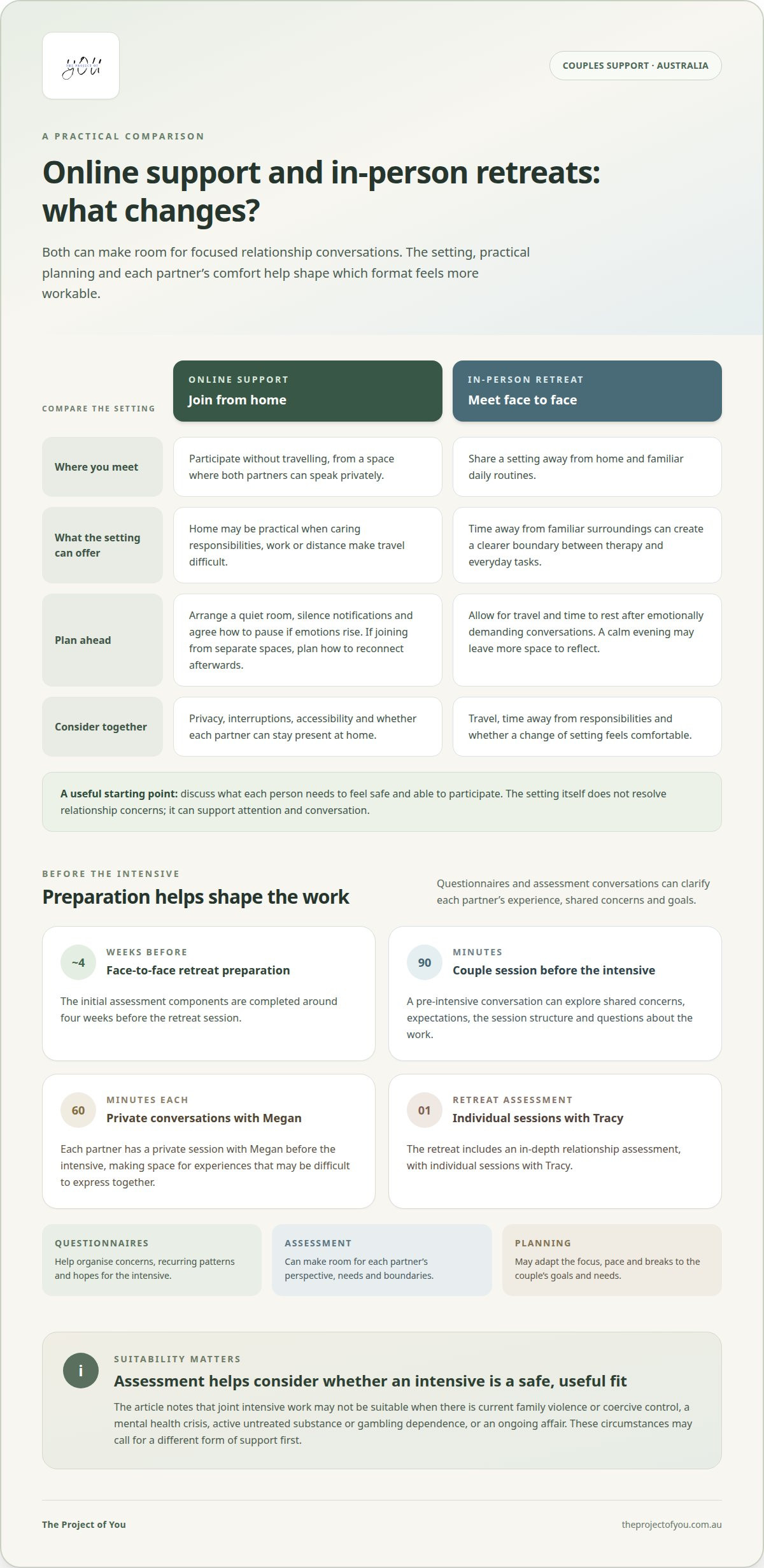
Couples across Australia can consider online support or an in-person retreat. Online sessions let partners participate without travelling, while meeting face to face offers a shared setting away from home. The better fit depends on practical needs, privacy and what helps each person stay present. For example, a couple with caring responsibilities may value joining from home, while another may prefer time away from daily routines.
Online sessions work best when both partners can speak privately and without interruption. Before joining, arrange a quiet room, silence notifications and agree on how to pause if emotions rise. Partners joining from separate spaces may also need a plan for reconnecting after the session. These practical choices create room for focused conversation, even when work, family or distance shape the day.
An in-person retreat offers a different structure: leaving familiar surroundings can create a clearer boundary between therapy and everyday tasks. Couples can plan travel and allow time to rest after emotionally demanding discussions. For instance, arranging a calm evening rather than returning straight to work may give both partners more space to reflect. The setting itself doesn’t resolve relationship concerns, but it can support attention and participation.
Personalised retreat planning starts with the couple’s relationship challenges and reasons for seeking support. A therapist may explore communication, trust, recurring conflict, attachment needs or a major life transition. These priorities can shape the session focus, pace and breaks. A couple addressing trust may need careful space for listening, while partners caught in repeated arguments may want to understand how disagreements escalate.
A personalised plan also considers each partner’s experience, rather than assuming both people feel the same way. Assessment can clarify what feels emotionally safe, which topics need a slower pace and what strengths the couple can draw on. This planning can make deeper work more focused while allowing the structure to respond to the couple’s needs as they emerge.
To decide between online and in-person support, discuss privacy, travel, accessibility, time away from responsibilities and comfort with each format. If one partner feels more settled at home while the other wants a change of setting, explore what each preference means. That conversation may reveal needs around safety, control or connection. Naming those needs gives the therapist useful context for planning a format and approach that fits the relationship.
Preparation questionnaires and assessment sessions
Preparation gives each partner space to describe the relationship in their own words. A questionnaire can help organise concerns, recurring patterns and hopes for the intensive before the first joint discussion. For example, one partner might describe withdrawing during conflict, while the other experiences that silence as distance. These different perspectives help the therapist create a balanced assessment and understand what each person wants to address.
For a face-to-face retreat, the initial assessment components are completed around four weeks before the retreat session. The process includes a 90-minute couple session before the intensive. This gives the therapist time to hear shared concerns, notice where accounts differ and begin identifying goals. It also lets the couple discuss expectations, session structure and questions about what the work may involve.
Assessment can include private conversations as well as joint work. Each partner has a private 60-minute session with Megan before the intensive, and the retreat includes an in-depth relationship assessment with individual sessions with Tracy. These conversations can make room for experiences that feel difficult to express together. The therapist can then consider how each person’s needs, boundaries and sense of emotional safety shape the shared work.
Questionnaires and sessions help build a tailored plan instead of relying on a standard sequence of exercises. The focus may be communication skills, trust, attachment needs or the way conflict escalates. If one partner becomes overwhelmed during difficult conversations, the therapist can consider pacing and breaks. Depending on the couple’s goals and assessment, weekly sessions may also support ongoing work.
Suitability matters. An intensive may not be suitable when there is current family violence or coercive control, a mental health crisis, active untreated substance or gambling dependence, or an ongoing affair. These circumstances may call for a different form of support before joint intensive work. Assessment is more than a formality: it helps determine whether the format can provide a safe and useful setting for both partners.
When choosing a couples therapist in Australia, look for relevant professional membership, couples therapy training and experience with the concerns you want to address. Azita Abdollahian, who leads counselling at The Project Of You, is a Member of the Australian Counselling Association. You can also ask how the therapist assesses suitability, manages emotional intensity and adapts the plan when new needs emerge.
Before the intensive, consider what each of you hopes will be different afterwards, and what would help you participate. A conversation about goals and boundaries can make the assessment more focused. If you’re ready to explore that first step, you can book an initial discussion and begin clarifying what support may fit.
How intensive couples retreats differ from weekly therapy
A weekend couples therapy intensive brings relationship work into a focused period instead of spreading it across weekly sessions. Couples may explore communication, conflict, trust and emotional connection, with the therapist shaping the work around their concerns.
Retreat durations and therapy stages
A two-day intensive includes approximately 11 hours of counselling, while a three-day intensive includes approximately 16 hours. Sessions can move from clarifying goals to exploring recurring patterns, practising new responses and considering next steps. Optional breaks help pace multi-day work according to emotional tolerance, giving partners space to pause and reflect.
Therapies and relationship issues addressed
Couples intensives can address communication difficulties, recurring arguments, trust and emotional closeness. A therapist may help partners notice patterns, understand each other’s responses and practise skills for difficult conversations. The approach depends on the couple’s goals and assessment, so one partner’s experience isn’t treated as the whole story.
Accommodation, meals and retreat experiences
Accommodation and meals shape the practical experience of a retreat, including travel and time to rest between sessions. They’re separate from the counselling itself. One two-day option includes either a couples massage or a 90-minute yoga session, offering a shared experience alongside therapy.
Weekly therapy often involves sessions lasting one or two hours, spaced over months or years. This rhythm gives couples time to reflect between appointments and try different responses in daily life, such as discussing household responsibilities. An intensive creates more continuous time for relationship conversations, without needing to rebuild momentum at each weekly appointment.
That concentrated structure still needs room to breathe. A therapist can organise conversation, reflection and breaks, adjusting the pace if either partner feels overwhelmed. For example, after discussing a painful disagreement, partners may pause before exploring what each needs next. This allows the work to attend to emotional safety as well as the relationship patterns that brought them into therapy.
Progress also involves bringing new insights into everyday life. A follow-up couples therapy session and ongoing support can help partners practise changes after the retreat. Follow-up may be weekly, fortnightly or tailored to the couple’s needs, and most couples move into weekly sessions. This can provide space to revisit communication goals as familiar challenges arise at home.
One-day and multi-day intensive therapy formats
Couples intensives can range from a half-day appointment to therapy across consecutive days. The format shapes how much time is available for focused work, reflection and breaks.
Half-day and full-day formats
A half-day couples retreat can last 3-4 hours, while a full-day retreat can last 6-8 hours. These formats offer different amounts of time for guided conversation and practising new ways to respond. Consider how much sustained discussion feels manageable, and whether travel or work commitments affect the day.
Multi-day and consecutive-day sessions
Mini-marathon intensives can run from a full day to several days, with retreats sometimes scheduled for 3 to 8 hours per day. A multi-day format creates space to pause between sessions and return to difficult topics with fresh attention. Optional breaks can help pace the work according to each couple’s emotional tolerance.
Consecutive days provide continuity: partners can return to a conversation without waiting for the next weekly appointment. The therapist can structure sessions around the couple’s goals, with time to reflect between discussions. For example, a couple exploring recurring conflict might first map the pattern, then practise a different response in a later session.
Two-day intensive schedule
A two-day couples intensive is delivered over two consecutive days. It includes approximately 11 hours of counselling, arranged across the retreat rather than as one uninterrupted session. The schedule should make room for breaks and reflection, so couples can stay present as the work unfolds.
There isn’t one fixed timetable that suits every couple. The therapist’s method and the concerns being addressed shape the sequence, while the planned breaks help balance focused discussion with space to reset. A two-day option includes either a couples massage or a 90-minute yoga session, adding a shared experience alongside therapy.
For a weekend couples therapy intensive, the decision is not simply how many hours are available. Consider how the format supports connection, safety during difficult conversations and time to recover afterwards. A shorter day may suit couples wanting a contained period of work; consecutive days may allow deeper exploration. Discussing these needs during assessment helps align the schedule with the couple’s capacity and aims.
Private intensive couples therapy
Private intensive therapy gives two partners dedicated time with a therapist, focused on their relationship rather than a group programme. In this one-to-one setting, couples can discuss concerns that feel difficult to raise in front of others, while each partner remains part of the conversation. The therapist can make space for both perspectives without treating one person as the problem.
For example, one partner may want to address trust after a breach, while the other wants to understand recurring conflict. A private session lets the therapist hear how each person experiences the same event and explore what happens between them. The focus is on understanding the interaction and finding more constructive responses, not deciding who is right.
Intensive counselling may suit couples whose schedules make weekly appointments difficult. Concentrated sessions create a defined period for therapeutic work, while preparation and follow-up remain important parts of care. The therapist can help partners identify their main concerns, agree on goals and set a pace that reflects their emotional capacity. If a conversation brings up grief, shame or strong feelings, the structure can allow time to pause.
A private format isn’t automatically suitable for every relationship. Assessment should consider whether both partners can participate safely and whether their current concerns are appropriate for joint therapy. Current family violence or coercive control, a mental health crisis, active untreated substance or gambling dependence, or an ongoing affair can make an intensive unsuitable. In these circumstances, safety and appropriate support need attention before joint intensive work.
When considering a therapist, ask about their couples therapy training, experience with your concerns and how they adapt sessions to each partner’s needs. A clear approach should explain how the therapist supports balanced participation, manages emotional intensity and responds if a conversation becomes overwhelming. It’s also useful to understand how follow-up is planned, so insights from the intensive can inform everyday relationship decisions.
Medicare and private health insurance don’t automatically cover a couples intensive as a package. Rebates or benefits depend on how the service is provided and the terms of an individual policy, so understand the payment arrangements before committing.
Private therapy can give each partner room to name what they hope to understand or change. A shared focus might be handling disagreements about parenting or rebuilding emotional closeness, while recognising individual needs. Follow-up can help translate insights into daily choices, such as pausing before a familiar argument escalates. The important question is whether both partners feel able to participate.
The Project of You | Trauma, Couples & Relationship Therapy Australia: Relationship Intensive Retreat
The Project of You | Trauma, Couples & Relationship Therapy Australia offers a Relationship Intensive Retreat for couples seeking focused support with relationship challenges. It may be a considered next step when recurring conflict, disconnection or difficulty communicating feels hard to address in ordinary routines. The work can help partners become curious about their shared patterns and what each person needs to feel heard.
Choosing an intensive is a personal decision. Consider whether you’re both ready to participate, what you hope to explore and what emotional safety would look like during the process. For support with nervous system awareness, Nervous System Regulation & Restoration is another relevant offering.
Contact The Project of You | Trauma, Couples & Relationship Therapy Australia to discuss whether the Relationship Intensive Retreat may suit your relationship.
Choose a next step that feels right for both of you
Choosing a weekend couples therapy intensive is a meaningful decision, not a test of how committed you are. Give yourselves room to consider what you hope to understand, what feels difficult to raise and what support would help you participate. A shared intention can be simple, such as listening without rushing to solve things or finding a calmer way through disagreements.
If an intensive feels like a possible fit, The Project of You | Trauma, Couples & Relationship Therapy Australia offers a Relationship Intensive Retreat. Its Nervous System Regulation & Restoration may also be relevant if you’re seeking support with understanding your responses to stress. The next step can reflect what matters most to you as a couple.
You don’t need every answer before beginning a conversation. A thoughtful first step can help you find a path that respects both partners’ needs.
Frequently Asked Questions
Do you offer other options for couples seeking help?
Yes. The Project of You | Trauma, Couples & Relationship Therapy Australia offers couple counselling as well as relationship retreats. Individual counselling can give a partner space to explore personal concerns that affect how they relate, while parenting counselling can support families navigating parenting-related pressures. The starting point depends on what you hope to address: a shared relationship concern, an individual experience or challenges affecting family life.
Are weekend couples therapy intensives available in Australia?
Yes. The Project of You | Trauma, Couples & Relationship Therapy Australia provides relationship support nationally, including its relationship intensive retreat. If you're considering an intensive, first decide whether both partners can make the time and emotional space to participate. Think about work or caring responsibilities, privacy and how you'll ease back into everyday routines afterwards. These practical considerations can help you decide whether an intensive fits your circumstances.
Where can couples find weekend therapy intensives in Australia?
The Project of You | Trauma, Couples & Relationship Therapy Australia is an Australian practice offering a relationship intensive retreat. As you consider this option, focus on what affects your ability to participate, such as travel, accessibility and time away from usual responsibilities. Clarifying these needs can make it easier to decide whether a retreat setting is workable for both partners and plan around commitments that cannot be moved.
What should couples expect before, during and after an intensive?
Before an intensive, think about what you want your time together to make possible and what boundaries support open discussion. During sessions, expect a therapist to guide the conversation and keep both perspectives in view. Afterwards, choose a realistic change to practise in daily life, such as making time for a calm check-in. Reflecting together on what felt useful can guide your next steps.
Who may not be suitable for couples therapy intensives, such as couples experiencing domestic violence?
A joint intensive may not be suitable when domestic or family violence or coercive control is present, because both partners need to participate safely and speak freely. If either person feels afraid to disagree, disclose concerns or set a boundary, treat that as important information. Safety comes first: a couples intensive isn't the appropriate setting for addressing an unsafe dynamic together.
How do weekend intensives compare with weekly couples counselling?
Weekly counselling spreads conversations over time, while an intensive concentrates attention into a shorter period. Consider how each format fits your capacity for reflection and change. If you value trying an idea in everyday life before discussing it again, regular appointments may suit that rhythm. If repeated appointments are difficult, concentrated work may be easier to schedule. The format should support participation, not add pressure.
Comments