

Parental burnout: How common is it, and where can you find support

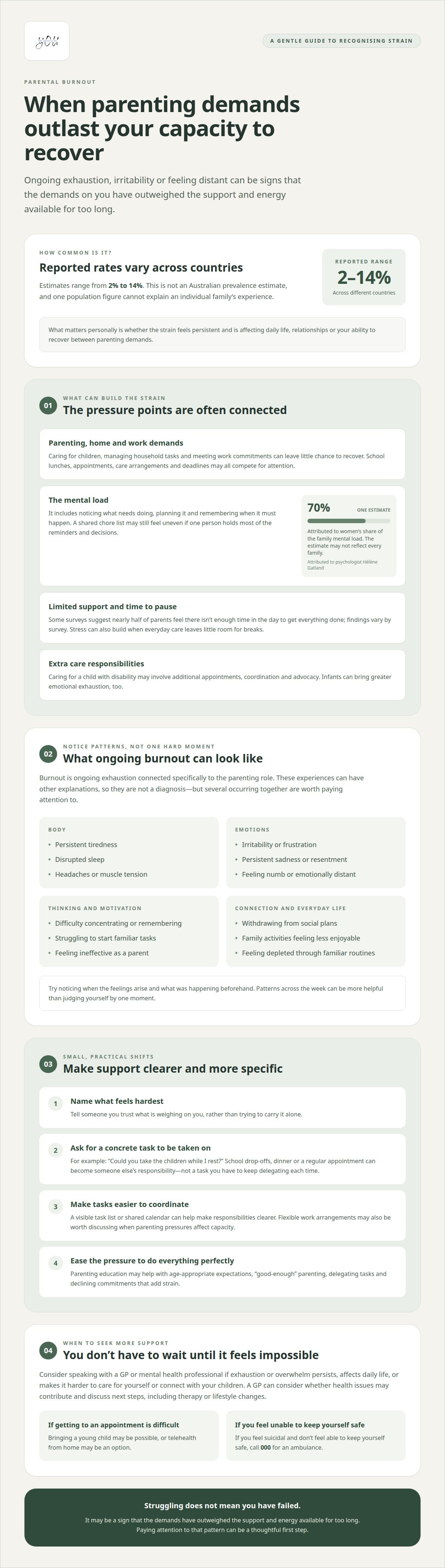
Reported rates of parental burnout range from 2% to 14% across different countries, so there isn’t one figure that describes every family or community. If you’re dealing with parental burnout, it can help to know that this is more than a hard day or a demanding week: it’s ongoing exhaustion connected to the parenting role.
Azita Abdollahian, relationship expert and psychotherapist, compassionately reminds her clients that you can care deeply about your children and still feel depleted, irritable, distant or unlike the parent you want to be. That tension can bring shame, but struggling doesn’t mean you’ve failed. It may signal that the demands on you have outweighed the support and energy available for too long.
In this article, you’ll learn what parental burnout can look like, how common it is, and how prolonged stress, mental load and limited support may contribute. We’ll also explore its possible effects, practical ways to create small moments of relief, and where to seek support in Australia. Understanding what’s happening can be a gentle first step towards finding a more supported way forward.
Table of Contents
1. How common is parental burnout?
Reported parental burnout rates range from 2% to 14%, varying from country to country. This broad range shows that estimates differ across populations and measurement approaches. It isn’t an Australian prevalence estimate, so it can’t tell us exactly how common burnout is among Australian parents. Nor can a population figure explain one person’s experience. What matters for you is whether the strain feels persistent and is affecting daily life, relationships or your ability to recover between parenting demands.
Parental burnout is chronic exhaustion connected specifically to the parenting role. It can involve feeling overwhelmed, emotionally distant from your children or ineffective as a parent. One difficult afternoon is different from a pattern that continues over time. For instance, school mornings, meals and bedtime may leave you depleted day after day, with little chance to regain energy when the routine changes.
Physical signs can include persistent tiredness, disrupted sleep, headaches or muscle tension. You might wake after what seemed like a full night’s sleep and still struggle with breakfast and the school run. Emotional signs can include irritability, frustration, persistent sadness, resentment or numbness. These experiences can have other explanations, so they aren’t a diagnosis. They are reasons to pay attention, especially when several occur together.
Burnout can also affect concentration, memory and motivation. You might forget a school form, lose your train of thought in a conversation or struggle to start a task you once managed easily. You may withdraw from social plans or find that family activities no longer feel enjoyable. These changes can be confusing when you care deeply about your children, but they don’t mean you’ve stopped caring.
Notice patterns across the week rather than judging yourself by one moment. You could note when tiredness, sadness or disconnection arises and what was happening beforehand. Does it follow a particular routine, or persist across different situations? Observing these patterns can help you describe your experience to someone you trust or a health professional, and make the next step feel more manageable.
If you feel suicidal and don’t feel able to keep yourself safe, call 000 for an ambulance, according to the Australian Government Department of Health and Aged Care. If you’re unsure whether your ongoing distress needs attention, speak with a GP or mental health professional. You don’t need to wait until every part of parenting feels impossible before asking for support.
2. Parenting demands, mental load, and insufficient support
Parental burnout can develop when parenting demands keep exceeding the time, energy and support available. It’s more than a challenging week. The strain may come from caring for children, managing household tasks and meeting work commitments, with little chance to recover. You might organise school lunches, remember appointments, arrange care and soothe a distressed child while also trying to meet deadlines.
The mental load includes noticing what needs doing, planning it and remembering when it must happen. One estimate, attributed to psychologist Hélène Gatland, is that women carry 70 per cent of the family mental load; this figure may not reflect every family. Some surveys suggest nearly half of parents feel there isn’t enough time in the day to get everything done, though findings can vary by survey. If one person holds most of the reminders and decisions, even a shared chore list may not feel like shared responsibility.
Support is often most useful when it’s practical and specific. A partner or relative could take responsibility for school drop-offs, prepare dinner or manage a regular appointment, rather than waiting to be asked each time. A visible task list or shared calendar can make responsibilities easier to coordinate. Employers may also consider flexible work arrangements when parenting pressures affect someone’s capacity, including for single parents.
Some families face additional demands. Caring for a child with disability can involve extra appointments, coordination and advocacy. Infants may bring greater emotional exhaustion, and stress can build when everyday care leaves little time for breaks. Parenting education may help clarify child development, age-appropriate expectations and “good-enough” parenting. It can also offer strategies for setting realistic expectations, delegating tasks and declining commitments that add strain.
When should you discuss parental burnout with a GP or mental health professional? Seek support if exhaustion or overwhelm persists, affects daily life, or makes it harder to care for yourself or connect with your children. A GP can consider whether health issues contribute to exhaustion and discuss next steps, including therapy or lifestyle changes. Psychological support can help you understand the pressures and develop strategies suited to your family.
Emotional support matters alongside practical help. Tell someone you trust what feels hardest, and make a clear request, such as, “Could you take the children while I rest?” If attending an appointment is difficult because you’re caring for a young child, bringing them may be possible; telehealth from home can also be an option. CBT and ACT may be considered as approaches to managing burnout symptoms, depending on individual needs. If a conversation with a professional feels like a useful next step, you can book a counselling appointment.
3. Self-compassion
Self-compassion means responding to struggle with kindness instead of adding harsh self-criticism. It involves recognising that difficulty is part of being human and giving painful feelings your attention. If you snap during the evening rush, notice what happened without deciding you’re a bad parent. Perfectionism can intensify exhaustion by making ordinary mistakes feel like proof of failure. “Good-enough” parenting leaves room for repair, learning and rest.
Small acts can support wellbeing, even when a full break feels out of reach. A short walk, slow breathing outside, or a chat with a supportive friend can offer a pause. One possible practice is sitting quietly with a cup of tea for 10 minutes. Another is reading a few pages or returning to music you enjoy. These actions aren’t a cure for ongoing stress; they create brief moments of care while you’re experiencing it.
Make self-care easier to remember by attaching it to a routine you already have. For example, take a few slow breaths after school drop-off, or step outside while the kettle boils. Check HALT: are you hungry, angry, lonely or tired? That simple pause can help you identify what you need before pushing through. A recent finding reported that 60% of parents don’t routinely do anything to relax and recharge, so start with a manageable action rather than an ideal routine.
Sleep can be difficult when your mind stays busy after the children are in bed. A calmer wind-down might include dimming screens, keeping a steady bedtime routine or choosing a warm bath. Limiting caffeinated drinks may also be worth trying if they affect your rest. If waking during the night or persistent fatigue continues, speak with a health professional. Rest matters, but one sleep strategy won’t remove every source of pressure.
How can you manage parental burnout and recover, step by step? First, pause and name what feels hardest. Identify one immediate need, such as food, quiet or help with childcare. Then ask someone you trust for specific support and choose one small restorative activity for today. Over time, notice which demands you can reduce and which routines help you feel steadier. Adjust the plan as your energy changes, without judging yourself for needing support. A village can begin with one person who listens and one practical task shared.
4. Asking for help and finding community
Asking for help can feel difficult when you’re used to carrying your family’s needs. You may worry about being judged or believe you should manage alone. But burnout isn’t a personal failure, and you’re not alone in needing support. Start with someone you trust and a clear request, such as, “Could you collect the children today while I rest?” A specific ask gives them a practical way to respond.
Practical help can ease pressure more than general offers. Ask a friend or relative to prepare dinner, supervise the children while you shower or take responsibility for a regular school run. If household tasks feel overwhelming, choose one priority together and let less urgent jobs wait. A shared calendar can make appointments and care tasks visible, so the plan doesn’t depend on one person remembering everything.
Community can offer connection and perspective. Talking with another parent may help you express what feels hard without explaining every detail. You could arrange a regular walk, share a meal or create a simple childcare swap with someone you trust. Be clear about expectations, including what you can offer in return. Support doesn’t need to be perfectly balanced every time to matter.
Consider professional support if burnout affects daily life or you feel constantly overwhelmed or checked out. A GP can discuss exhaustion and consider whether medical issues may contribute. A counsellor or other mental health professional can help you understand the pressures and find strategies suited to your family. Seeking support early can give you a chance to discuss how you’re feeling and explore what may help.
What Australian helplines can parents call for urgent emotional support? Lifeline is available on 13 11 14 for people who need someone to talk to. Parentline is another support option for parents; you can also contact a GP or allied health professional.
If burnout is affecting your ability to care for your children safely, ask a trusted adult to stay with you or take over care while you seek urgent support. Tell them plainly what is happening, such as, “I’m worried I can’t manage safely on my own right now.” If you feel suicidal and don’t feel able to keep yourself safe, call 000 for an ambulance. Trying one clear step, such as calling a friend or GP, can help you begin building support around your family.
5. Definition and effects of parental burnout
Parental burnout is chronic exhaustion specifically tied to the parenting role. It can develop when the demands of caring for children keep outlasting the resources available to meet them. You may still manage work or household tasks yet feel depleted by school mornings, meals and bedtime. The strain is connected to parenting, rather than simply feeling tired after one challenging day.
Burnout can involve feeling overwhelmed, emotionally distant from your children and ineffective as a parent. You might go through the motions of getting a child ready for school while feeling numb or disconnected. That distance can be unsettling, especially when it clashes with the closeness you value. It describes an experience under strain, not proof that you don’t love your children.
Some descriptions focus on burnout in parents whose children are over 18 months old, but this is not a universal age threshold or a way to determine whether someone is experiencing burnout. Mothers and fathers can both experience parental burnout. The wider picture includes how long stress has continued, what responsibilities are present, and whether support allows time to recover.
Parenting expectations can add another layer. D. W. Winnicott began developing the idea of “good-enough parenting” in the 1950s, a useful counterpoint to the pressure to be a perfect parent. Children don’t need every meal, activity or response to be flawless. For example, a simple dinner and a calm repair after a tense moment can matter more than meeting an impossible standard every day.
Burnout can affect more than how a parent feels in the moment. Ongoing strain may affect connection at home, patience during conflict and confidence in everyday parenting. You might interpret ordinary setbacks as evidence you’re failing, deepening shame or anxiety. Research suggests prolonged, severe parental burnout may be associated with longer-term effects on child development, but this does not mean every difficult period causes lasting harm. It can be helpful to notice family stress early.
One useful distinction is whether low mood centres mainly on parenting or extends to other parts of life. If sadness or anxiety continues beyond family situations, or daily functioning becomes harder, discuss it with a health professional. Burnout and other mental health concerns can overlap, so an assessment can help clarify what support may fit. Recovery isn’t a test of willpower. It often involves reducing pressure, rebuilding support and making room to recharge.
The Project of You | Trauma, Couples & Relationship Therapy Australia
The Project of You | Trauma, Couples & Relationship Therapy Australia offers individual counselling for parents who feel persistently overwhelmed, depleted or unsure how to move forward. Sessions give you space to explore the pressures affecting your wellbeing and consider practical ways to support yourself and your family.
If stress is affecting your sense of calm or connection, Nervous System Regulation & Restoration may be relevant to your support needs. You don’t have to wait until you feel completely overwhelmed to seek help. Support can begin by naming what feels difficult and exploring what might help.
If you’d like to discuss support, contact The Project of You.
Take one supported step towards feeling steadier
If you’re dealing with parental burnout, you don’t need a perfect plan before seeking support. A first step can be naming what feels most difficult right now and allowing someone to meet you there. You might also consider what you want more room for: patience, rest, connection with your children or a stronger sense of yourself beyond daily tasks.
Change often begins with small, thoughtful choices rather than a complete overhaul of family life. Give yourself permission to move at a pace that respects your energy. Asking for help is a meaningful act of care for you and your family. You deserve support that takes your circumstances seriously and helps you find a way forward.
You can take the next step gently, one conversation at a time.
Frequently Asked Questions
How common is parental burnout?
Parental burnout is reported across countries, but measured frequency varies with the population and assessment used. There isn’t one percentage that captures every Australian parent or family situation. Treat prevalence figures as broad context, not a way to decide whether your experience is serious. If you’re dealing with parental burnout, a more useful question is whether the strain is affecting your wellbeing and everyday functioning.
When does parenting get less exhausting?
There’s no predictable age when parenting becomes less exhausting. The daily work changes as children grow, and a new stage can bring different pressures, such as school transitions or supporting a child through change. Consider which parts of your current routine feel most demanding, then review them as your family’s circumstances shift. A routine that worked last year may need adjusting now.
Why does it happen?
Parental burnout can follow a build-up of pressures rather than one difficult event. Ongoing responsibility, few opportunities to recover, personal expectations and changes in family life can combine in ways that are hard to see from within the routine. Noticing what changed before the strain intensified can offer a useful starting point. A return to work or a change in care arrangements, for example, may have altered the family’s rhythm.
What are the signs and symptoms of parental burnout?
No single sign confirms parental burnout. Look for a sustained change from your usual way of functioning, especially if it affects daily responsibilities or how you relate to your family. Ask yourself whether you’ve felt unlike yourself for a while, and whether that shift is limited to parenting or present elsewhere too. These observations can help you explain your concerns in an appointment.
What causes parental burnout and who is most at risk?
No single personal characteristic determines who will experience burnout. Risk depends on how a parent’s circumstances, responsibilities and available resources interact over time. Some conditions can make parenting more demanding, but they don’t make burnout inevitable. It may help to consider which parts of your situation could change, such as expectations, work arrangements or the dependable support around your family.
What practical self-care and stress-management strategies help with parental burnout?
When dealing with parental burnout, make a short plan that reflects your capacity today. Write down what genuinely needs attention, what can wait and one person who could help with a specific task. Choose a small pause that fits into the day instead of waiting for ideal conditions. If your plan repeatedly proves impossible or your wellbeing keeps worsening, discuss the pattern with a health professional.
How can partners, family and friends support a burned-out parent?
Start by listening without minimising the parent’s experience or rushing to solve it. You might ask, “Would you like me to listen, help think through options, or take something off your plate?” A predictable check-in can make support easier to accept than a one-off offer. Respect their answer, avoid criticism and keep showing up. If you’re concerned about immediate safety, help them connect with urgent support.
What is the difference between parental burnout, depression and ordinary parenting stress?
These experiences can overlap, so a description alone may not make the difference clear. A health professional can consider how long the difficulties have lasted, where they arise, how strongly they affect daily life and whether mood changes extend beyond family responsibilities. Ordinary stress may ease as circumstances settle, while ongoing distress deserves attention. A GP can help assess your mental health and discuss appropriate next steps.



Comments